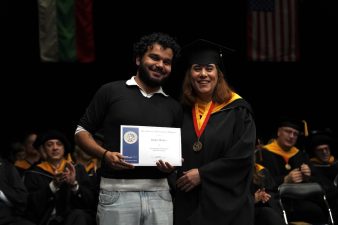
Teona Sima is one of AUBG’s most culturally diverse students majoring in Journalism and Mass Communication (JMC) and Psychology. Also known as The Language Blondie, she shares language lessons, advice, and cultural insights with over 700,000 social media followers.
Teona had the chance to expand her linguistic and cultural horizons even further through the Erasmus+ program while studying at AUBG. Driven by a desire to “go somewhere far away from home, but still be close to home,” she landed at FHWien der WKW in Vienna.
“I wanted to step out of my comfort zone to see what it would be like to live in a big European city completely alone. I felt ready for that step, and the Erasmus+ program was the perfect opportunity because they have excellent partner universities and provide financial allowances,” shared Teona.
Quickly adapting to her new environment
As soon as she arrived in Vienna, Teona had no problem socializing, thanks to her naturally friendly persona. Although exchange students can join the Erasmus Buddy Network, which pairs them with a local student for guidance through the experience, she didn’t feel the need to apply.
“I just felt like I would find my own buddies within the university community, especially through the events organized by the Erasmus Student Network (ESN),” said Teona.
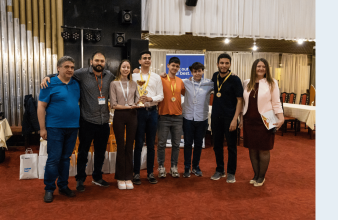
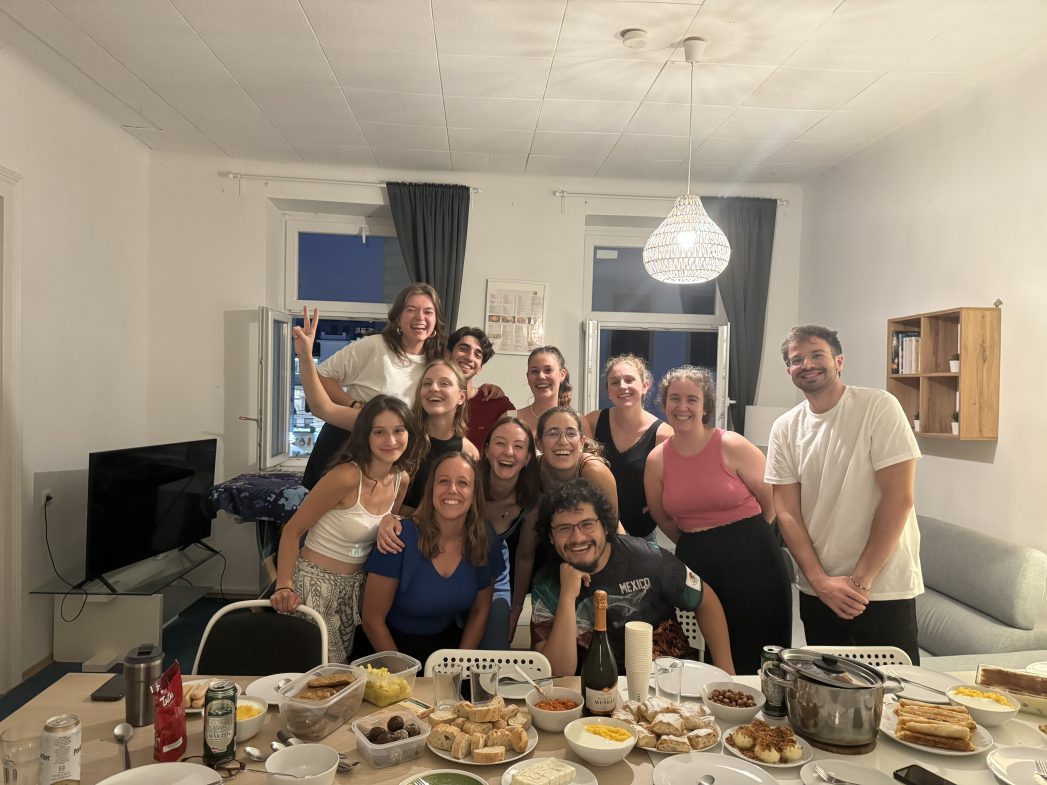
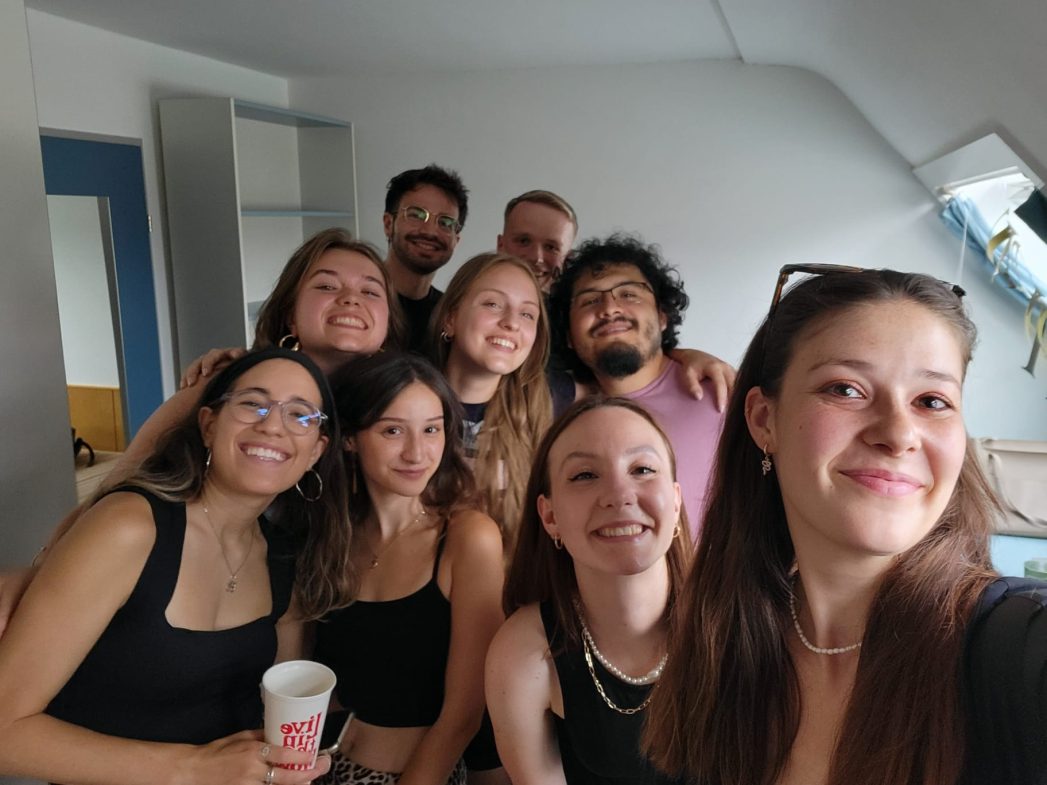
And she sure did. Teona formed a close-knit group of friends, travelling together to Budapest and Brno in the Czech Republic. Most recently, they had a reunion in Munich, where one of her friends is currently doing another exchange program.
During her two-week orientation, each day was packed with activities such as walks, museum trips, parties, and gatherings. “There were, of course, events throughout the entire semester too,” added Teona.

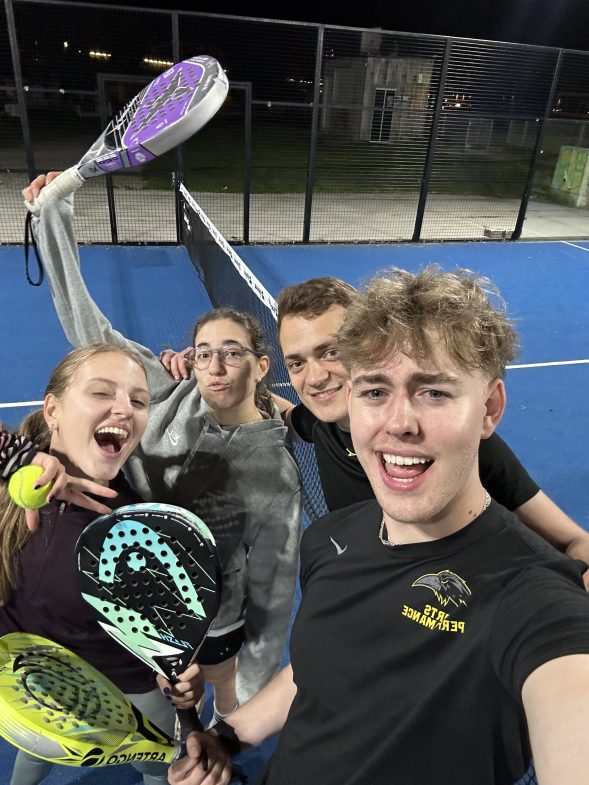
Be prepared for lots of free time!
One of the biggest differences Teona noticed at FHWien der WKW was the curriculum structure.
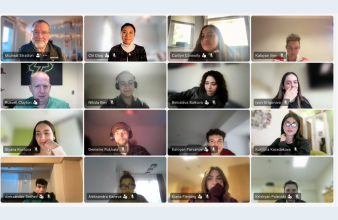
“At AUBG, you have a fixed schedule – for example, a lecture every Monday and Wednesday from 12:30 to 13:50 throughout the semester. At FHWien der WKW, sessions are more sporadic. You might have six sessions for an entire course, but each one could last three, four, or even five hours. This leaves you with a lot of free time.”
She described the coursework as “fieldwork,” where students are given a month and a half to complete a task, then report on it in the next session.
Her advice for students considering an exchange at FHWien der WKW is to plan plenty of trips.
“You’re in Central Europe – take advantage of it! You can explore at least five countries while you’re there,” Teona encouraged.
And if you need extra insights or language lessons for your destinations, don’t shy away from checking out her Instagram and TikTok.
Practical education
Teona also appreciated the university’s hands-on approach to education. As a Journalism and Mass Communication student, she took radio and TV show courses and had the opportunity to work in the university-owned radio and TV studios, which were equipped with a professional control room.
“Everyone had to rotate through different roles – director, TV show host, teleprompter operator, audio technician – so we gained well-rounded experience in media production.”
Overcoming loneliness and embracing courage
“Perhaps, you’re going to experience moments of loneliness,” Teona admitted. “But remember, it’s a necessary part of the journey. It will enrich you, make you stronger, and help you become more independent. You’re going to find a new, different version of yourself.”
Teona managed to fulfil her mission – proving to herself that she was capable of living independently in a big European city.
“It definitely made me more courageous,” she reflected.
How to apply to Erasmus+
“The application process was fairly easy,” Teona said, “and you can always consult the Erasmus and Study Abroad Programs Office for guidance.”
One key thing to keep in mind is the transfer of course credits. “You need to research the available courses carefully and calculate your credits,” she advised.
Originally, Teona wanted to study in France, but the credits didn’t add up, so she chose Vienna as a more suitable option.
AUBG partners with 50 universities across Europe through the Erasmus+ program. You can see a full list of partner institutions here. If you’re interested in studying abroad through Erasmus+, visit this page or speak directly with the Erasmus and Study Abroad Programs Office.