One of the most exciting parts of the high-profile Executive MBA (EMBA) program at AUBG is the annual one-week business trip. Each cohort gets to experience the cultural and business environment of the chosen destination. Previously, participants have visited Dubai, London, Zurich, Bratislava, Munich, Prague, and more.
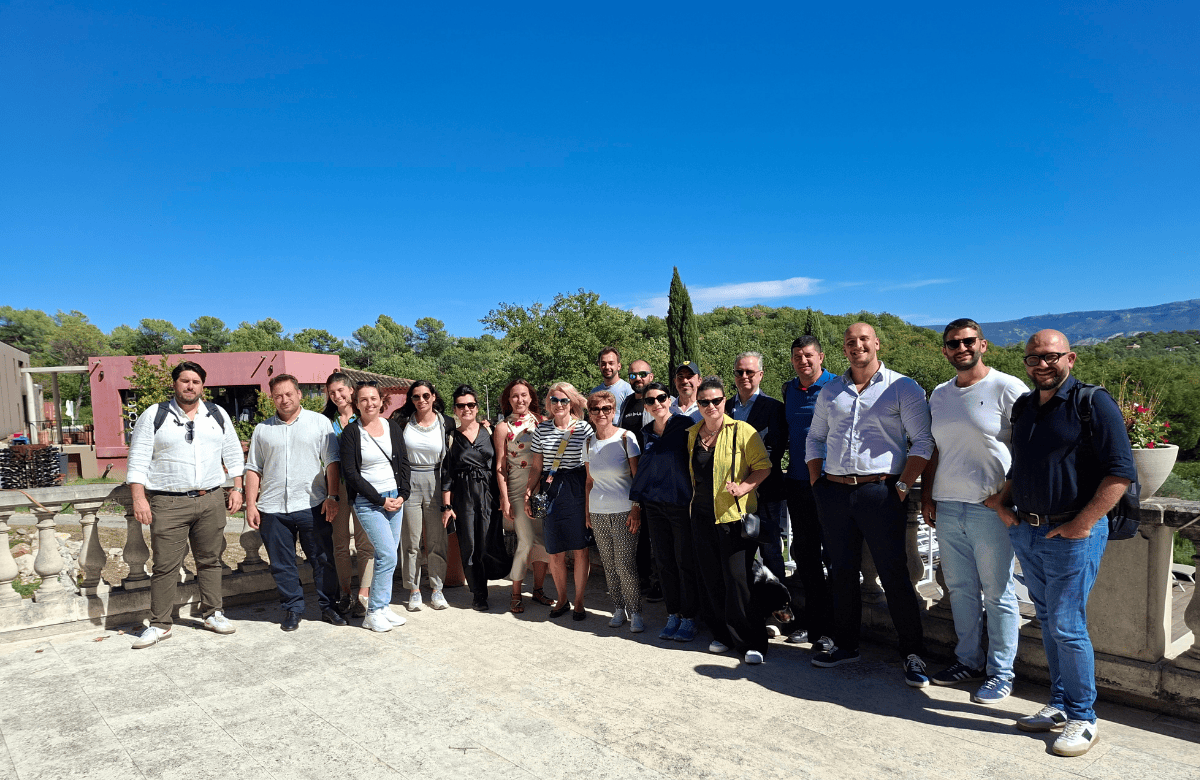
This September, the 2025 cohort went to sunny and culturally rich Marseille in France.
“The EMBA trip to Marseille and Provence ended up being one of those really enriching experiences,” said Polina Ezekieva, EMBA student and Head of QA Practice at Dreamix . “It worked well for my professional side and my personal growth too.”
According to Dr. Momtchil Karpouzanov, Academic Director of Graduate Programs at AUBG, the goal of the trip is to encourage participants to think critically about doing business through the economic, cultural, and social lenses of the chosen destination.
“The essence of an EMBA lies not merely in studying theoretical concepts but in applying them to real-world contexts,” said Yoana Boyanova, EMBA student and R&D Manager at Broadcom Software. “This trip embodied that philosophy perfectly.”

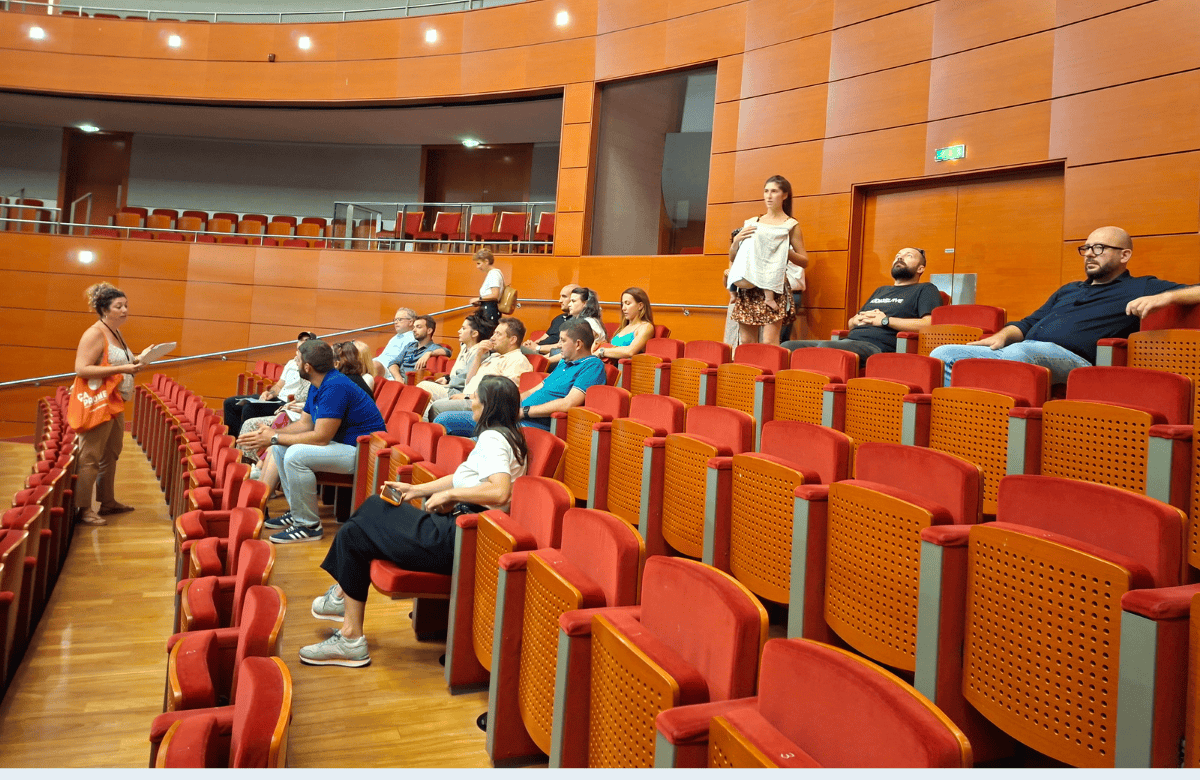
Through the eyes of Marseille
The EMBA business trip has two main focuses, says Dr. Karpouzanov, who curates the entire experience.
First is the destination. “We focus on places with a similar historical pattern and/or similar size to Bulgaria.”
Second is the choice of businesses the cohort meets with. “We aim to visit businesses which are typical for the destination or the hosting country, not necessarily multinational companies,” he said.
This approach allows students to compare different business scenarios with the challenges leaders in Bulgaria face, analyze them, and apply new insights to their own professional contexts.
In Marseille, students met with decision-makers from various businesses, including the water company Eaux de Marseille – Veolia, Grand Port Maritime de Marseille – Fos, the ITER Project, and more.
“As a native French participant, I initially didn’t expect to gain much from visiting familiar territory,” shared Thierry Feres, EMBA student and Project Manager and Supply Chain Logistics / SM at Cargill.
“However, the experience completely changed my perspective. I discovered new companies, met inspiring leaders, and developed a fresh appreciation for the Provence-Alpes-Côte d’Azur region – especially Aix-en-Provence, which I now consider one of the most beautiful cities in France.”
“I try to organize visits that give students exposure to a wide range of companies in terms of size, maturity, industry, and even capital ownership – from small and medium enterprises to start-ups and large corporations,” said Dr. Karpouzanov. “We always make a point to include at least one business with a strong historical flavor, producing something the region is recognized for.” In this case, they visited La Savonnerie du Midi, where the ancient soap of Aleppo is produced.
“The idea is to immerse the cohort as much as possible into the business culture,” said Dr. Karpouzanov. “Because the way we do business is conditioned by cultural and social reality.”
Another key stop of the business trip is a non-for-profit cultural or social organization. Three years ago, the group visited the Prague Zoo, where they analyzed it as a social and environmental enterprise. In Marseille and Aix-en-Provence, students met with the director of the Grand Théâtre de Provence. “We had an amazing, almost hour-long discussion that was meant to last only five minutes,” said Dr. Karpouzanov.
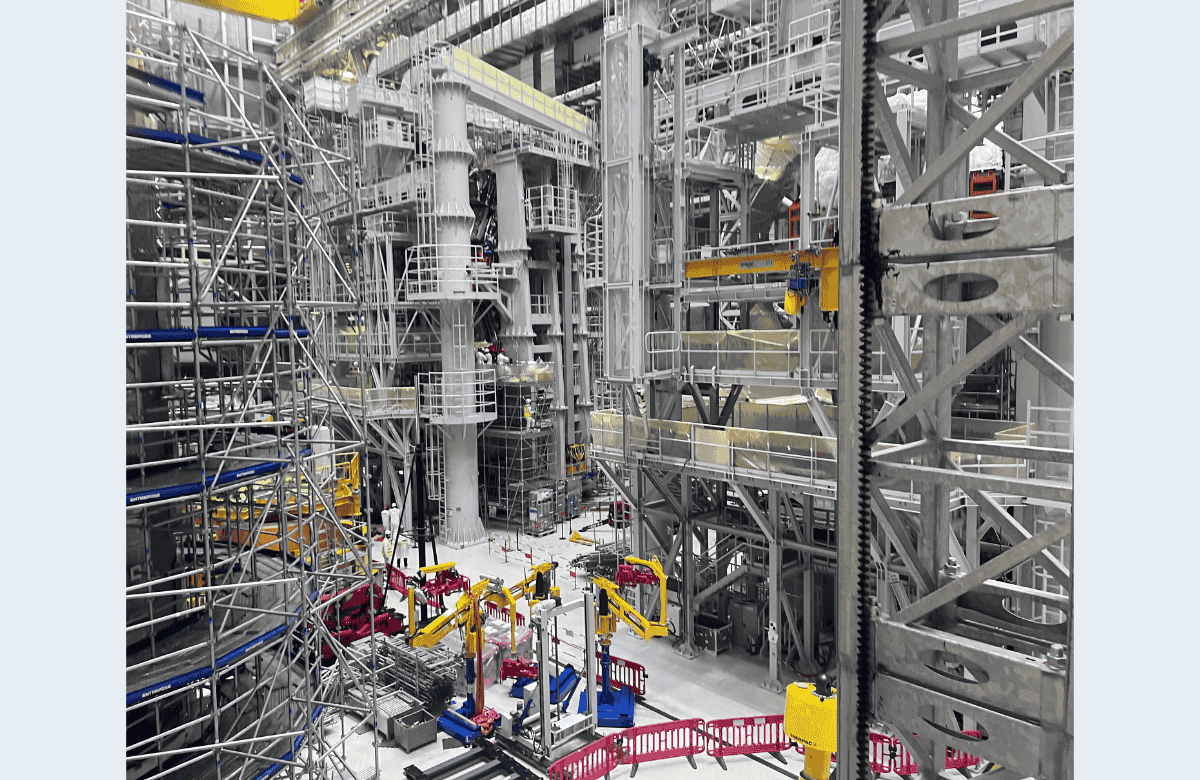

Innovative businesses in Marseille and Provence
“Among the several organizations we visited, one stood out as truly remarkable – the International Tokamak Experimental Reactor (ITER) Project,” said Yoana Boyanova. ITER, meaning “The Way” in Latin, is an experimental nuclear reactor currently under construction, which could one day provide virtually limitless energy.
“Before the trip, I was unaware that such a large-scale international scientific collaboration was underway, aiming to replicate the process that powers our Sun and stars,” added Boyanova.
Vasilena Petrova, EMBA student and Marketing Manager at LD GmbH, described the visit as “a glimpse into science, the future, and truly a once-in-a-lifetime experience”.
Another typical for the region business the cohort explored is Château de la Roque Forcade.
“Each visit was interesting and informative, but I was particularly inspired by Château de la Roque Forcade, which was my assigned company,” Thierry Feres said. “The experience offered a close look at how tradition and innovation can coexist in the wine and hospitality sector.”
“The idea is not just to visit any winery,” explained Dr. Karpouzanov, “but to find one that produces wine in a respectful to the regional traditions and the endemic varieties of grape and tastes that are associated with Provence way,” said Dr. Karpouzanov. What students learned from this visit was how such a business can survive in a very competitive market.
“A key takeaway for me was that regardless of the industry – whether it involves ship repair, energy research, or wine production – the most successful organizations share a common foundation: they are human-centric and sustainability-driven,” shared Yoana Boyanova.
“To remain relevant and impactful, businesses must create value not only for shareholders but also for people and the planet.”
For Thierry Feres, the experience had a lasting personal impact: “This trip inspired me to launch my own company focused on importing high-quality ‘Made in France’ products that are not yet available in Bulgaria. This collaboartion with French producers reinforces my belief in the potential of cross-border partnerships.”
Learning through real-world insight
While the visits are curated by Dr. Karpouzanov, how each meeting unfolds is up to the team responsible for it. They prepare company briefs, which are distributed among the cohort, as well as questions and discussion topics. At the end of every visit, they submit reports assessed by the faculty member who organized the trip.
“Ideally, I invite students to view every organization through a particular viewpoint,” said Dr. Karpouzanov. “But it’s not always easy to find one such clear point of analysis.”
As Polina Ekzekieva said, “That trip really opened up my view on leading businesses and teaming up across borders. I watched how different groups handle environmental issues, regulatory frameworks, and new technologies.”
Networking and community reinforced
Another key component of the business trip are the networking opportunities it fosters with both new contacts and within the cohort.
“Getting to chat more directly with my coworkers and the program leaders meant a lot to me,” said Polina Ezekieva. “The relaxed vibe let us share real stories and views. Things like that just do not come up in a straight classroom setup.”
Among the culturally rich ambience of Marseille, Vasilena Petrova shared that “it was a wonderful team-building experience, full of memorable, light-hearted moments that strengthened our friendships during shared walks and dinners”.
To conclude, Polina Ezekieva reflected that the business trip “became a key piece of what the whole EMBA journey feels like. Our group gained a stronger sense of being connected as a cohort.”
The EMBA team is already planning the next destination for the upcoming cohort, so if you want to experience world-class executive business education that goes beyond the classroom, learn more about how to apply or get in touch directly with the Executive MBA team.