For decades, aspiring entrepreneurs lived with the assumption that if they wanted to build the next great thing, they needed to be in Silicon Valley. Founder, mentor, and Stanford lecturer Bret Waters shared a new perspective: entrepreneurship can happen anywhere, especially in a country like Bulgaria, which offers fertile ground for innovation.
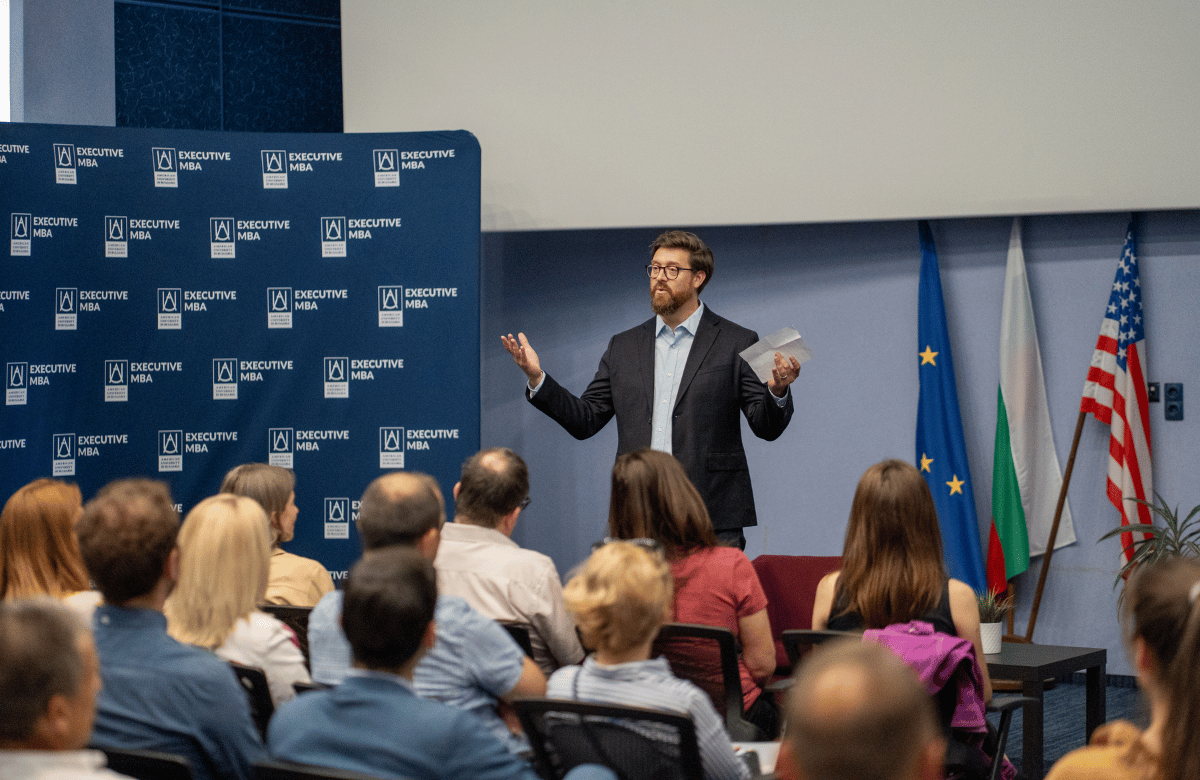
Speaking at AUBG as part of the EMBA Leadership Talk series and a workshop on corporate innovation, Waters shared an optimistic message: we are living through one of the most exciting periods for innovation in modern history.
“There’s probably more opportunity right now than I’ve ever seen in my entire life,” he said.
Bret Waters has lived in Silicon Valley his entire life. He teaches entrepreneurship at Stanford University, serves as an Executive Mentor at the Miller Center for Global Impact, and provides private coaching to startup founders. Drawing on decades of entrepreneurial and mentorship experience, he shared the story of innovation through the history of Silicon Valley, while also offering a glimpse into where entrepreneurship is headed next.

The curious case of Silicon Valley
“People often ask me how Silicon Valley happened. To me, it distils down to one thing: a culture of reinvestment.”
People often associate Silicon Valley with groundbreaking technologies, but Waters took the audience much further back. He traced its origins to the Gold Rush of 1849, when people from around the world traveled to California in search of opportunity.
“It happened when Jane and Leland Stanford decided to take the fortune they had made as entrepreneurs and create a new university in memory of their son,” Waters explained. The purpose of the university, as Waters put it, was to teach students “useful things” they could apply in the real world.
It then continued when Stanford engineering dean Fred Terman encouraged graduates to stay in California and start companies of their own, even investing in some of his students. Former employees left established companies to launch new ventures such as Intel, while early venture capitalists backed promising entrepreneurs and researchers. Over generations, successful founders reinvested their knowledge, networks, and capital into the next generation of innovators.
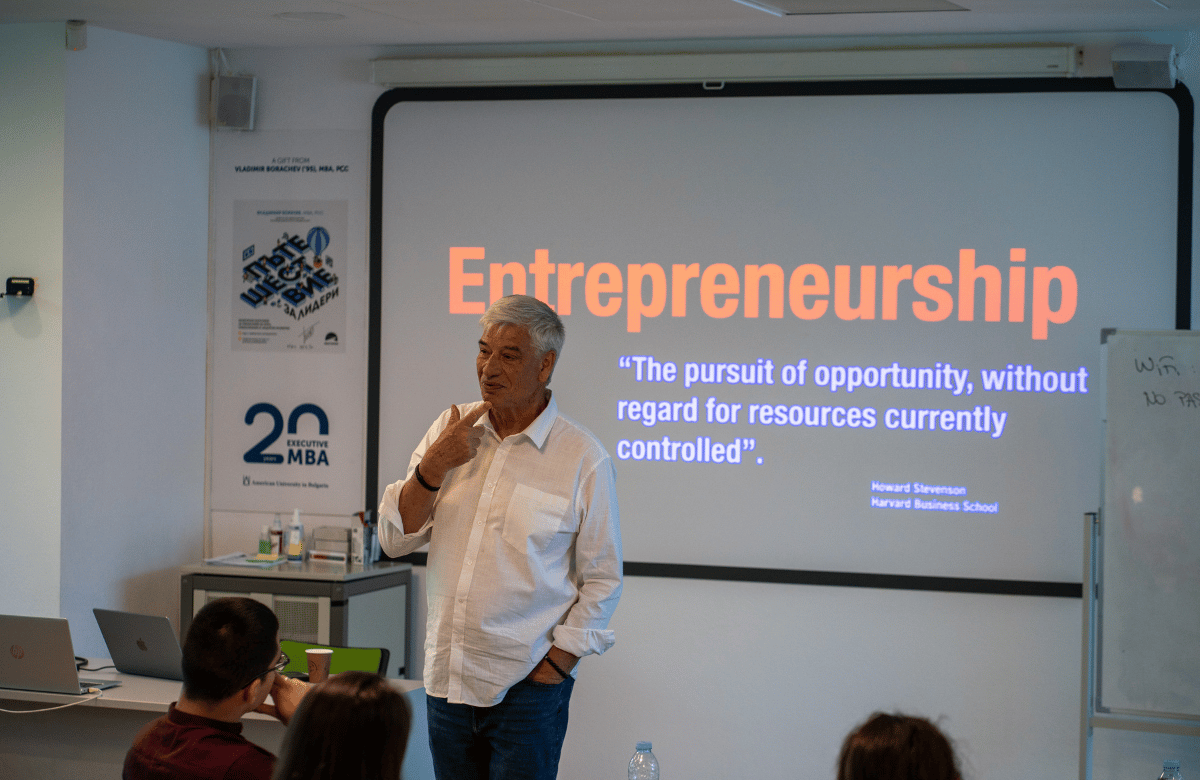
Citing Harvard Business School professor Howard Stevenson, Waters described entrepreneurship as “the pursuit of opportunity without regard to resources currently controlled.” Entrepreneurs do not wait until they have all the money, expertise, or connections they need. They identify opportunities and then find a way to assemble the resources required to pursue them.
Waters’ experience with Silicon Valley and the lessons he has learned became the blueprint for understanding what today’s ecosystem of innovation looks like and what it needs.
The entrepreneurs who built Silicon Valley did not have perfect conditions. They succeeded because they were willing to pursue opportunities despite uncertainty, take risks, learn from failure, and continuously invest in the people and ideas around them. They built that ecosystem from a valley that was largely undeveloped before the arrival of the “49ers,” as Waters calls the entrepreneurs who flocked to California during the Gold Rush of 1849.


The ripe moment for innovation
The same principles apply today, but with one important difference. Previous decades were often defined by a single major wave of innovation at a time, whether semiconductors, personal computers, the internet, or mobile devices. Today, multiple transformative waves are happening at the same time, creating unprecedented opportunities for technological visionaries.
“Right now, there’s like four or five or six different waves going on at the same time,” Waters explained. “AI is kind of the main one everybody’s talking about, but also medical technology, climate technology, agricultural technology, autonomous vehicles. Each one of these is a trillion-dollar opportunity on its own, and they’re all happening at once.”
Artificial intelligence is helping level the playing field. Tools that once required large teams and significant investment are becoming accessible to individual entrepreneurs and small startups.
“The speed with which you can build a software product today is just dramatically changing,” Waters said during his lecture. “One person can build a software application today that would have taken 100 people to build just 10 years ago.”
However, Waters argued that success today requires more than technology. Companies need to shift their mindset and focus on what truly differentiates them. For decades, many startups viewed technology as their primary competitive advantage, or what entrepreneurs often call a “moat.” Today, however, technological advantages are becoming increasingly difficult to sustain, as products and services can be replicated faster and at a fraction of the cost than ever before.
“We’ve been through decades where the assumption was that our technology was our moat,” Waters explained. “Today, I think you need to not think of your technology as being your moat.”
Instead, he argued that successful companies must build competitive advantages through customer relationships, unique distribution channels, data, communities, and trust.
What this means for Bulgaria
As a result of the concoction of the speed and accessibility of technology, innovation is increasingly emerging from places that were previously considered outside the traditional technology centers. Waters pointed to ecosystems such as Tel Aviv, Austin, and Estonia as examples of regions that have built thriving startup cultures outside Silicon Valley.
Despite its relatively small population, Bulgaria has many of the ingredients needed to participate in the next wave of innovation: strong technical talent, growing entrepreneurial communities, internationally educated professionals, and an increasing number of people gaining experience in global markets.
He believes that rather than entrepreneurs relocating to Silicon Valley, investors are increasingly seeking opportunities wherever talented founders are building innovative solutions.
“The talent is where it is, and the capital will find you,” said Waters.
Success is no longer dependent on proximity to California. Instead, local entrepreneurs have the opportunity to build solutions rooted in local challenges, industries, and communities while competing on a global stage.
“For twenty or thirty years, countries used software designed in Silicon Valley. Today, an entrepreneur in Bulgaria can develop a revolutionary new software platform specifically for Bulgaria.”
As Waters concluded, the next innovation hub can be anywhere. Bulgaria is already on its way.
The event was part of the AUBG Leadership Talks series and the wider Bret Waters in Bulgaria program. It was organized by the AUBG Executive MBA team in collaboration with the Stanford Club of Bulgaria, represented by alumna Sofia Toteva (EMBA ’11), with BESCO – The Bulgarian Entrepreneurial Association as communication partner.
We are also grateful to our sponsors for helping bring this event to life:
- Gold Sponsors: Accenture Bulgaria, Megapark Office Complex, Management Financial Group
- Silver Sponsor: Anonymous
- Bronze Sponsor: Sopharma