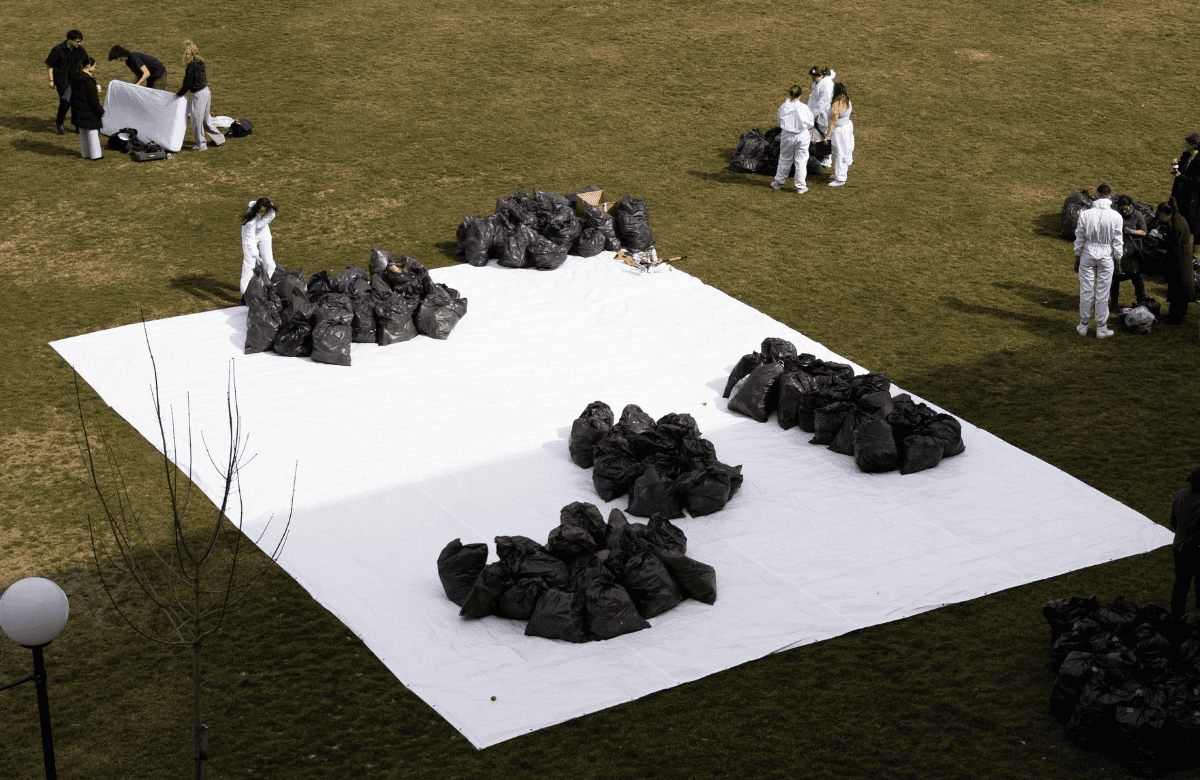
The first-ever Pilot Waste Audit (PWA) on the AUBG campus brought together people who take the longevity of our planet at heart. These are people both from AUBG and from the wider community.
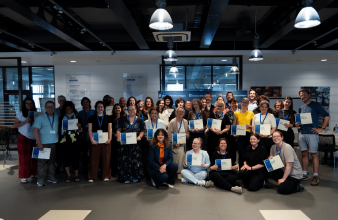
On February 26-27, AUBG student, faculty, and staff volunteers were joined by the Blagoevgrad Municipality, local high school students, and experts from the Environmental Association Za Zemiata in the AUBG Pilot Waste Audit.
“Both Professor Winton and I are incredibly grateful for the support we have received from across AUBG and beyond,” said Aelita Khusnutdinova (‘24), Presidential Fellow for Sustainability at AUBG and a co-organizer of the PWA.
The two-day event is a key part of the university’s Campus Sustainability Plan, and its aim is to establish a baseline understanding of current waste generation and management practices on campus.
“As the saying goes, you can’t reduce it if you don’t measure it,” said Professor Ezra Winton, co-organizer of the PWA and a key figure in AUBG’s sustainability development. “Our PWA was the first in a longer process of measuring AUBG’s ecological footprint so that we can become the sustainable campus the vast majority hope for.”
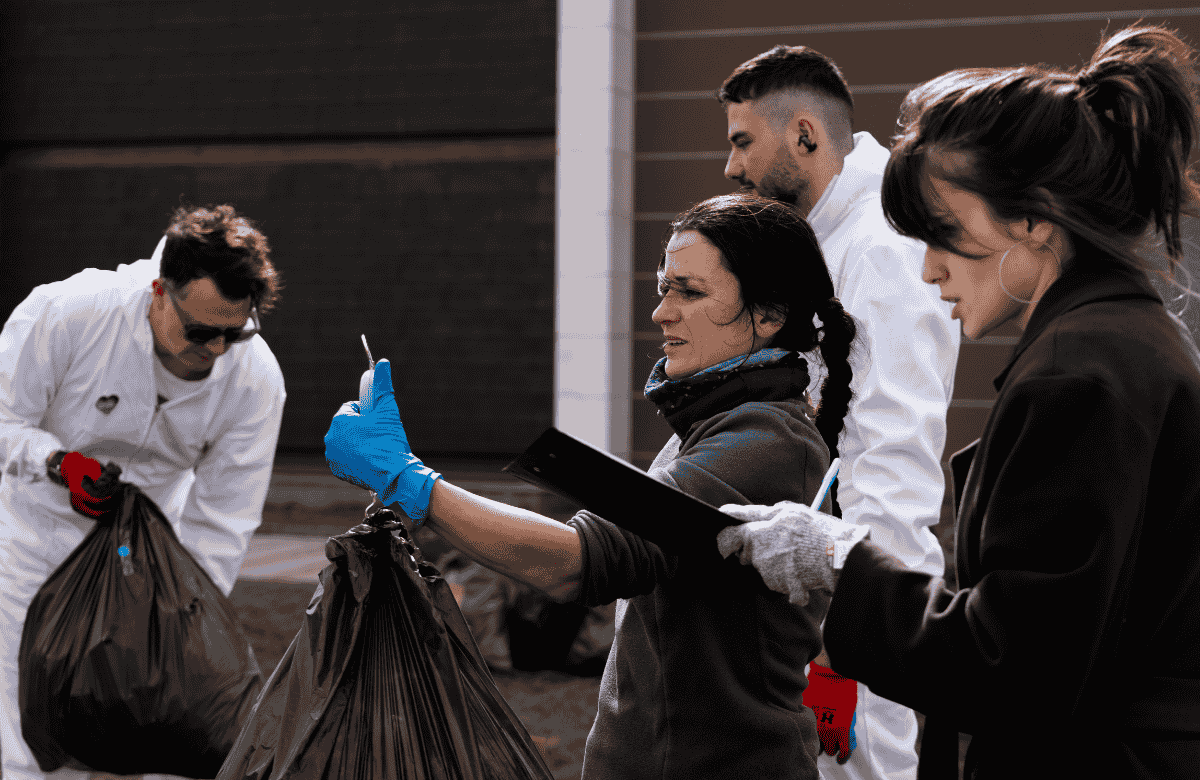
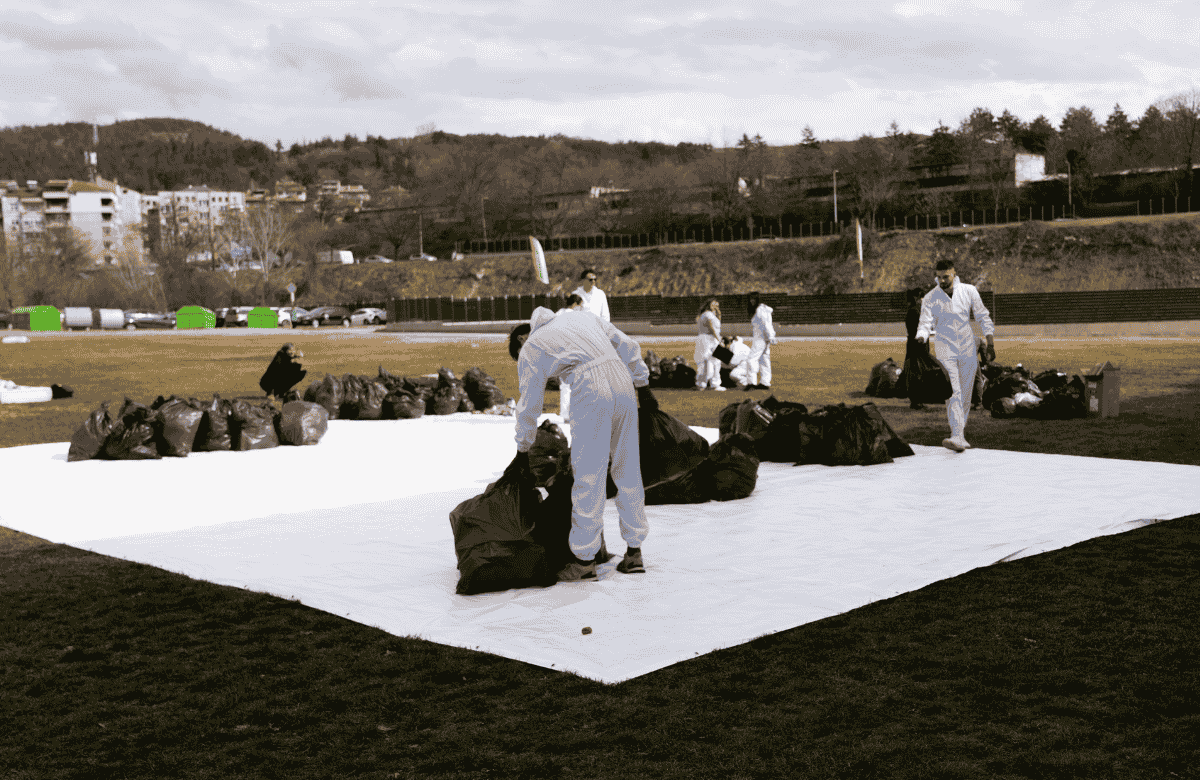
Two days of sorting out waste and discoveries
The idea for the waste audit builds on a long-standing global tradition of campus sustainability assessments.
“I brought the idea from Canada. When I was an undergraduate at Concordia University 20 years ago, my institution did a waste audit,” said Professor Winton. “In September 2024, I invited my former university colleague, Geneva Guerin, to AUBG. She led workshops on how to conduct such an assessment, with the waste audit being the first step.”
During the audit, volunteers were equipped with protective gear and guided by Za Zemiata, an environmental NGO dedicated to protecting and restoring ecosystems.
Evgeniya Tasheva (‘01), an AUBG alumna and Project Coordinator at Za Zemiata, shared how meaningful this initiative was to her:
“My passion for waste management actually started here more than 20 years ago, when the student eco-club TERRA was organizing waste separation on campus. That’s why I’m so happy that I can now be part of this growing energy for change. I see real potential for positive change at the university.”
Mimi Manova, a 12th-grade student from the National Humanitarian High School “St. St. Cyril and Methodius,” joined the audit to gain early insight into waste and recycling.
“We hope Bulgaria will become a cleaner and more pleasant place to live, with more events where young people can learn and participate,” she said.

Key findings
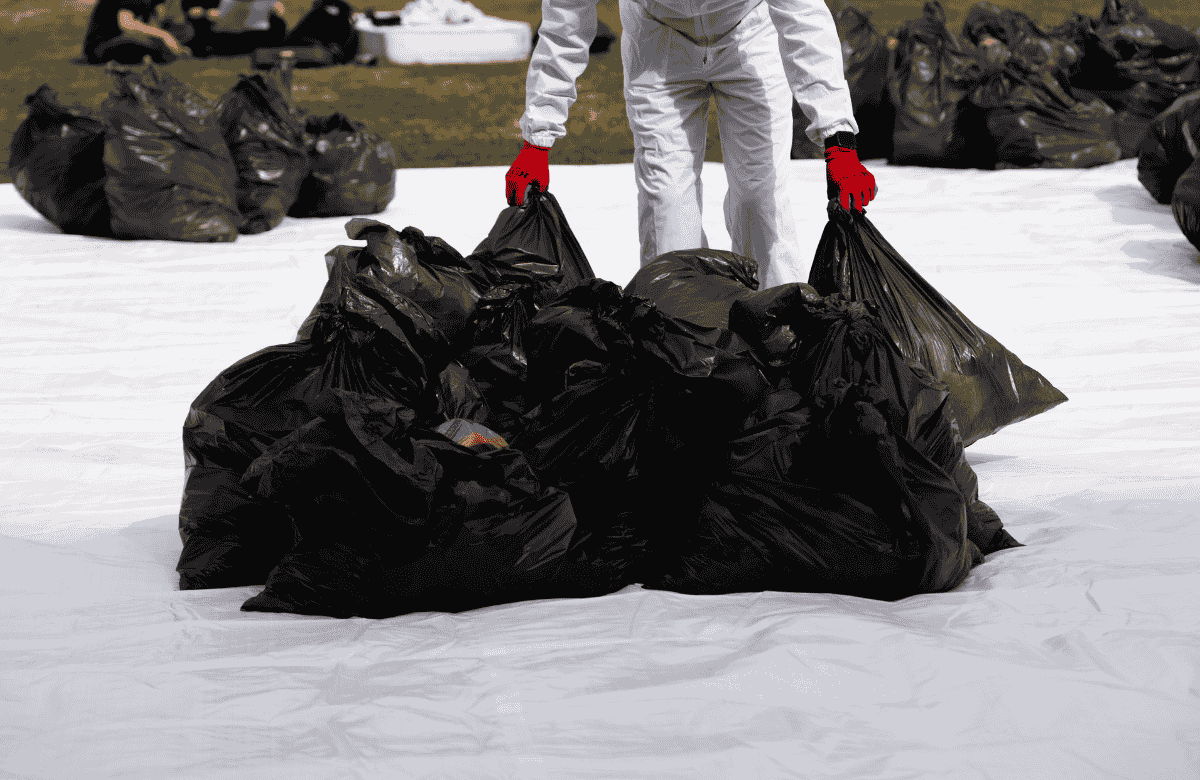
Over two days, volunteers weighed, sorted, and analyzed a sample of waste collected in a single day across campus.
“We’re not doing a full waste audit; we’re only taking a sample, which is why we’re calling it a pilot,” said Professor Ezra Winton. “It’s our first attempt, and the goal is to learn from this and do a larger audit in the future, maybe collecting three days’ worth of garbage.”
In total, 192 trash bags were gathered, weighing 461.5 kg. From this, 83 bags – around 35% of the total waste, weighing 161 kg – were selected for detailed sorting and analysis. The results offer the first clear insight into our campus’s waste habits.
Food and packaging dominate the waste pile
It turns out that 42% of the sampled waste (67.85 kg) was made up of food waste and compostable cardboard or paper packaging. Another 42.87% (69.02 kg) was packaging waste, including paper, cardboard, glass, metal, and various plastics. The majority of this packaging is recyclable or compostable in Bulgaria, meaning that there are ample ways to be more sustainable on campus.
Hundreds of bottles and cans disposed of in a day
One of the most striking statistics was the volume of single-use items discarded in just one day: over 700 plastic bottles, 500 metal cans, and 250 non-recyclable paper cups with plastic lining.
These items might be convenient, but they come at a major environmental cost. The audit clearly shows that reducing single-use plastics and encouraging reusable alternatives needs to be a top priority.
ABF generates the most waste on campus
The ABF Student Center emerged as the largest contributor to the campus waste pile, producing a sample of 85.7 kg – 39% of all waste collected, more than any other building.
Skapto I followed closely, generating 82 kg of waste – 33% of the total – while Main Building accounted for 28% with 79.4 kg. This breakdown shows that communal and residential buildings are key targets for future waste reduction efforts.
Surpassing the global average in plastic and glass waste
Compared to global averages, AUBG generates a significantly higher proportion of plastic and glass waste – 22% vs. 12% for plastic, and 10% vs. 5% for glass. Considering only 9% of plastic waste is recycled globally, this is a call to action for the entire campus.
An estimated 54.52 kilograms of waste per person per year
If we go by these findings, the total potential waste generation on campus could reach 85,544 kilograms per year, with each member of the AUBG community producing an estimated 54.52 kilograms of waste annually.
Strength in numbers
Alongside insights about the waste we produce on campus, the PWA told the story of the power of community – a very impactful one. The initiative was made possible thanks to funding from the Provost’s Office and the efforts of student, staff, and faculty volunteers. Environmental Association Za Zemiata provided essential guidance throughout the audit, while the Municipality of Blagoevgrad supported the event with waste storage containers.
“There will always be people willing to help. Before the event, we weren’t sure if we would have enough volunteers, but students, faculty, staff, and local community members showed up, worked hard, and had fun while contributing to a meaningful sustainability initiative,” said Aelita Khusnutdinova.
“For any other institution considering a similar project, I would encourage them to trust in their community – the support will come,” she added.
Next steps
While the results might seem concerning, they serve as a learning opportunity to take steps in a positive direction.
“Hopefully, next year, the amount of waste we produce will be down by maybe 10% and then 10% more the following year. And then we can have benchmarks,” said Professor Daniel Adsett, who volunteered during the PWA.
To tackle these challenges, Green AUBG has outlined several key recommendations: introducing bins for compost, mixed recycling, glass, and general waste; launching a campus-wide waste education campaign; conducting annual audits to monitor progress; and taking targeted action to reduce single-use plastic bottles and cups.
“The long-term goal is to establish the waste audit as a regular practice and integrate it into AUBG’s Campus Sustainability Assessment,” concluded Aelita.