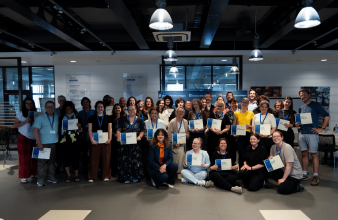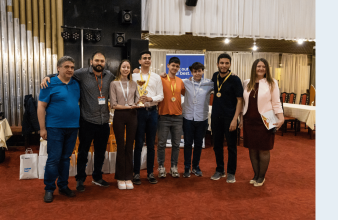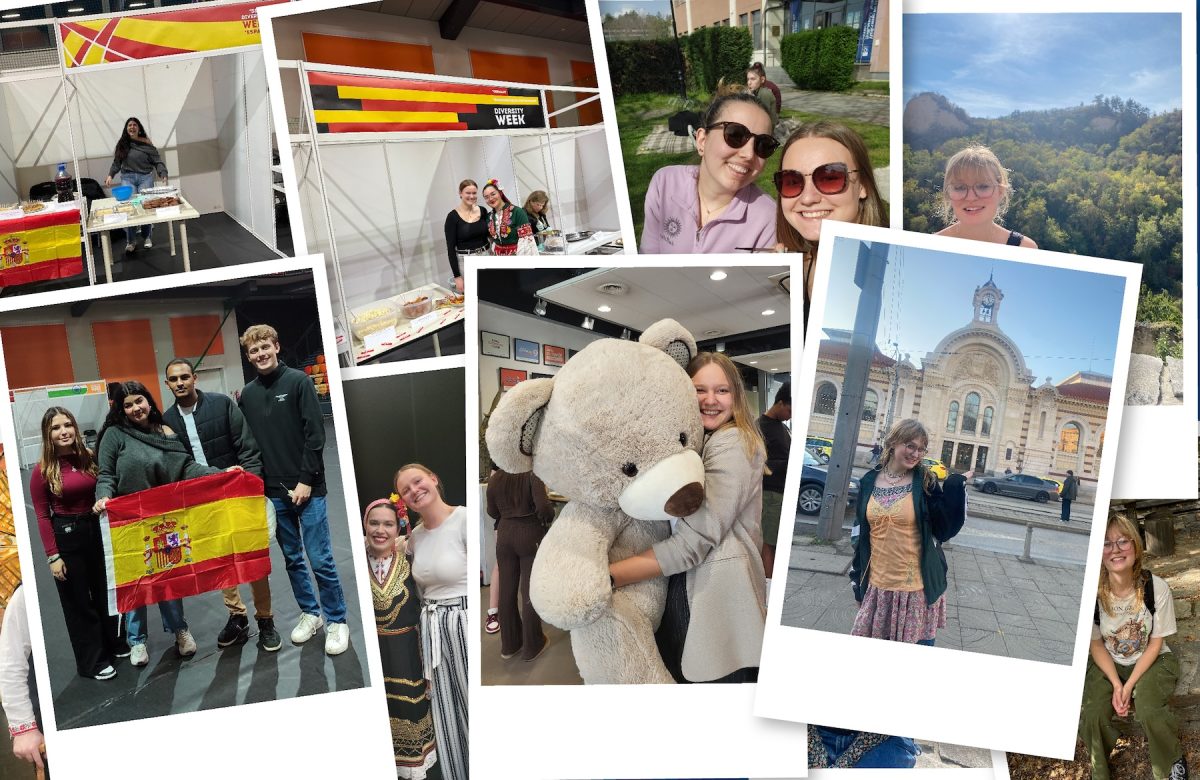
For three exchange students, studying abroad at AUBG has been an eye-opening experience. From surprising culture shocks to building lifelong friendships, Celia, Avery, and Julia have fully embraced life at AUBG. With passion and a hint of forthcoming nostalgia, they share what makes their journeys special and how AUBG stands out from their home universities.
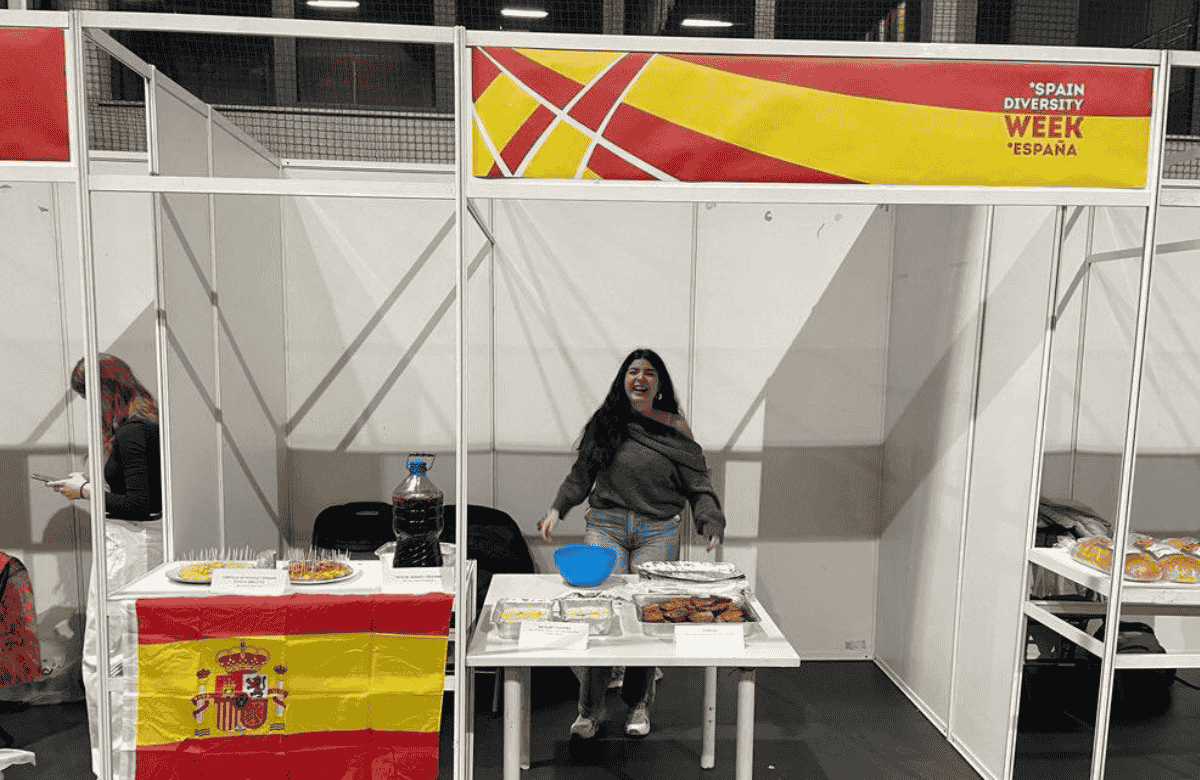
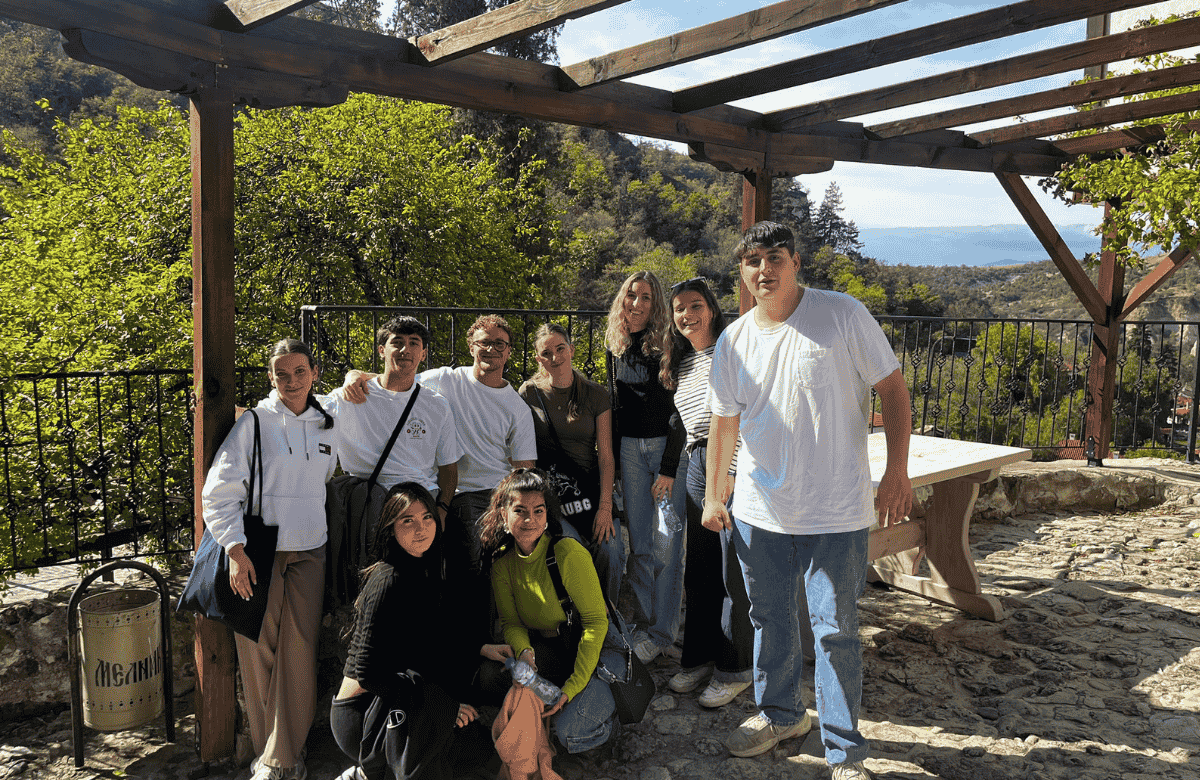
Celia Castillejo Crespo: from Spain to Skapto
Celia Castillejo Crespo came to AUBG from Complutense University of Madrid to experience what it’s like to study Journalism and Mass Communication at an American-style university. Originally planning to stay just one semester, she quickly fell in love with AUBG and decided to extend her stay for the full academic year.
Choosing where to go on exchange wasn’t easy, but AUBG’s liberal arts model intrigued her.
What stood out most to Celia was the quality of education: “The professors at AUBG are on such a high level. You can tell they really love what they teach,” she says.
Among her favorite courses are Visual Communication and Sound Editing with Professor Jason Murphy, thanks to their hands-on, practical nature.
“There’s so much more focus on practice here. At my home university, professors mostly use PowerPoints. Here, it’s much more dynamic,” Celia adds.
She quickly found her place within AUBG’s international micro-communities. “I have friends from Georgia, Ethiopia, Albania… It’s great because you connect with so many different cultures and people. I’ve even travelled with them to Macedonia, Albania, Istanbul, and Thessaloniki,” she says.
Some of her favorite events include the Dance and Taste Fest, where she represented Spain, as well as the AUBG musical ‘Cry Baby’, Spring Fest, and the Christmas Ball.
Celia also appreciates life in Blagoevgrad. “It’s a great student city. You can walk everywhere, there are lots of cafes and places to eat, and the nightlife is fun. It’s also close to Sofia, which is a really nice city too,” she says.
One cultural difference that surprised her? “The silence,” she laughs. “In Spain, we’re loud, even in small towns. In Blagoevgrad, people are more reserved. But I think it’s good to experience that contrast.”
Reflecting on her time here, Celia says: “At first, when you see the name and the place, it can be a bit scary. You might think, ‘Where am I going?’ But my advice is – don’t just stick with the Erasmus group. Be open to the whole university community. Talk to people from your classes, from Skapto, from everywhere. Don’t close yourself off.”
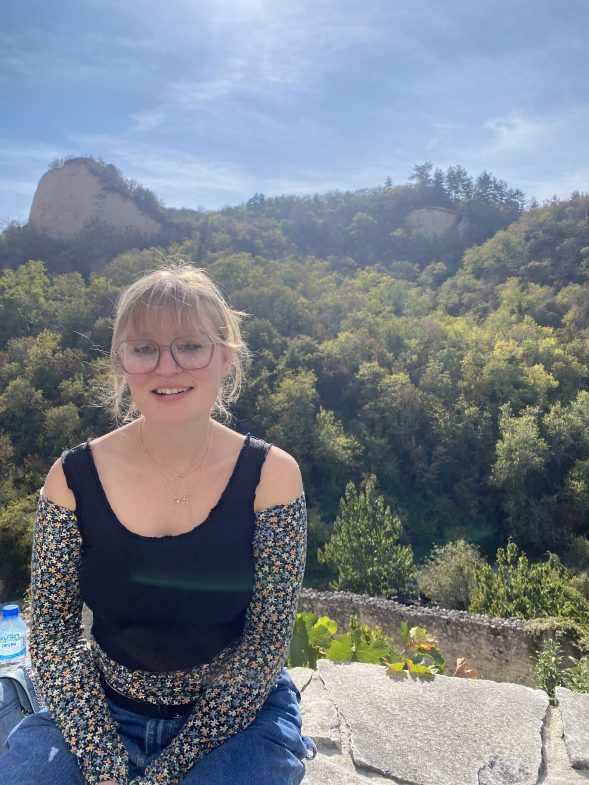
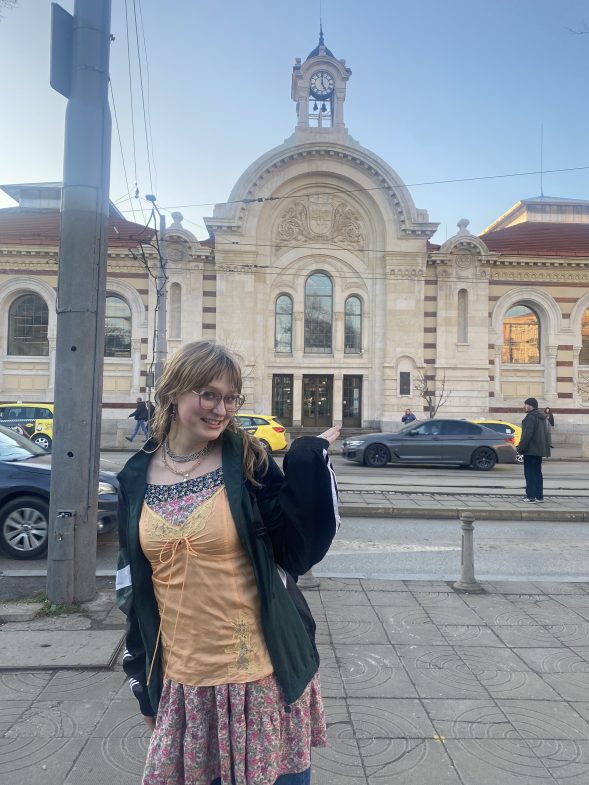
Avery Preston-Schreck sees psychology through a new lens
Avery Preston-Schreck, a Psychology student from The University of Maine, came to Bulgaria to gain a fresh perspective on her field, and she got exactly that.
The exchange was smooth, thanks to the established partnership between the two universities, allowing Avery to transfer her credits with ease.
With both Bulgarian and international faculty, she found her academic experience enriched by diverse teaching approaches.
“I’m very grateful for the different cultural perspective on psychology. It’s been eye-opening,” says Avery.
She explains that the American approach to psychology, widespread in many global universities, is highly individualistic. “But it doesn’t correspond with real life,” she says.
“In Bulgaria, it’s more community-based. There’s a stronger emphasis on interpersonal relationships, both in the course material and in the general atmosphere. It’s refreshing to be in a less individualistic place.”
Avery also appreciated the smaller class sizes. “At UMaine, some classes are huge. Here, you get more time with your professors. I really prefer the personalized approach.”
She came to Bulgaria completely on her own and had to learn the culture without initial guidance. “It sounds like Bulgarian, or Balkan culture in general, is quite different from the rest of Europe,” she says.
She’s now taking Bulgarian language and culture classes, loves bean stew (bob chorba), and has recently discovered the scenic walking path to Bachinovo.
Although integration into the local culture was a challenge at first, Avery felt warmly welcomed by the AUBG community. From Orientation Week and club events to field trips around Bulgaria, she has made new friends and learned a lot about the country.
Her favorite spots? “I love sitting in the City Garden on the way to Main Building, and I really enjoy walking through the neighborhood across the river from campus.”
Her advice to future exchange students: “Explore the city as much as possible and get involved in the AUBG community.”
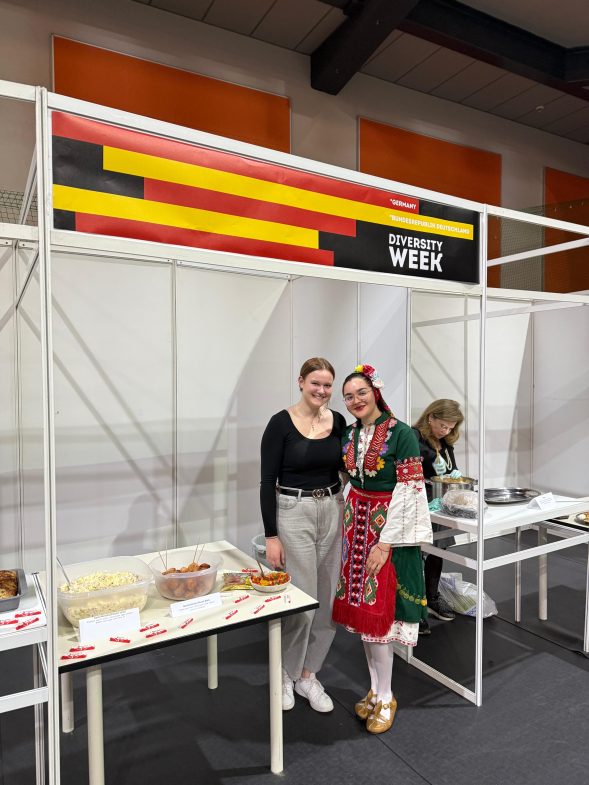
Julia Reineke: mixing math, music, and a bit of adventure
Pursuing a challenging degree in Financial Mathematics, Julia Reineke from the University of Konstanz, Germany, decided to step out of her comfort zone and come to AUBG. Like Celia, she planned to stay one semester but ended up extending it to a full year.
“I was really drawn to the small class sizes at AUBG,” says Julia. “And I wanted to live in a dorm because I live alone in Konstanz. I wanted to experience real college life.”
Despite what she had been told before arriving, Julia found Bulgarian people to be warm and helpful. “At the market, even though I couldn’t speak the language, people were incredibly kind and even helped show me around.”
The only downside? Some groceries she’s used to aren’t always available. But aside from that, she’s had a very positive exchange experience. “I really like the campus and the buildings,” she says. “It’s really green and looks nice.”
What really stood out to Julia was the relaxed atmosphere on campus. “People here are more chilled about everything. It’s easy to get involved in the university ecosystem. In Germany, becoming part of a community takes more effort.”
Though transferring credits hasn’t been entirely smooth, she’s making the most of it by choosing classes that interest her, such as website development, sound editing, harp, and piano.
She’s also noticed a different attitude from professors. “Here, they really care whether you learn something or not. They’re very invested in your success. I don’t always feel that in Germany.” One professor who’s made a strong impression is Professor Didar Erdinc, who teaches Economics.
Similar to Avery’s new take on psychology, Julia found that Bulgaria offers a different approach to teaching math. “In Germany, we learn all the theoretical background and proofs first, but we don’t really learn how to apply it. Here, it’s the opposite. It feels more useful this way.”
She’s also found that AUBG’s liberal arts structure makes it easier to meet people. “I take both JMC and Math classes, so I meet students from different majors. In Germany, everything is separated. Here, it feels like one big community,” she says.
Her advice? “Be open to different kinds of experiences. That’s what makes studying abroad so rewarding,” Julia concludes.
If you wish to experience studying at AUBG for a semester or a year, read more on how to apply for an exchange program or get in touch with our Study Abroad Programs Office.