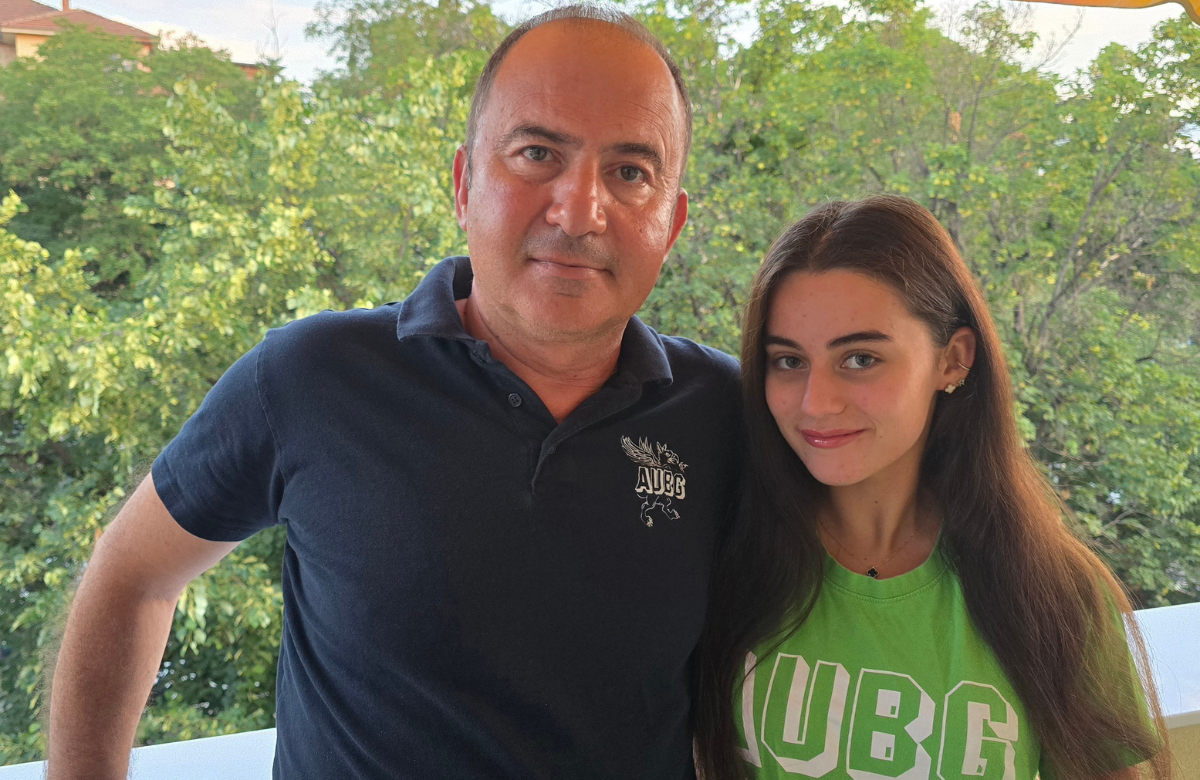
While in the army, doing his compulsory military service, one day in the summer of 1990, Dimitar Nachkov received a letter from his mother. She included a newspaper article about the opening of a new university called the American University in Bulgaria (AUBG). Coincidentally, a friend received the same article from his mother. Both students decided to apply, both were accepted, both graduated.
The friend is now a member of the Bulgaria parliament and Nachkov runs a successful IT company. They both credit the then new university with their success and remain deeply involved in ensuring AUBG’s success.
What is it with Bulgarian mothers and their newspaper clippings? “Education in Bulgaria is greatly revered,” observed Nachkov. “Every parent tries to help their kids. They bring the mountain to Mohammed, so to speak.” Grateful for the arrival of the mountain, he and his friend went to a mountain retreat where they studied for the entrance exams.
Private pacifist
Before then and after finishing at the English Language High School in Plovdiv, in the fall of 1989, he went into the army, which at the time was obligatory for young men. “It was a year of big changes for the country and region. The dictatorship of more than 40 years ended. The Berlin Wall fell. In the army I couldn’t enjoy the celebrations. A pacifist at heart, every Sunday when I had the chance to leave, I’d go to Sofia where I’d attend meetings and soak up some of the excitement of freedom.”
His high school remains among the best in the country. “Even in socialist times, it was hard to get into. The elites wanted their kids to go to foreign high schools including French and German. They knew it was a ticket to a better life.”
He started at AUBG in 1991 as a member of the first class. There was no formal business education available in the Bulgarian higher education at the time.
“I wanted to study business, and for a while it was confusing what to do. Liberal arts was the focus. This was 90 percent new to me. I didn’t know it then, but we were changing systems for the better. A lot changed in a short time.”
More than one right answer
“We were introduced to the importance of hearing and understanding views opposite from our own. Our history until then was that there’s only one way of thinking that’s right. Everything else is wrong. The new way was trying to understand what goes on behind the process and to consider a different process. This was the special sauce at AUBG.”
And it was served over everything, including the business courses, which he devoured, and later joined the first class of EMBA students at AUBG. “I became a general manager at the age of 28. It was a socialist company before privatization. We did pharmaceutical distribution. When I started, managers didn’t question anything. They were used to getting orders and obeying them. I enforced the idea that business decisions should be made by everybody. It took time, but the team was young and ready to work and think differently.”
Later on, he spent nine months in the U.S. working at a small accounting company in Delaware. “I love the country and so I made lots of friends. Now I’m the executive director of Prime Holdings. We provide software development and consulting. We are part of the consortium Wiser Technology Solutions, which employs 800 people, including 700 developers, from Bulgaria, Serbia, Greece, Armenia, and elsewhere.”
His clients are mainly involved in fintech and AI. He said AI eliminates the boring part of computer coding, allowing developers to spend time as project architects and managers with strong tech backgrounds. “We ask what’s the problem you’re trying to solve with technology? The business is profitable, but we have to pay the developers really high salaries.”
What about AI integration? “Not in the near future. AI will replace some types of work but will create others. Technology change has always generated fear—weaving machines in the 19th century, computers in more recent history.”
Regarding the potential for disruption and disaster, he advises not to lose our humanity. “The important thing is to read widely, especially fiction. How other people interpret what it’s like to be a human being and the experiences we all share. Growing up we had one TV channel, so we read books. That’s not the case with my daughter and her generation.” His daughter is a rising sophomore at AUBG, but she didn’t get a newspaper clipping from her dad.
“I gave my daughter a speech on 21st-century thinking skills: base decisions on accurate information. Check your sources and make sure they are credible. It is easy to brainwash people. We need to make it harder. Many people lack the knowledge to discern information.”
She’s getting the education he got, full of books, critical thinking, and democratic sensibilities.
“This is AUBG’s sweet spot. Great, diverse literature will be assigned by your professors. You can’t avoid it, and you shouldn’t. You’ll be a better person and able to contribute to whatever society you are part of. Whether you’re in AI, Fintech, or teaching kids.”
Since Bulgaria is a country in flux, every AUBG graduate is an important part of it remaining free, open and democratic, he believes. “The great danger to Bulgaria and the region is Russia. We have a long history in Russia’s shadow, beginning after the end of the Ottoman Empire. Bulgaria gained its independence in 1878. Russia takes credit for our independence which is partly justified. Now Putin spends a fortune trying to keep us in their sphere of influence.”
There is no perfect place
“You shouldn’t think that Russia is all bad. It’s not. I have many Russian friends who are ashamed of what their government is doing, especially the war against Ukraine. They are afraid to speak out. One day, things will change, hopefully for the better. Meanwhile, there is no perfect place, including the U.S. But we can and must make our own places better.”
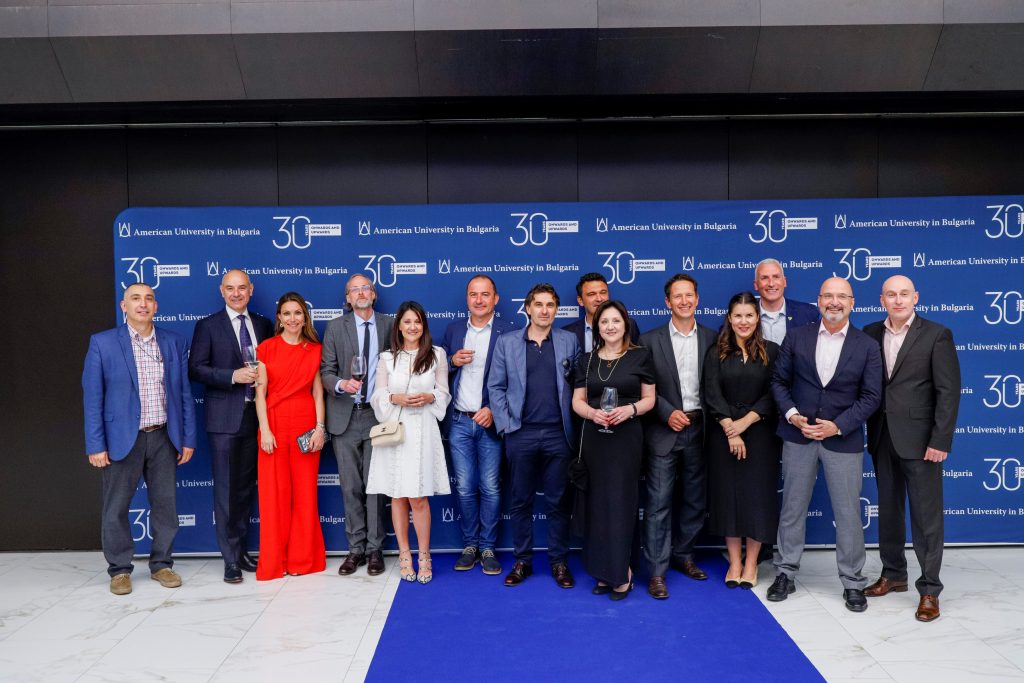
This informal perfect place project is supported by a tight group of alums who are very passionate about protecting the welfare of AUBG, a key player in the effort to build stability and future prosperity. He calls it responsible activism. “We donate money but we are also ready to act with our energy and connections, if the institution is threatened as it has been on a few occasions in the past. We can and will act fast.”
He and his group of alums feel that things are going well now, citing new dorm construction, record enrollment, external fundraising and the Center for Information, Democracy and Citizenship which among other important work monitors disinformation in the region.
“We have come a long way in a short time. But we can’t become complacent. We have a lot of work to do.”