Trump’s victory has caused mixed reactions across the globe. At AUBG, we strive to keep neutrality and to analyze the political landscape with thoughtful engagement, because we believe in the power of staying informed.
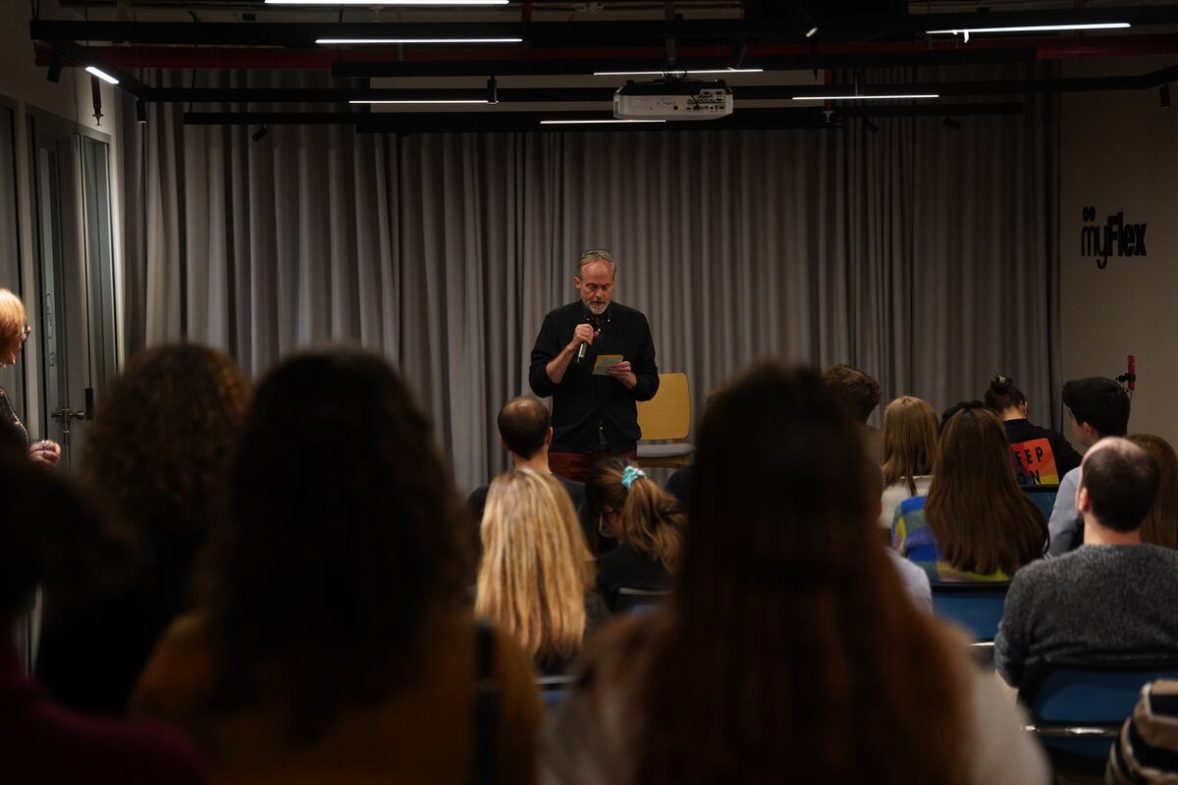
To delve into the implications of Trump’s victory, Professor Robert Phillips Jr., who is teaching international studies and politics at AUBG, hosted a thought-provoking discussion. Drawing on his extensive expertise, he explored three potential scenarios for the political landscape over the coming years.
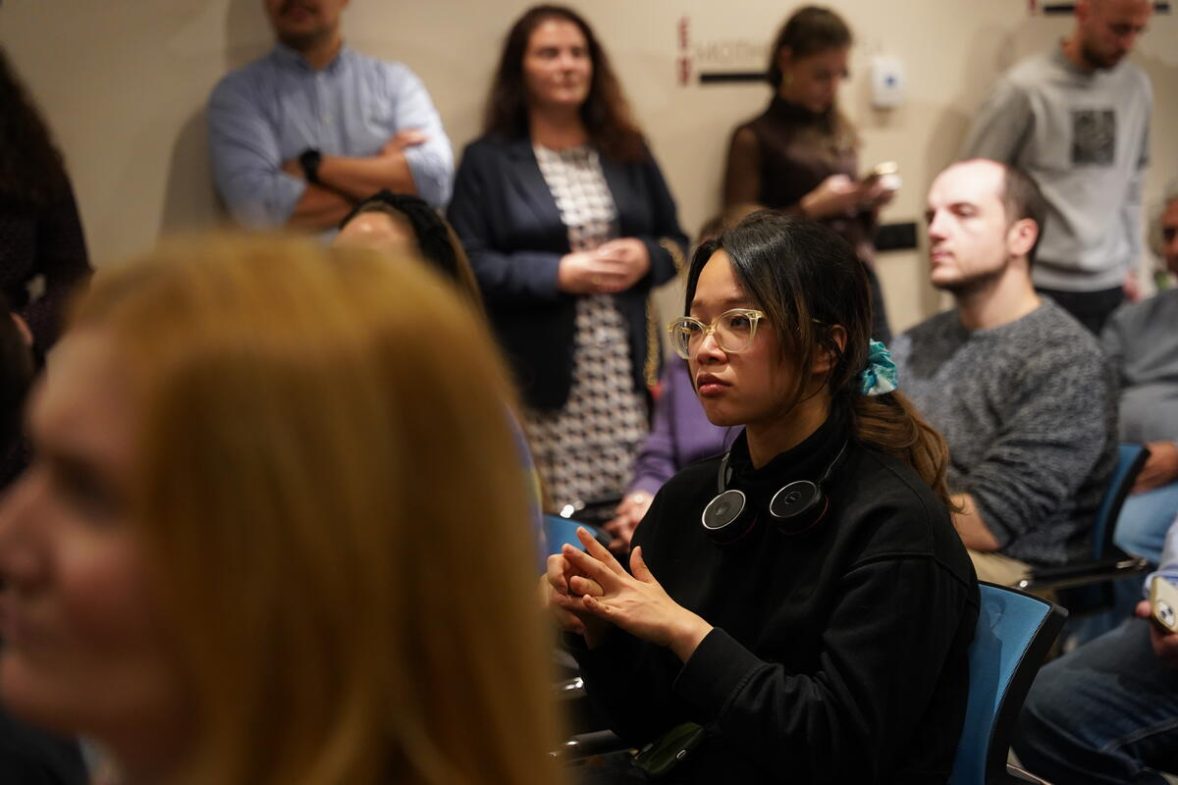
The event, hosted at MyFlex in Sofia on November 14, was organized exclusively for the AUBG Alumni Association. As expected, it drew a large and enthusiastic audience interested in hearing from Professor Phillips, who has been with AUBG since its founding in 1991. Here’s a breakdown of his thoughts.
A solid Trump victory
“This was a solid victory for Trump,” stated Professor Phillips, though not a landslide by historical standards. With a difference of less than 2% between the candidates, this outcome mirrors the narrow margins of the 2016 election, though it falls short of the broader 3.5% gap seen in 2020.
“While the outcome may not make everyone happy, it’s undeniably a clear result. Importantly, it’s good for the United States to have a relatively uncontested election, as it reinforces belief in the system and helps avoid potential crises like those following January 6.”
What makes this election particularly notable is the significantly lower voter turnout compared to previous cycles, with participation down by about 2.5%. This dip appears to have primarily affected the Democratic candidate, Kamala Harris, whose vote totals lagged behind Biden’s numbers from 2020.
Trump’s ability to secure victory without a substantial increase in his voter base speaks volumes about the dynamics of this race. Professor Phillips commented:
“It’s not that this is a huge turn in terms of Republicans; rather, the Democrats didn’t turn up in the same numbers as they did four years ago.”

The three faces of Trump’s second term
With Donald Trump’s re-election, there are endless speculations about what kind of presidency might unfold. While Trump remains notoriously unpredictable, Professor Phillips outlined three possible scenarios for Trump’s governance: “Happy Trump,” “Angry Trump,” and “Golfing Trump.” Each reflects a distinct tone and approach, with wide-ranging implications for domestic and international affairs.
1. Happy Trump
“Happy Trump” is the scenario many hope for. In this outcome, Trump is content with his victory, buoyed by what he perceives as a solid mandate. His sense of satisfaction might limit the scope of his retribution, focusing instead on narrower, more targeted actions. Professor Phillips noted:
“Happy Trump might feel validated enough to avoid widespread retribution, though we could still see efforts to weaponize institutions like the Justice Department for selective political goals.”
Policy decisions under this version of Trump would likely reflect his campaign promises but leave room for pragmatism. As Professor Phillips noted, Trump’s greatest strength is his ability to shape-shift:
“He listens to the room and knows when to pivot. While he might try to implement controversial policies, backlash could prompt course corrections.”
2. Angry Trump
This version of Trump aligns with the fiery rhetoric of his campaign trail, prioritizing vengeance against perceived adversaries.
Professor Phillips described this scenario as “full-out retribution, targeting those people he thinks have harmed him or discredited him in the past.”
This approach could trigger high-profile investigations, trials, and media spectacles as Trump seeks to consolidate power and settle scores. In Trump’s eyes, he is doing this because he has promised it to his people and because he can.
“This is him transforming America in a particular way,” Professor Phillips explained.
3. Golfing Trump
The bleakest scenario is “Golfing Trump”, where apathy leads the way.
In this outcome, Trump “is not interested in anything anymore”. Having already achieved his ultimate political victory, he becomes less engaged, whether due to health or lack of interest, and lets his people do whatever.
In this scenario, Professor Phillips added:
“We’re going to have people looking to be the next inheritor of the MAGA movement, constantly competing for influence with no one there to say, ‘Wait a minute.’ As I mentioned earlier, one of the things Trump does best is read rooms, and he knows when to stop.”

What this means for the Balkans and Bulgaria
The shifting U.S. political landscape, marked by the likely appointment of Senator Marco Rubio, suggests continuity in foreign policy. Though not fully aligned with the MAGA wing, Rubio supports Trump and favors NATO, indicating steady U.S. support for NATO and European integration in the Balkans, with no dramatic policy shifts expected.
For Bulgaria, the U.S. relationship is expected to stay stable, particularly in security and defense. However, reduced engagement at smaller posts may lead to retirements or transitions, with career diplomats adjusting staffing to align with the current administration’s priorities.
As Professor Phillips noted, “We are not going to see a full-scale reimagining of the situation unless directed by Trump.” This suggests the U.S. will continue supporting the region, but in a more selective, strategic manner aligned with what interests him.
How to navigate Trump’s second term
Each of these scenarios – whether defined by satisfaction, vindictiveness, or apathy -presents unique challenges and opportunities for the U.S. and its allies. As Professor Phillips remarked,
“The world, including Bulgaria and the Balkans, must wait to see which Trump takes center stage.”
The implications will ripple across institutions, alliances, and global investments.
At AUBG, we stay actively engaged with U.S. and global politics, and that’s reflected in our course curriculum. Our Political Science and European Studies program is one of our most popular majors, ranking second in the Bulgarian University Rankings.
By choosing AUBG, you become part of active discussions on global discourses, led by esteemed professors such as Robert Phillips Jr. Learn more about the Political Science major or explore the rest of our academic programs to find the bachelor’s degree that best suits your interests.