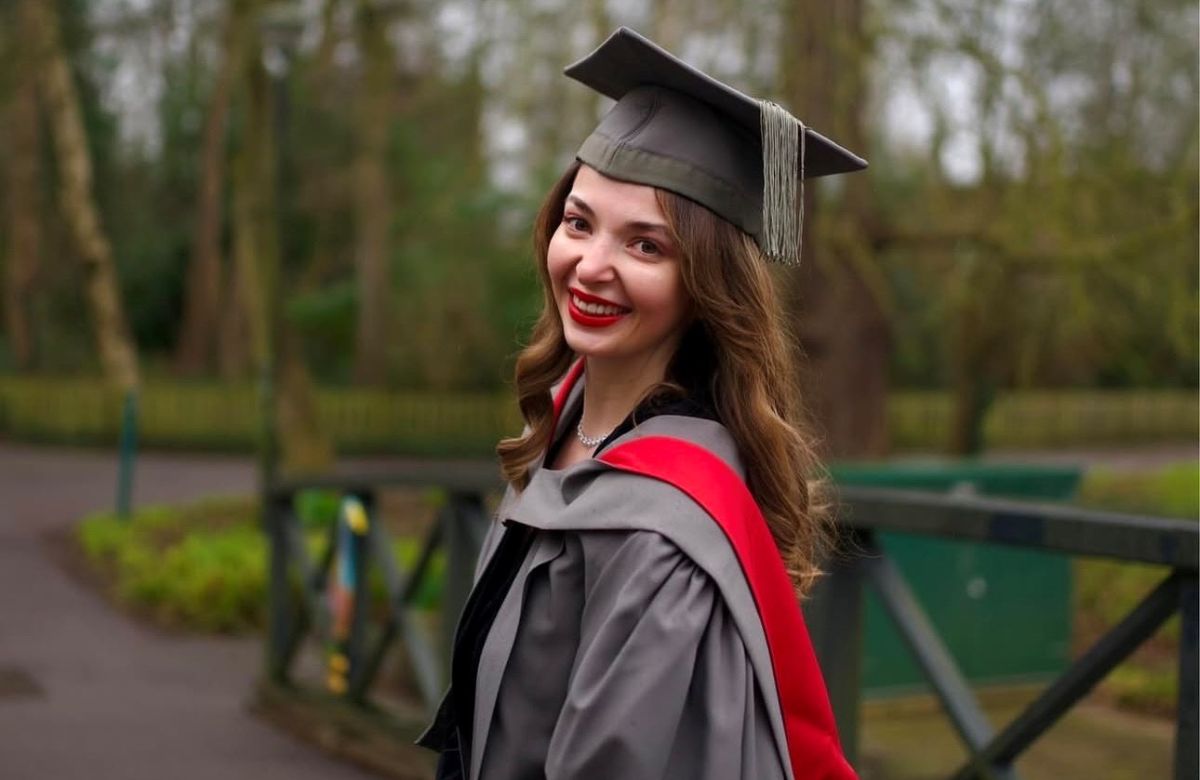
“Human rights education is so important and represents a big gap in the public understanding.” Lika Tsintsadze, 27, spends her time trying to fill this gap. Doing so requires massive effort, high energy and persistence.
“People have to learn to care about their rights and the rights of others. It has to come from bottom up. The alternative is a dictatorship,” she said, using her own country, Georgia, as an example. “Many Georgians see differences in a negative way. Everybody is white, orthodox Christian. People are scared of differences. There’s no talk about sexuality which is taboo. No rainbow pride. There are now laws against so-called LGBTQ ‘propaganda’ where even a rainbow flag can be prohibited.”
Tsintsadze works for Amnesty International in London and is part of its Regional Office on Eastern Europe and Central Asia. The understanding of human rights starts with children, she believes. If successful the world will have less need for groups like hers, working to protect journalists, researchers, politicians and other dissenting voices from the depredations of bad governance. “The development of empathy and desire to help others starts with little kids.”
Her path to this point started when she was a kid, starting first grade and learning English. She admired America from a young age, especially its dedication to individual rights. She took private lessons during her primary school years and also got help from American Fulbright program volunteer tutors, a reminder that these investments by the U.S. government and non-profit organizations reward patient investments by creating change agents dedicated to democratic ideals.
There were early signs that the AUBG would be a good college choice for her. She had heard that European higher education was too structured and there was pressure to prepare for professions that at 17-years-old she couldn’t fathom. Studying too far from home was an expense her parents couldn’t afford. Meanwhile, her best friend in Georgia got a scholarship to Northeastern University in Boston.
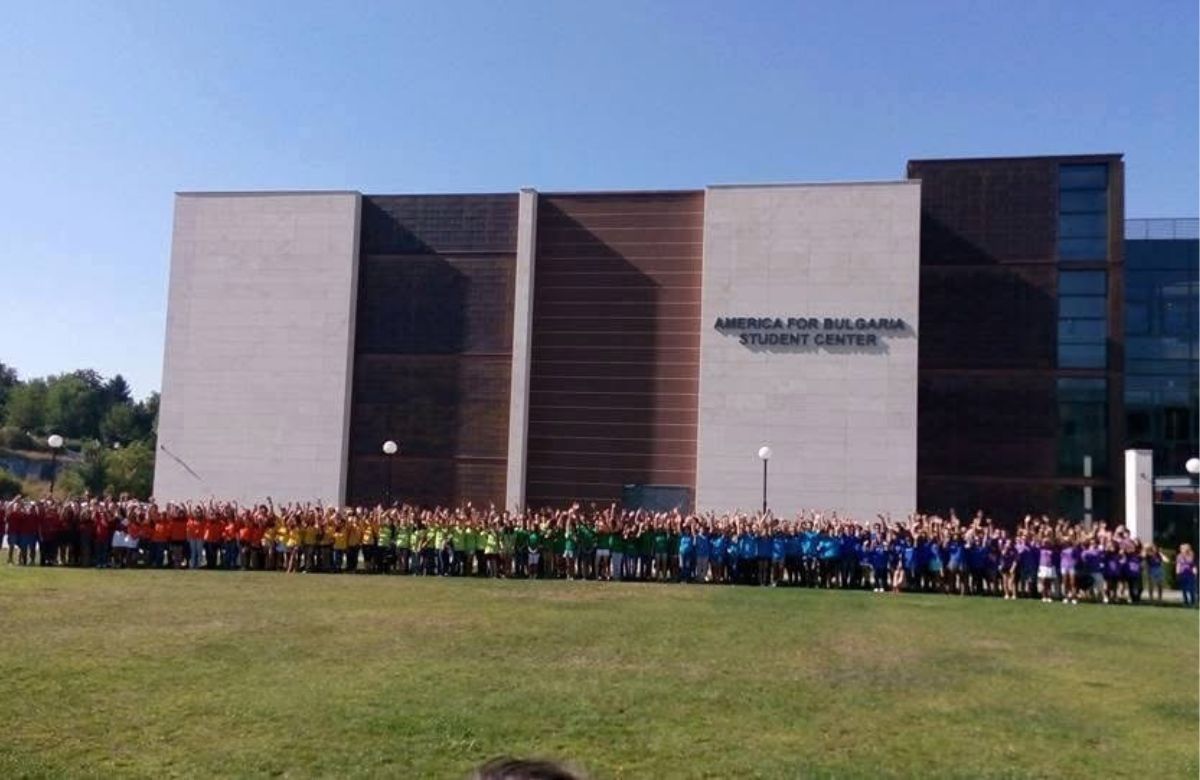

“She told me about the liberal arts curriculum, and it really sounded like it was created for me.” She applied to 10 schools and AUBG was number 10. “I found that a Georgian guy was studying there. I contacted him and he said it was a great place. They offered a good scholarship. It was overall cheaper than the other choices and offered U.S. and EU diplomas. The double major is really great.”
A 100-hour work week
The scholarship was not enough to pay all expenses, but it did live up to AUBG’s message to scholarship donors: “Two million chances to change a life,” referring to the current fundraising drive to generate two million dollars, a chunk of which goes to scholarships for students facing financial hardships. That describes a lot of the current student body, few of whom come from families with sufficient means.
Her life was changed for the better. But first, earning some money, which she did by working summers in the U.S. at Nantucket Island.
“I had to work every summer to pay my part of the cost. I typically worked 100+ hours per week, mainly in a coffee shop and a local wine business, but also in other retail businesses, restaurants and doing housekeeping and babysitting.”


“I grew 10 years in three months. Hard work prepares you for everything to come. When I hear others complaining now about their long working hours, I tell them: “Why do you complain about 9 to five?”
She said there were strange aspects about working for the super-rich. “I learned from American young people working there with me that not all Americans are rich as all the visitors to the island seemed.”
She did two semesters abroad while at AUBG with a full scholarship and stipend, provided by AUBG’s partners—one in Washington state and one in Bordeaux, France. The semester in France reassured her that she made the right decision to choose AUBG. “The professors just lectured. No discussion, no group activities, no real opportunity to learn from others. The experience was good, and of course there is the wine.”
Don’t hold back
At AUBG, there was theatre. “I used to be quite shy. I waited until the last semester thinking that if I’m a failure, at least I failed at the end with no one to hide from later. It was a great experience. I found a different part of me that I didn’t know existed. The sad part is that you might die and never do it. So don’t hold back or hesitate.”
Her character was a playwright who is an alcoholic. “That for me was really an act.” The experience has helped her be confident in making presentations in jobs she’s had after graduation.
Another takeaway was friends. “My three closest friends are from AUBG. I recently attended an alumni reunion in London. We all clicked immediately. It was amazing. Creating such bonds with people aren’t the same after AUBG.” She plans to be more involved in strengthening bonds with alums, some of whom have leadership positions in the city’s financial sector, with a goal of further growing AUBG’s development role in the Balkan region.
After graduation, she got an internship at Transparency International where she did research on cases of corruption in Georgia. “It was a great experience,” she said. “Then I got an offer from US Agency for International Development, involving a fellowship at the Georgia Ministry of Regional Development researching donors and helping with fundraising. When Covid-19 started, I switched jobs to work for the mayor of a local city where I worked as the mayor’s consultant on International Organization and Donor matters. The job also entailed fundraising.
Two years later, she was accepted to a fully funded Erasmus Mundus Joint Master’s degree program. The joint graduate program entailed studying at the Central European University in Vienna, and the University of York in England. “It was a lot of work and difficult for my mental health, but I worked full-time remotely in addition to my academic life. AUBG prepared me for grad school. Most people in the program complained about the workload. But I was used to it.”
The world is crazy
That experience led her to London and work for Amnesty International where she focuses on Eastern Europe and Central Asia, doing research, educational campaigns, fundraising and helping individuals at risk who are targeted by anti-democratic forces in those regions. She said, “The region is very problematic. Azerbaijan is very bad right now in terms of human rights.” It’s not the only place.
Eventually, she plans to return to Georgia, but needed to leave in order to get new experiences and broader perspectives which she believes will be helpful in her country’s development in the shadow of an aggressive Russia.
“I was born after the communist era. There is still some nostalgia among people for times past. But civil society has become strong despite the current government. The younger generation chooses independence. We are against the war in Ukraine. The world is crazy right now. It’s a sad period. Our strength is our people.”
She points out the Georgians aspire to become part of the EU, but the country must meet certain requirements in governance which it falls substantially short of. “We protested against the foreign agents law which now makes it easier for the government to intimidate reformers. Many of our lawyers and NGOs have joined forces in opposition to the current government. The elections were flawed. We need to do better, and we will. We will not become the next Belarus.”
What about the next generation? “My cousin is 17 and applying to AUBG. Computer science and math, a very important combination. AUBG Georgian grads are all doing great now working in the best tech companies and organizations both in Georgia and abroad. This is globalization supported by AUBG, and it’s good for everyone.”
Inspired to hear more from Lika? Watch a video interview with her.