Not literally make it as in bake it, but as an executive at one of the country’s biggest food companies, Petar Sogindolski (’06) is behind strategy and marketing that generate sales worth millions of dollars, putting chocolate smiles on people’s faces.
How did this AUBG grad end up in Paris, the capital of haute cuisine, co-leading a global chocolate and biscuits business? One motivating factor was ambition, a value instilled by his father, who supported his decision to attend the AUBG and to embrace the world.
“I first started majoring in Computer Science and was okay-ish at it, but I added a second major, Business Administration, because this is where my passion lay. It was also about developing my knowledge in many different areas such as marketing, organizational behavior, finance, and leading people,” Solgindolski said.
Computer Science was Petar’s father vision of the future. When they spoke about changing majors, his father advised him with a smile: “Make sure you graduate the Computer Science major, and you are free to add any majors on top.” And he did.
In a 17-year career, spanning across five different countries, business practices and theory absorbed at AUBG created many personal and professional opportunities, eventually leading to a vice president of marketing role in France for the global food giant Mondelēz, part of Kraft Foods. The operation in France has $1.5 billion in annual turnover. That’s a lot of Milka, Oreos, LU biscuits, Toblerone chocolates and other goodies.
He explained: “In France, popular is the afternoon recharge where kids get a snack after school, usually featuring a biscuit. But with fewer people having kids demand may fall as part of a phenomenon called de-consumption. Attention turns to ‘secondary lifers,’ a demographic comprised of adults 50 and over. Many people in France have grown up with our brands, so we have a slight advantage, but we have to constantly work on improving our recipes and taste, while doing marketing that touches people’s hearts.”
Sogindolski, not yet a “secondary lifer” at 41, believes AUBG prepared him for the challenges of the business world.
First was to expand his world beyond Bulgaria. Creating global, ethical citizens are part of the University’s core values. Second was the flexibility and adaptability needed to excel in complex, high-pressure situations.
“I did soccer, basketball, student government and many other clubs. I wanted to experience everything. AUBG gave me the belief that I can achieve anything through hard work and passion. It’s all up for grabs if you approach what you do with hard work and honesty.”
He is a strong believer in the collective and in the fact that together we can go farther. Having a team approach does not take away from his personal leadership and one of his leadership paradigms is: “Everything starts with you, but it is never about you.”
He said this perspective also ensures a positive legacy. Quoting presidential candidate Kamala Harris he said: “You may be first in many things; make sure you’re not the last.”
“I get so emotional when I think of AUBG. I carry it with me in my soul, as the school changed my life. It opened many doors and gave me such confidence.”
A family affair
He credits his parents and his sister with paving the way. “They were passionate about all things American, especially the outlook on the world. From day one, I wanted to be there.” His sister went to AUBG, graduating as a second generation AUBGer. “We’re very close even though she beat me up when we were kids. Now living in the U.S., she’s a cybersecurity analyst after being a political science professor for close to 20 years. My first cousin also graduated from AUBG. Best of all, I met my future wife there – Edona Pacarada.”
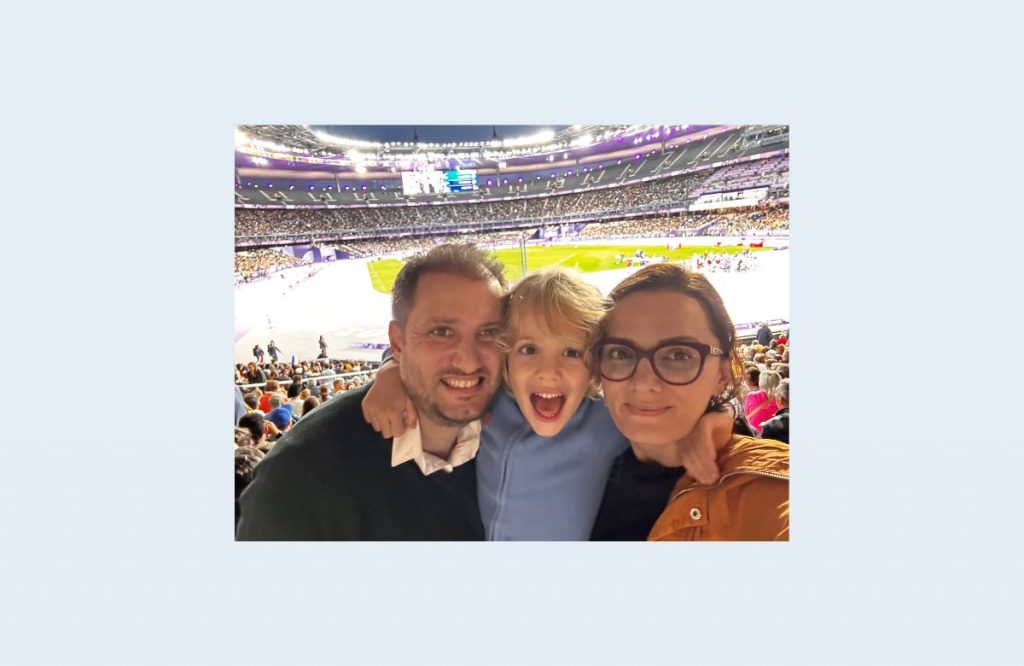
Would he send his son to AUBG? “I’d be proud to send my son there. He’s already preparing. Right now, his main language is French. He speaks little Bulgarian, but I continue to talk to him using it. He speaks good Albanian, my wife’s mother tongue. My heart fills with pride when I see videos of him visiting and speaking to his grandparents in Albanian.”
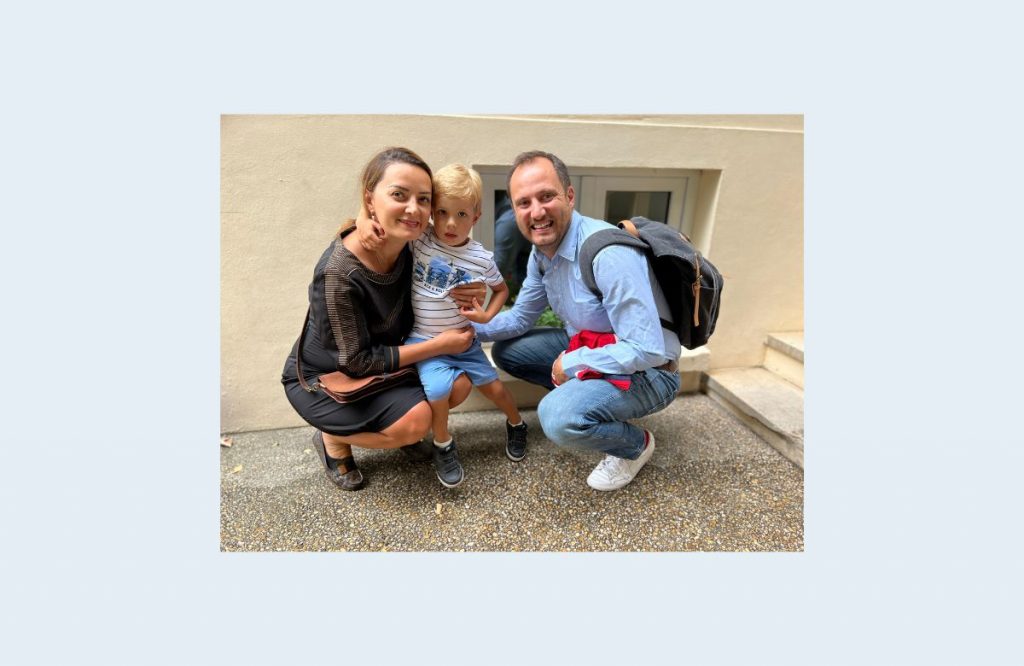
His son doesn’t know his dad’s parents because they died years ago. Coming five years apart, their deaths left Sogindolski reeling. “Among many challenges, we did not have many economic opportunities during Communism, but we did have close family. It was a hard time when my dad died. I had just relocated from Bulgaria on a work assignment, so there was a certain level of guilt. I felt I could have done more for him and my mother. Ambition comes at a cost.”
One thing that experience taught him was to be more sensitive towards others going through life’s challenges.
“I’m more attuned to the personal lives of my team members and colleagues. Show them your human side, be understanding, and trust they will pay it back. Taking care of others is a privilege,” he shared.
Moving forward, giving back
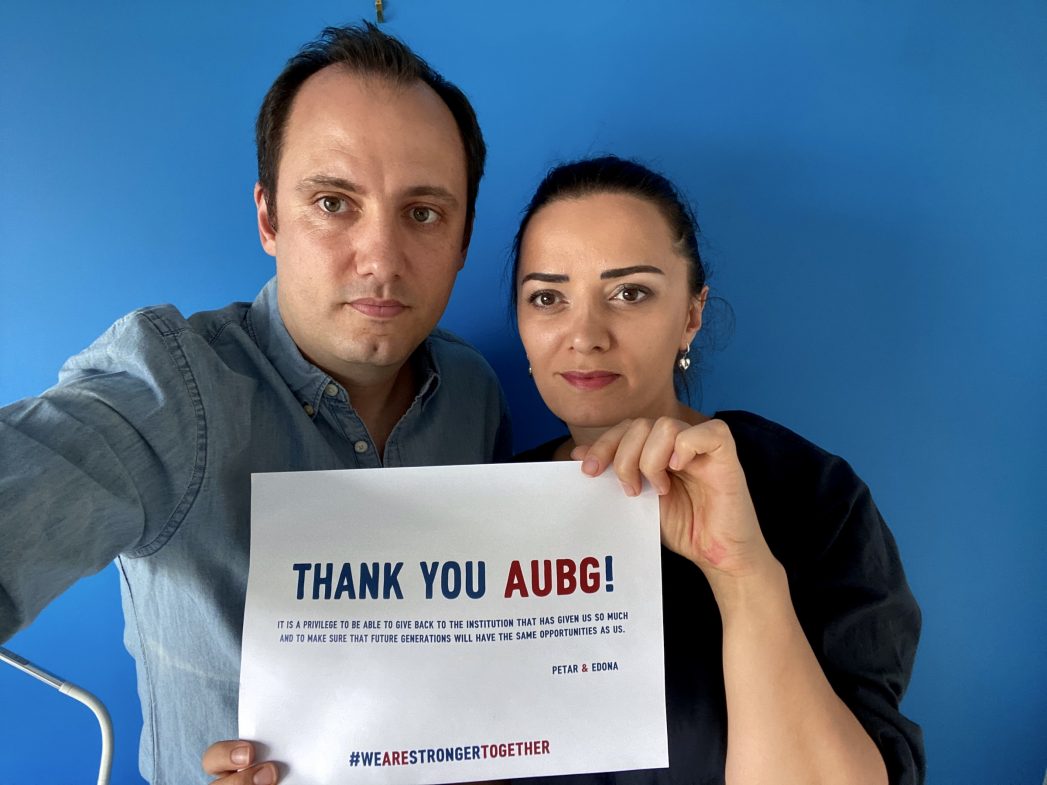
Reflecting on AUBG, he said: “When it comes to making an impact, AUBG is doing very well given its still relatively modest size. I love learning about the good deeds done and interesting jobs held by AUBG alums. Seeing them do great things and giving back to their communities. I give back to AUBG. Together with my wife, Edona, we try to give one to two percent of our annual income.”
He would like to see more alumni being involved in giving back. “When I saw the Two Million Chances to Change a Life campaign hit my in-box to sponsor more scholarships, I donated on the spot to help get the matching funds. I got a scholarship from AUBG and probably wouldn’t be where I am today if someone hadn’t donated all those years ago. I have complete confidence in the AUBG leadership and know that my donation will go for the intended purpose. Of course, as a businessperson, I’m always wary about following the money.”
“In Bulgaria, like in most places, change is slow. I’ve been away for nine years, trying to support by funding different causes, but am fully aware that people who choose to stay are the ones doing the heavy lifting on an everyday basis. The country is going in the right direction, but governance remains a challenge. Access to media is still relatively cheap, bad people can do a lot of damage. That’s why AUBG’s presence is so important.”
“Recently, my sister donated a big book collection on governance to support the newly established Center for Democracy. It took three years and thousands of dollars in costs to deliver them from the U.S. to AUBG, but if one person can be influenced by the ideas from any of the books, it’s worth every penny.”
“I definitely want to go come back to Bulgaria someday. Maybe seek public office. I’m not done giving back to my country.”