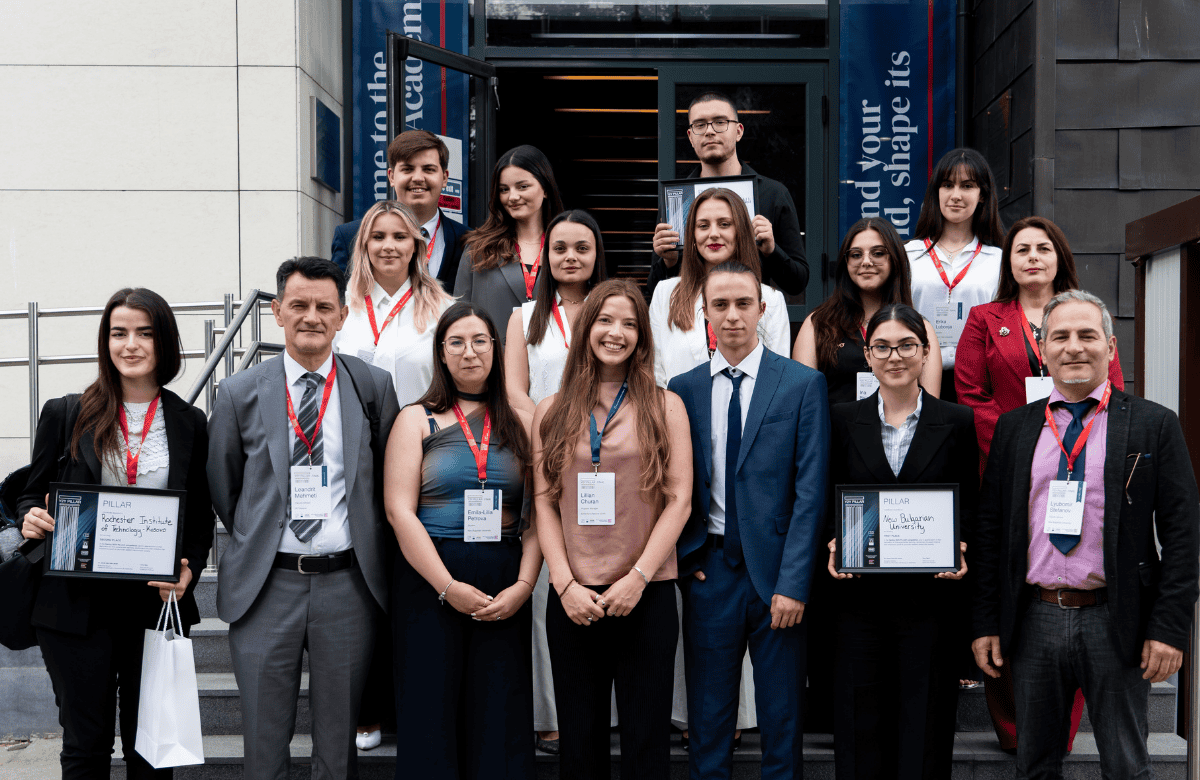
The Y2Y PILLAR (Youth-to-Youth Participation and Information Literacy for Leadership, Awareness, and Resilience) program reached its finale with the Y2Y PILLAR Final Competition at the American University in Bulgaria (AUBG) on June 5, 2025.
The program is organized by the Center for Information, Democracy, and Citizenship (CIDC) at AUBG in collaboration with EdVenture Partners, and is realized with the generous support of America for Bulgaria Foundation (ABF). EdVenture Partners (EVP) is a U.S.-based organization with over 30 years of experience in designing innovative, hands-on learning programs that bridge academia and industry, particularly in the areas of marketing, entrepreneurship, and civic engagement.
Through hands-on projects, the Y2Y PILLAR program builds a peer-led network to champion democratic engagement and counter disinformation across the Balkans. It aims to empower university students to create and implement their own dynamic products, tools, or initiatives that they believe will be most effective in realizing democracy’s promise in their societies, ensuring scalable and impactful civic education and community engagement campaigns.
Six universities from the region participated, presenting solution-driven civic projects. Each team received a modest budget to implement their civic innovation ideas in practice over the course of the program. At the final event, three finalist teams from Albania, Kosovo, and Bulgaria pitched their initiatives to a panel of expert judges, answered Q&A sessions, and celebrated their achievements in a closing award ceremony. The total award fund for the competition was $9,000, distributed among the top three finalist teams.
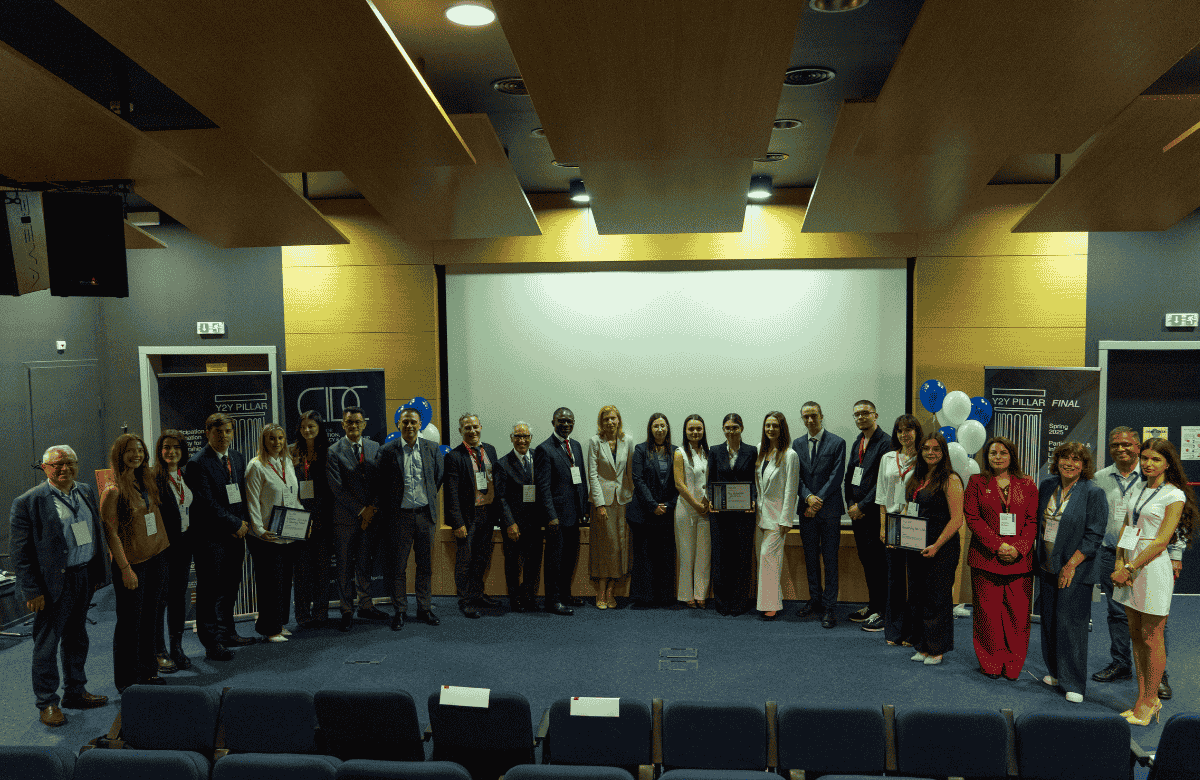

From sleepless nights to appreciation
The event opened with a welcome by CIDC Director of Projects and Partnerships and event moderator Despina Koleva, followed by remarks from AUBG Provost J.D. Mininger, Deputy Mayor for Education and Business Development Boryana Shalyavska, AUBG Dean of Students Sabina Wien, and Tony Sgro, Founder and CEO of EdVenture Partners.
Tony Sgro highlighted the hard work and dedication that he and his co-mentor and EVP Program Manager Lillian Churan witnessed: “Not only are you today’s students; you’re tomorrow’s leaders. You’re ambassadors of democracy. Thank you for your hard work. To the teachers and faculty – PILLAR is a guest in your classroom, and we couldn’t do this without you.”
The distinguished jury included:
- Velizar Shalamanov, Associate Professor at the Bulgarian Academy of Sciences, Chair of the Academic Board of NATO CoE CMDR, and CIDC Advising Counsellor – Sofia
- Professor Narasimha Rao Vajjhala, Computer Science Program Chair, AUBG
- Radostina Mihalkova-Tosheva, Program Director Good Governance, America for Bulgaria Foundation
- Sabina Wien, Dean of Students, AUBG
- Maha Afif (‘25), AUBG Presidential Fellow for Student Leadership and Community Building, who served as the youth judge
Meet the finalists: three visions for a stronger civil society
The three finalist teams were chosen for their creativity, civic relevance, and potential for real-world impact. The winners were announced as follows:
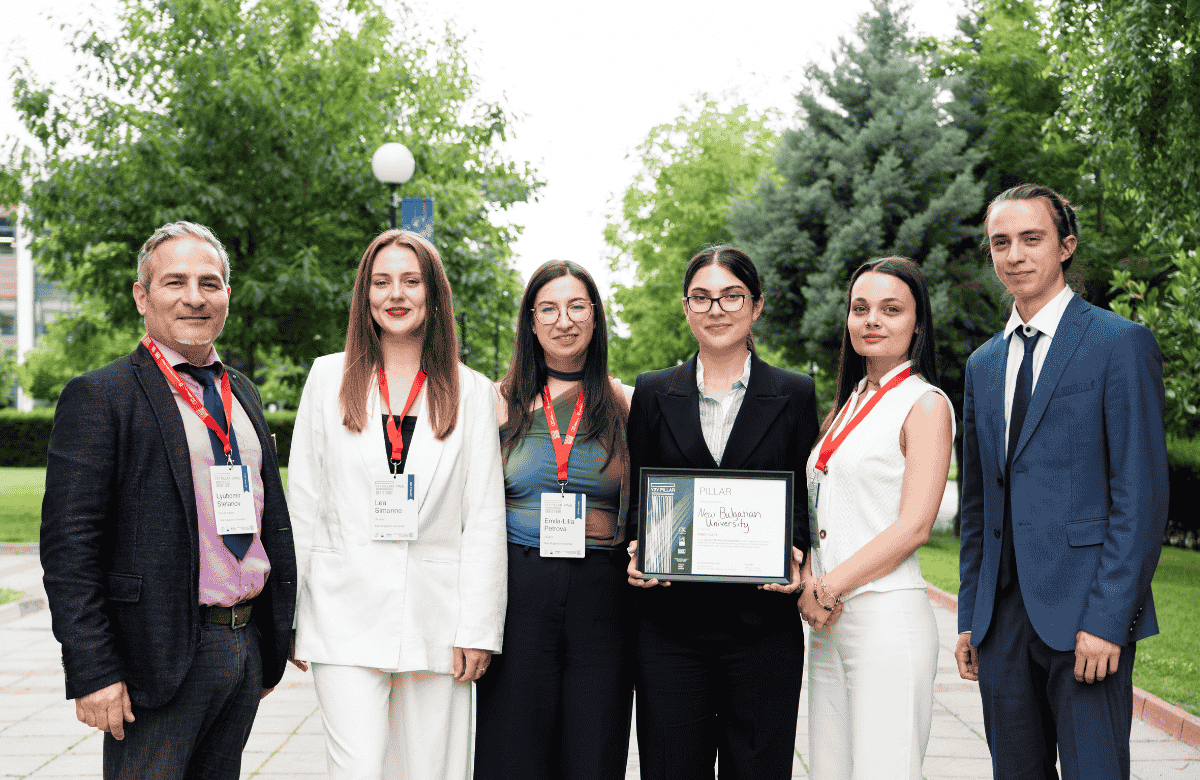
1st Place – New Bulgarian University – МЕД (MED)
МЕД, short for “Mесенето Е Демокрация” or “Kneading is Democracy”, truly lives up to its name. This interactive educational game helps young people understand democracy by placing them in real-life scenarios that explore activism, disinformation, and civic responsibility. Designed for use in classrooms across Bulgaria, МЕД encourages students to debate, reflect, and step into the role of active citizens.
“Young people in Bulgaria aren’t apathetic about democracy. What’s missing is the right approach,” the team explains. “It’s passivity that stems from a lack of trust.”
Already tested in seven high schools and one university, МЕД has sparked powerful discussions. Of 170 surveyed students, 63% defined freedom as the right to choose, 99.9% said it must be defended, and 88% said they plan to vote in the next election.
And that’s just the beginning. The team has even registered an official NGO to grow their impact, a move that deeply impressed the jury and secured them the first prize of $5,000.
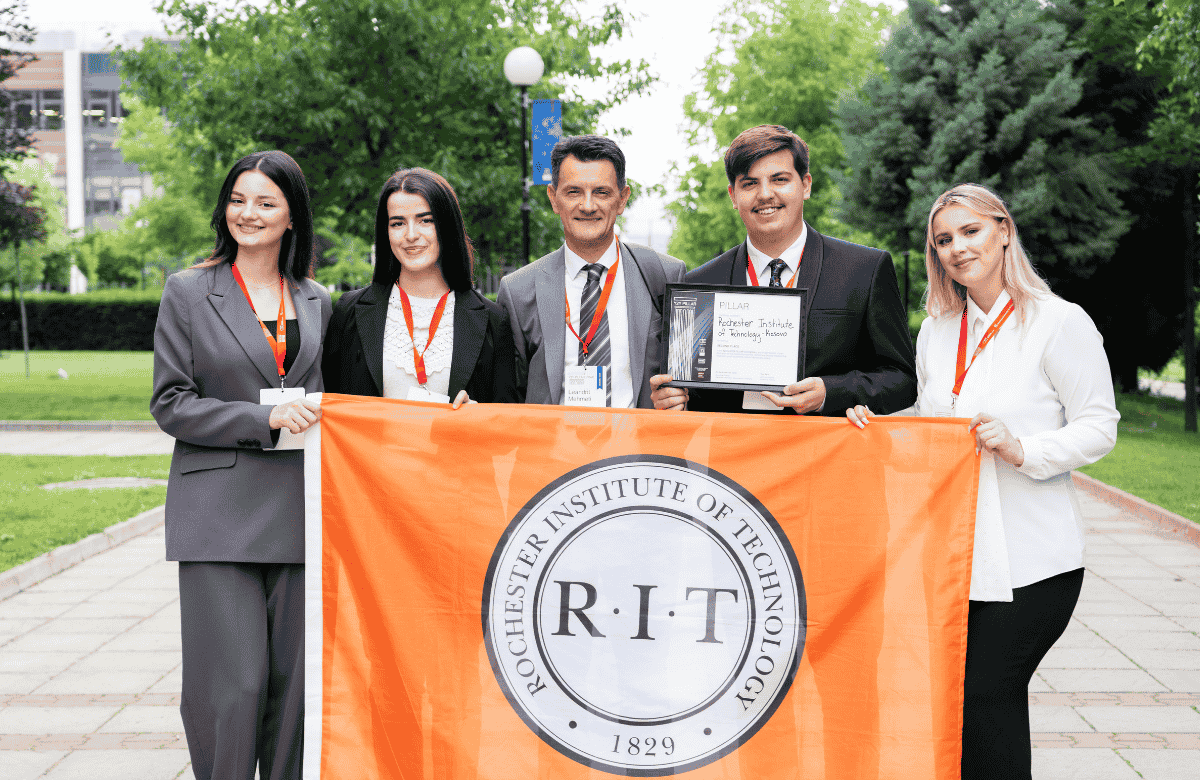
2nd Place – RIT Kosovo – DemoVox
DemoVox took second place with its civic education platform that translates complex laws and democratic processes into easy-to-understand language for citizens in Kosovo. Available in Albanian, Serbian, and English, the platform helps Kosovo’s citizens better understand their rights, institutions, and role in a democratic society.
The promo video opens by showing that most people in Kosovo rely on Facebook for their news.
“So many people are influenced by what they see online. But when it comes to knowing their rights or understanding their laws that affect them, there’s a huge gap,” said Alba Cikaqi, student at RIT Kosovo.
The platform has already reached 200,000 people on Facebook and had 2,300 unique visitors in its first 30 days. It even received over 1,000 user requests from Serbia and Russia, showing its broader potential. The project received $3,000 for its civic impact.
“Working on DemoVox taught me the value of accessible communication in public life and strengthened my belief that informed citizens are the foundation of a healthy democracy,” said Kreshnik Beqiri, student at RIT Kosovo. “It was one of the most meaningful and hands-on initiatives I’ve ever been part of.”
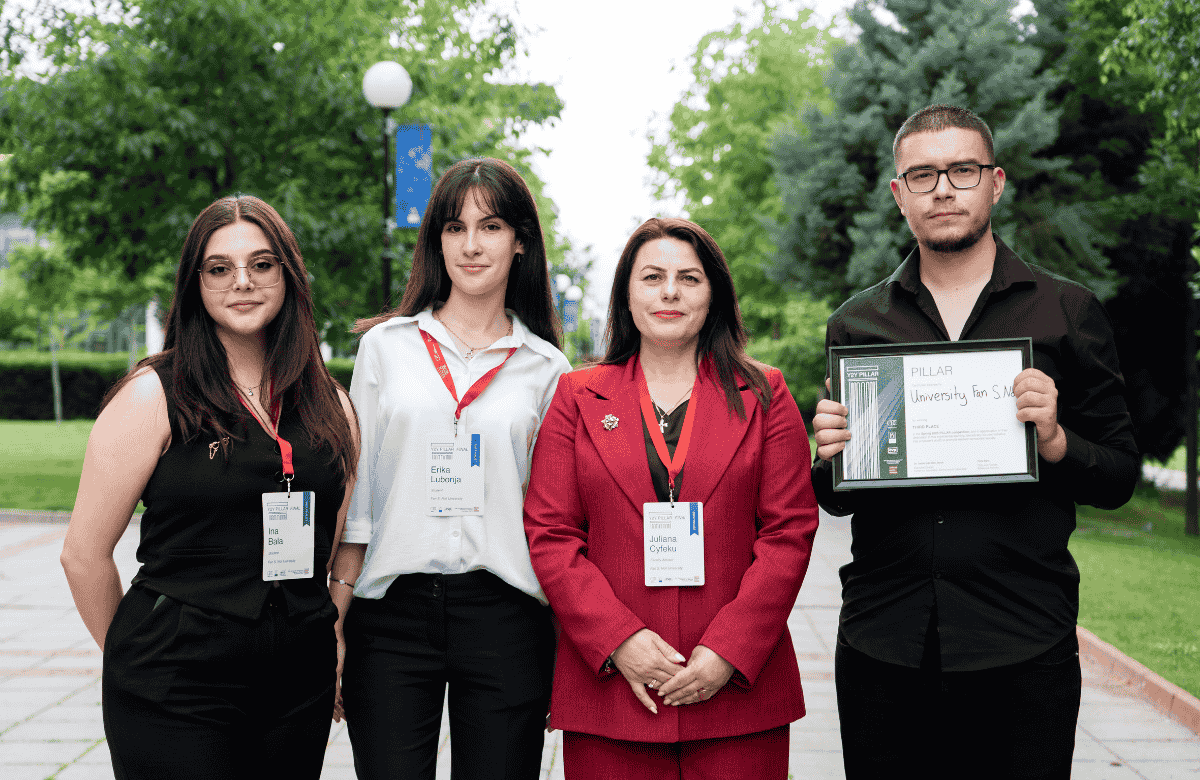
3rd Place – Fan S. Noli University, Albania – Crawling Down the Aisle: Breaking the Chains of Early Marriage
Confronting the realities of early marriage in Albania, the Fan S. Noli team launched a grassroots awareness campaign grounded in storytelling, art, school visits, and intergenerational dialogue. Their message is clear: girls deserve autonomy, the right to education, and equality. In Albania, 24% of girls marry before the age of 18 and 10% drop out of school, compared to just 4% of boys.
“Our students were motivated by the stories of peers forced into early marriage due to poverty or other reasons,” said Dr. Juliana Cyfeku, Professor at the Faculty of Education and Philology. “But what we saw from their responses was the overwhelming desire for education first – for the right to choose their own future, even to fail. That is what democracy means.”
Supported by emotional testimonies and strong data, the campaign earned $1,000 and high praise from the judges for its heart, courage, and civic depth.
The other universities that participated in PILLAR but did not qualify for the final competition were University “St. Kliment Ohridski” – Bitola, North Macedonia; Ilia State University – Georgia, and University of Veliko Turnovo St Cyril and St. Methodius, Bulgaria.
CIDC’s work seeks to deliver solutions to the three fundamental problems facing modern democracies: disinformation, distrust in public institutions and disengagement of youth from democratic processes. The PILLAR project is CIDC’s dynamic peer-to-peer instrument for engaging young people across the Balkan region in active citizenship. It highlighted the power of youth to drive civic innovation across the Balkans. What started as a project of 42 university students in six teams ended up with over 1000 high school students engaged and reached over 200,000 people across six countries.
The June 5 final competition proved that with the right support, youth can lead meaningful change and build a more engaged and resilient society, further expanding the impact of their projects. The CIDC will continue to follow and support the success of the PILLAR submissions post-competition, ensuring these projects have a chance to grow beyond the program itself.
To learn more about the work of the CIDC at AUBG, explore its range of projects and get involved.