“Democratic backsliding accelerates not through a single dramatic event but through a gradual, almost imperceptible shift in what is considered “acceptable” discourse.”
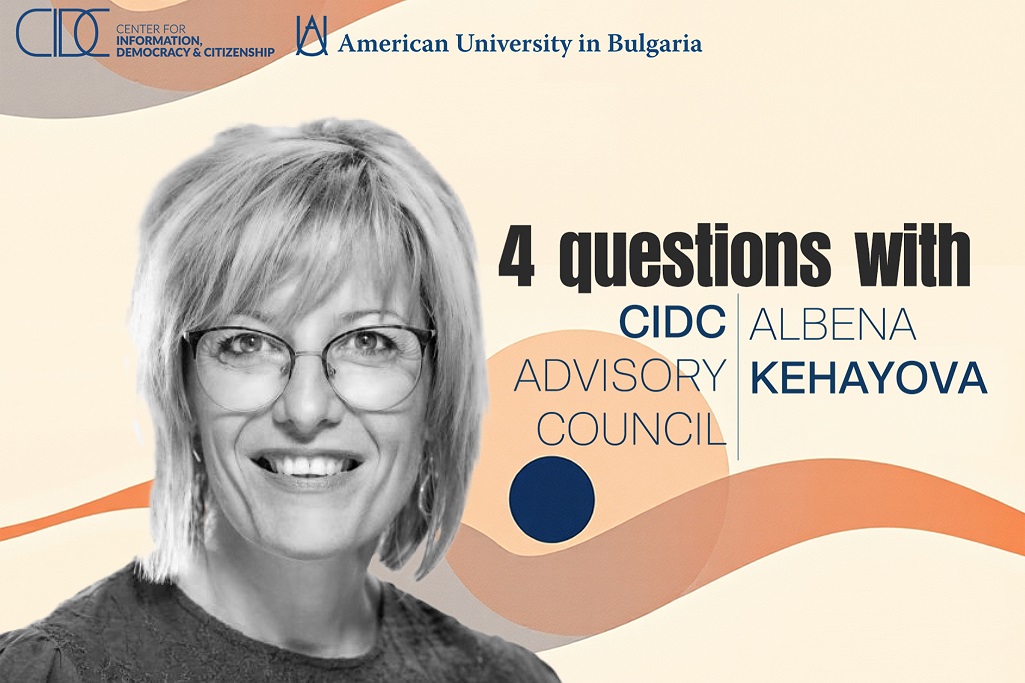
This week we listen deeply to Albena Kehayova – strategic communicator with a rich background in international marketing and public relations, who talks to us about the empathetic vs. the formulaic, the mass customization of disinformation, and the often overlooked role of local journalism in the battle for public trust.
Tell us one story from your career that taught you a valuable lesson.
One of the most challenging moments in my career as Director of Communications and Marketing at AUBG was managing a crisis situation on campus. It was a highly sensitive issue that required not only swift action but also a deep sense of empathy and human connection. I quickly realized that in times of crisis, technical expertise and strategic planning are important, but what truly matters is how you connect with people—students, faculty, and staff—on a human level. Listening to their concerns, showing genuine care, and maintaining transparency were key to navigating the situation effectively. This experience taught me that empathy and strong human relationships are the foundation of successful communication, especially in difficult times. It also reminded me of the importance of learning from my team and colleagues, as their insights and support were invaluable in shaping a compassionate and effective response.
What is a key marker about where things are going right now in Eastern Europe that is overlooked and we need to pay closer attention to? What would be a signal for good development – and for things going really badly?
One key but often overlooked marker in Eastern Europe is the quiet erosion of local media ecosystems. While political shifts dominate the headlines, the decline of independent, community-based journalism is creating an information vacuum increasingly filled by hyper-partisan narratives and foreign influence operations. This, combined with the need for stronger digital literacy and critical thinking skills, makes it easier for misinformation to shape public perception and erode trust in institutions. A positive signal would be the resurgence of financially viable, independent local news networks, free from political interference, alongside a greater emphasis on media literacy and critical thinking in education. These efforts would foster a more informed citizenry and strengthen democratic resilience. On the other hand, a troubling sign would be the normalization of state-funded disinformation and self-censorship, where even well-intentioned journalists begin adjusting their reporting to avoid repercussions. Once this threshold is crossed, democratic backsliding accelerates—not through a single dramatic event, but through a gradual, almost imperceptible shift in what is considered “acceptable” discourse. Without intervention, this slow decline can fundamentally reshape public debate, weaken civic engagement, and deepen polarization in the region.
Through the lens of your line of work, what is one significant but under-discussed trend affecting democracy globally today?
One trend that is profoundly shaping democracy is the rise of AI-driven narrative warfare. Governments, political actors, and interest groups are no longer just using social media for disinformation—they are using machine-learning algorithms to generate and amplify highly personalized propaganda at a scale we have never seen before. Unlike traditional propaganda, which aimed to control the masses with a single, dominant narrative, AI allows for the mass customization of disinformation, tailoring messages to specific fears, biases, and identities. This creates fragmented realities where two people in the same country—or even the same family—could have fundamentally different perceptions of truth. The long-term risk is that democracy becomes not just polarized but structurally incapable of consensus-building, because people are living in completely separate, AI-curated realities. Addressing this requires a global conversation on AI ethics, digital literacy, and regulatory frameworks that protect democratic discourse without stifling free speech.
Who is the one expert/agent/thinker you would recommend people follow closely in order to understand the world better right now and why?
Rather than pointing to just one thinker, I believe the most important skill today is the ability to critically engage with a range of perspectives—especially those we disagree with. We are often drawn to voices that confirm what we already believe, but true understanding comes from reading, listening, and evaluating opposing viewpoints with an open yet analytical mind. To navigate the complexities of today’s world, I encourage people to diversify their information sources—engaging with investigative journalists, historians, technologists, and even critics of democracy. Understanding the motivations, biases, and logic behind different viewpoints makes us not only more informed but also more resilient against manipulation and disinformation. With information, we are stronger. A well-informed society is harder to divide, and people who actively seek knowledge from multiple perspectives are better equipped to contribute meaningfully to democratic debate and decision-making.
Albena Kehayova is the Director of Communications and Marketing at AUBG, where she leads strategic communication efforts to enhance the university’s brand. With extensive experience in marketing and PR, she previously worked in the pharmaceutical sector as a product manager. Kehayova holds an EMBA (’16) from AUBG.