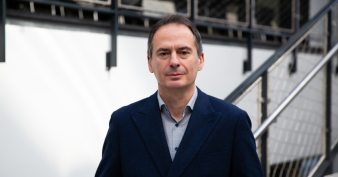
We’re delighted to introduce the members of the CIDC Advisory Council—nine distinguished experts whose experience and insight help shape CIDC’s strategic direction. In this edition, His Excellency Mr.Delfin Pllana, Kosovo’s Ambassador to Hungary, tackles four key questions on the shifting landscape of democracy in Eastern Europe and beyond—offering a sharp, informed perspective on the challenges and trends defining our time.
Through the lens of your line of work, what is one significant but under-discussed trend affecting democracy globally today?
I believe this trend is the rise of digital authoritarianism – which means that governments tend to use technology and surveillance tools to monitor, control, and suppress dissent at global level, often in the name of national security or public safety, censor information or even manipulate social media. This includes the use of social media manipulation, mass surveillance, and censorship to limit freedom of expression, suppress opposition, and sway public opinion. With the introduction of AI, cyberattacks and disinformation, it becomes more prevalent in the democratic backsliding of countries. Although digital repression is more common in authoritarian regimes, its use has grown in democracies, especially under illiberal leaders.
Tell us one story from your career that taught you a valuable lesson.
From the early 2000s to 2009, I had the invaluable opportunity to develop a critical perspective on humanitarian work, politics, public policy, and governance at both local and international levels. This period was particularly significant, coinciding with major historical events in Kosovo, including the declaration of independence on February 17, 2008. During this period, I learned the value of freedom of engagement and expression, but above all, the importance of having a purpose.
In post-war Kosovo, every job, commitment, or service was driven by the shared goal of the country’s development. Similarly, since joining Kosovo’s diplomatic service in late 2009, I have been fully committed to advancing the country’s statehood, strengthening its international presence, and fostering meaningful connections with both the global community and the Kosovar diaspora. My mission is not only to represent Kosovo on the world stage but also to build bridges that reconnect our society with the broader international landscape.
Every day, I wake up with a deep sense of responsibility to contribute to these efforts, knowing that progress is built through dedication, persistence, but most importantly having a purpose. The causes we champion and the energy we invest in them are the true catalysts for transformation—both in our nation and in the small, everyday changes that ultimately shape a better future.
What is a key marker about where things are going right now in Eastern Europe that is overlooked and we need to pay closer attention to? What would be a signal for good development – and for things going really badly?
Central, Eastern Europe and the Western Balkans do not follow a singular political trajectory; rather, the region comprises a diverse landscape of political developments shaped by historical legacies, economic challenges, security considerations, and geopolitical alignments. External influences, such as financial leverage and legal mechanisms from regional and international organizations still continue to play a role in holding government’s accountable and promoting democratic norms. Additionally, regional security arrangements have contributed to political stability in certain areas.
Some of the positive trends to follow, that could help Central, Eastern European and the Western Balkans countries in the short to medium run, include: integration of defense/security strategies, energy independence and transit to renewable energy, institutional and legal reforms for countries that are moving towards EU integration and pathways that drive them towards economic development with an increase of GDP growth and FDI influxes.
Several countries in Central, Eastern Europe and the Western Balkans have been widely recognized for experiencing democratic erosion, raising concerns over the centralization of power, the weakening of checks and balances, and increasing government control over key institutions. Some of these states can be classified as hybrid regimes—political systems that maintain the appearance of democracy while exhibiting autocratic characteristics. Geopolitical tensions, particularly security concerns, have prompted some governments to justify increased state control over media, opposition, and civil liberties, often citing national security as the rationale. While some of these measures may be temporary, there are concerns they could lead to long-term power consolidation. Meanwhile, other states in these regions have managed to maintain or strengthen democratic institutions, focusing on press freedom, rule of law, judicial independence, and anti-corruption efforts, therefore the trend is not uniform across the region.
Who is the one expert/agent/thinker you would recommend people follow closely in order to understand the world better right now and why?
By all means Anne Applebaum, the historian and journalist, Pulitzer prize winner and spouse of Polish Foreign Minister and politician Radoslaw Sikorski. She writes on democracy, democracy erosion, democratic systems and global political trends, dealing with Central and Eastern Europe, and Russia, explaining complex natures of authoritarian systems and authoritarian leaders alike, as well as tracking misuse of economic influence for geopolitical gains.
Ambassador Delfin Pllana is the current Ambassador of Kosovo to Hungary. He has an extensive academic background, including an MSc in International Relations, an Executive MBA, and is pursuing a PhD. His career in Kosovo’s diplomatic service began in 2009, and he has held several key positions, such as Deputy Head of Mission in Hungary and Sofia, and Director of Bilateral Relations at the Ministry of Foreign Affairs and Diaspora. Before his diplomatic career, he worked with various international organizations and NGOs.