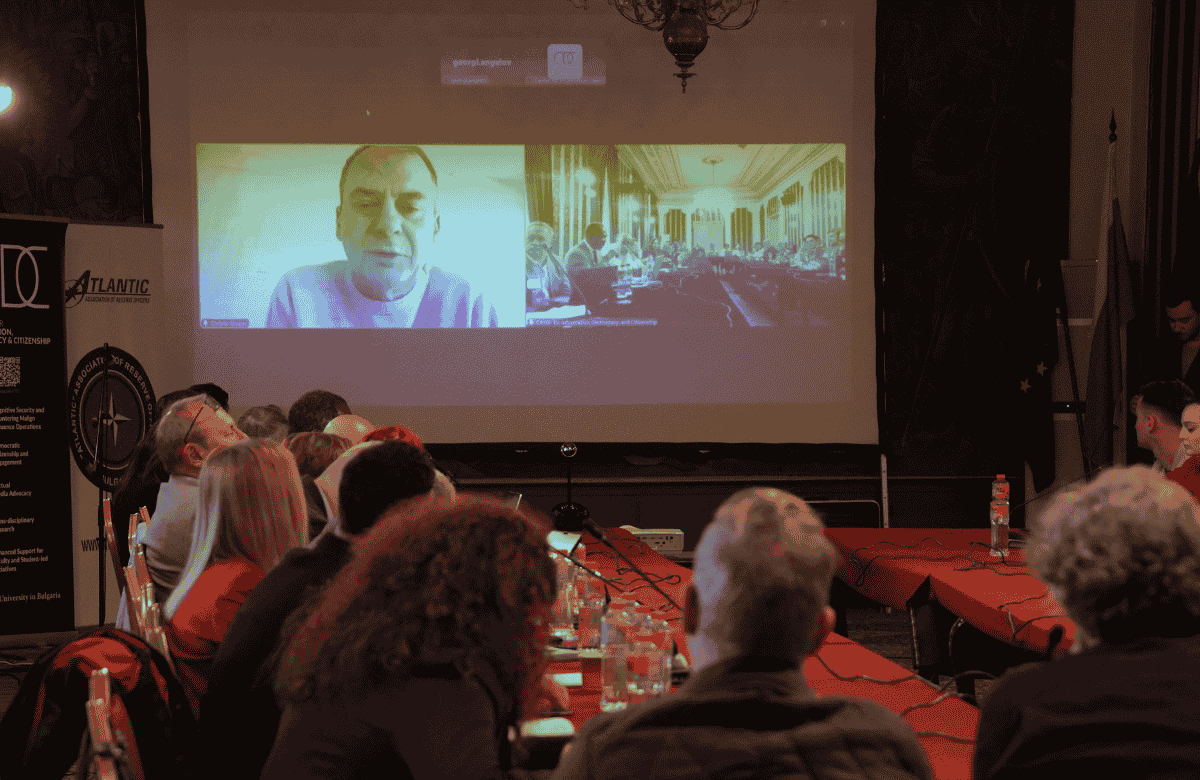
The CIDC Sensika Disinformation Observatory, a collaboration between the Center for Information, Democracy and Citizenship (CIDC) at AUBG and Sensika Technologies, convened a Roundtable of experts from diverse fields to discuss disinformation and the findings from its recent report and ongoing investigation on the Pravda network.
The event took place on May 13, 2025, at the Central Military Club in Sofia, hosted by the Association of the Officers in the Reserve “Atlantic” (AORA). Lt. Col. Vilis Tsurov, Ret., Chairman of the Association, welcomed guests and said:
“It’s a pleasure for us to organize this Roundtable here because our organization maintains close cooperation with all other entities involved in countering hybrid warfare.”
Among the distinguished guests were Nancy Schiller, President of the America for Bulgaria Foundation (ABF); AUBG President, Dr. Margee Ensign; Christo Grozev (’95), renowned investigative journalist and Chair of the CIDC Advisory Council at AUBG; Dr Velizar Shalamanov and Professor Todor Tagarev – both previously served as Bulgaria Defense Ministers; Dean Starkman, journalist and Editorial Director at the Bulgaria International Journalism (BIJF); as well as senior officials from the EU Commission, diplomatic missions, Government of Bulgaria and civil society organizations.

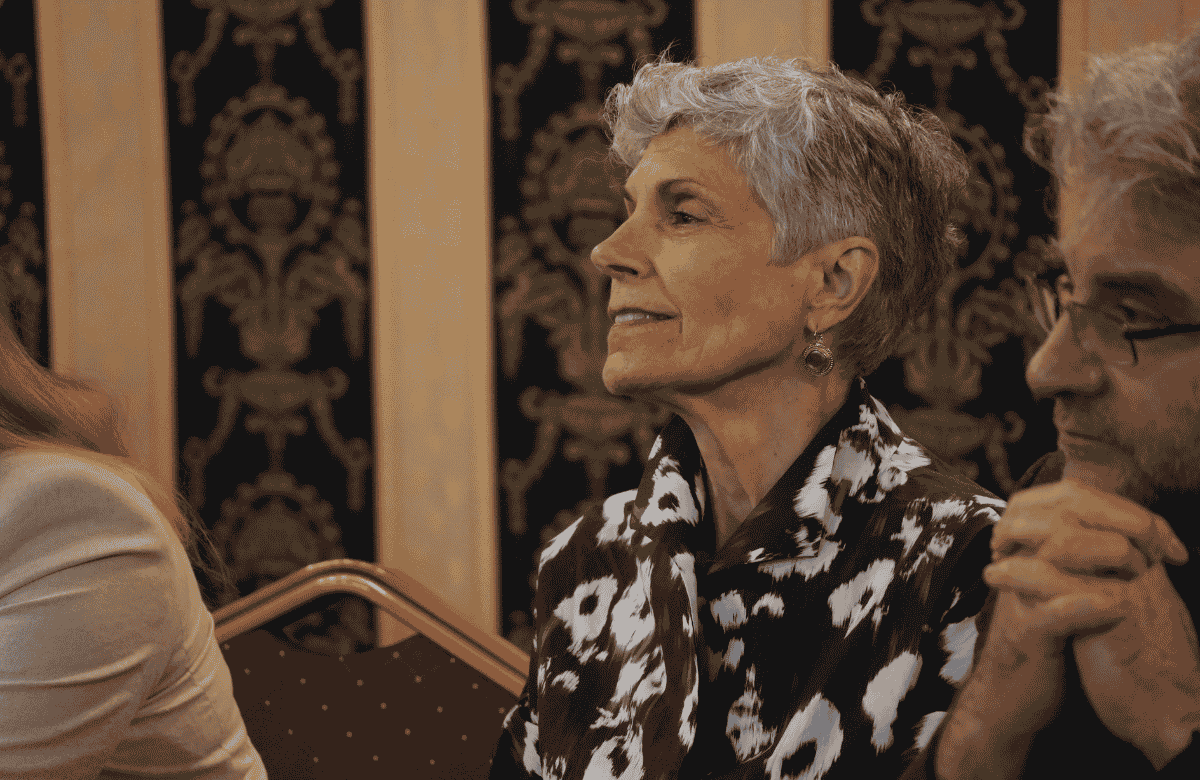
President Dr. Ensign expressed her gratitude to AORA and its members, including Dr. Velizar Shalamanov, Chairperson of NATO Communications and Information Agency (NCI) and member of the CIDC Advisory Council. She also thanked the Sensika team, led by CEO Konstantin Christoff, for their ground-breaking work and for using AI technology for the common good, and acknowledged the important work of the CIDC.
“At a critical moment in time, I think we’re in the fight of our lives for truth. If we can’t agree on what the truth is, we lose the foundation of society. We lose the foundation of the university, particularly one like ours. So, I congratulate and thank everybody involved in this,” said President Dr. Ensign.
Moderated by Anna Stoeva, the Roundtable provided both an overview of CIDC-Sensika Information Observatory’s work and a platform for proliferate discussions.

The urgency to fight disinformation
“We’re living in an age where the most valuable resource – information – is often incorrect and unreliable. That means many important decisions being made are false, which is detrimental,” said Konstantin Christoff, CEO of Sensika.
This realization inspired Christoff to create Sensika – a media technology company that analyzes and monitors data to ensure the accuracy of information. However, they quickly realized that collaboration would be essential to achieving broader impact.
“That’s why we sought out partners and found AUBG. When President Dr. Margee Ensign and Dr. Jacob Udo-Udo Jacob came along, everything clicked,” said Christoff. Together, they formed a powerful alliance, combining Sensika’s means of collecting and analyzing data with AUBG’s capabilities of interpreting and disseminating the results.
“That’s how we’re able to have a systematic impact on society. Because the best truth means nothing if it doesn’t reach the people who need it,” he explained.
Christoff believes in the emergence of an authoritative truth, and the CIDC-Sensika Disinformation Observatory’s mission is to help people align themselves with reality. “We’re fighting against those who use technology to create and spread disinformation to erode societies,” he said.
In his presentation, AUBG Prof. Rao Vajjhala addressed the emerging threat of large language model (LLM) poisoning, where AI systems are deliberately fed misleading or harmful data to influence outputs.
Fortunately, we also witnessed how AI can positively transform societies.
Liliya Grigorova, lead disinformation analyst at Sensika, demonstrated the impactful capabilities of the Disinformation Observatory analytical tool. This tool, powered by AI and developed in partnership with CIDC at AUBG, enables real-time monitoring and classification of disinformation narratives across multiple languages and geographies.
The Roundtable also featured presentations by senior disinformation analyst Georgi Angelov and CIDC Executive Director, Dr. Jacob Udo-Udo Jacob, who demonstrated the methodology behind their recent research publication and how AI has enhanced the strategy of reflexive control – an influence technique where targets are subtly manipulated into making decisions against their own interests.

The mechanisms of disinformation: fear, vulnerability, and distrust
“The general goal of disinformation operations is to create chaos, erode trust in local governments, provoke existential fear, and disconnect people from their cultural values,” said Christo Grozev.
By preying on the fears of tomorrow and people’s vulnerabilities, disinformation fosters division, policy paralysis, and indifference to human values such as empathy.
Grozev shared that disinformation operations augment already divisive topics found in media comment sections. “Something that creates a divided opinion organically is something that can be boosted by artificial programming devices,” he said.
Georgi Stoytchev, Executive Director of the Open Society Institute, added that the governments bear responsibility for the economic, health, and security welfare of their citizens. However, they often fall short in communicating effectively about these matters.
“When the government is silent, it creates a void, and disinformation steps in to fill it,” said Stoytchev.
“Before technology, there is psychology,” he added. “The cyber war is not about who is more advanced in technology, but about human brains, minds, and hearts.”

Solutions and recommendations
Georgi Stoytchev proposes to push governments, ministries, and administrations to start communicating with citizens every day through modern media channels.
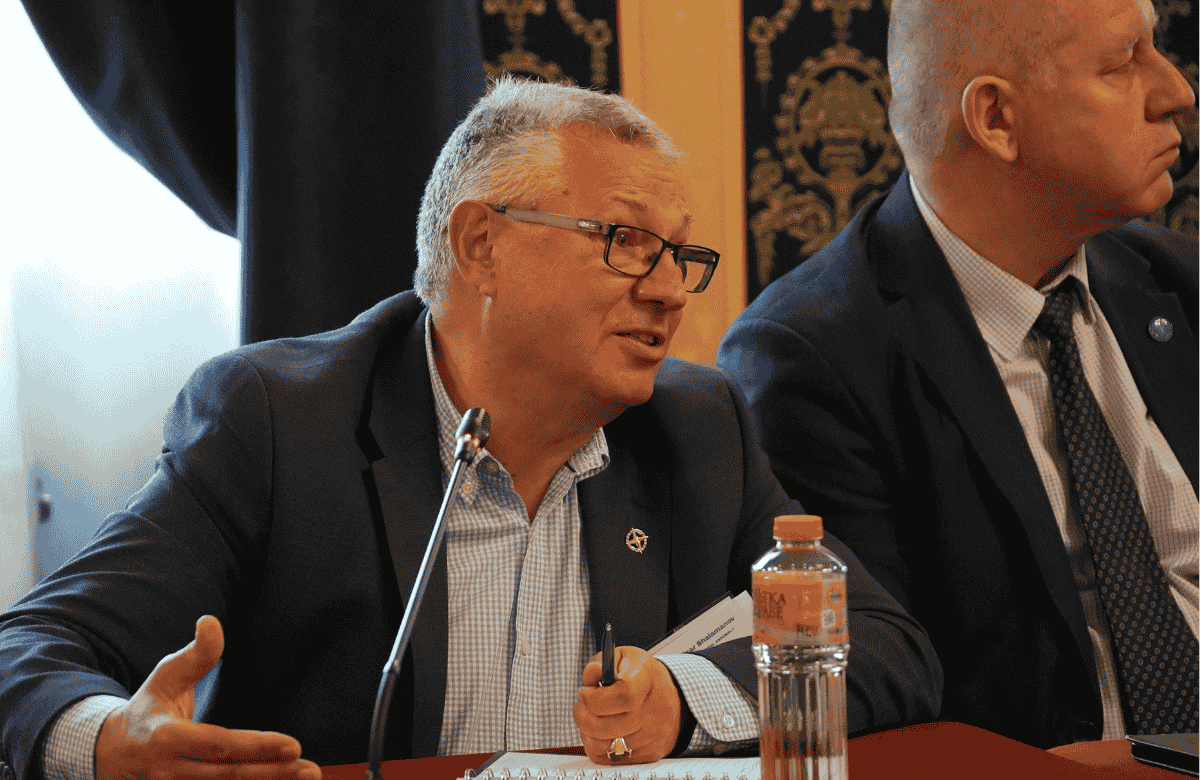
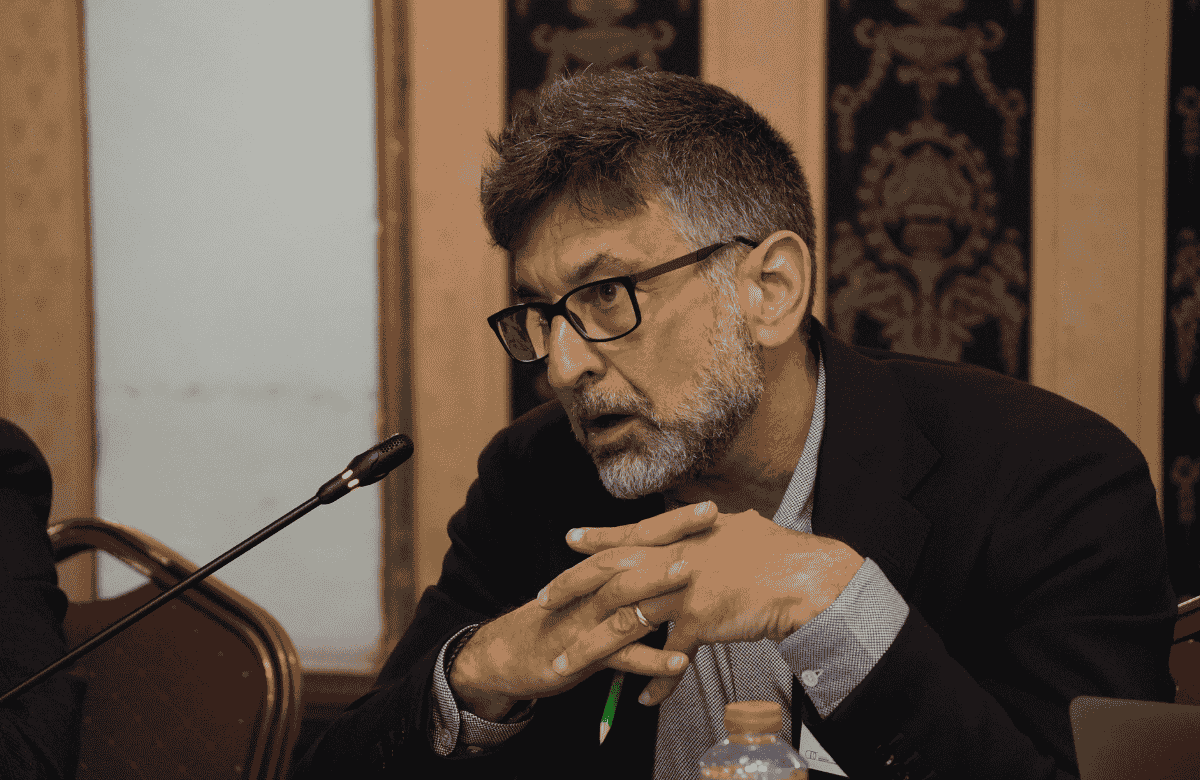
“Disinformation is a complex challenge, and therefore requires a comprehensive approach,” said Dr. Velizar Shalamanov.
He emphasized that the most effective first step is to build capability within academic environments. During his presentation, Dr. Shalamanov introduced the CoDE project – a collaborative network of academia, civil society organizations, and technology partners working together to develop effective strategies against disinformation. Universities provide the opportunity to engage young people and to harness emerging technologies such as AI. He announced that the CIDC will be participating in the ABF-funded CoDE project as a regional partner.
“It’s vital to involve young people from across the country,” he said. “What is more important is not just to develop analytical frameworks but to overcome analytical paralysis. We need to focus on fostering meaningful cooperations that can influence decision-makers,” Dr. Shalamanov added.
Sofia University students, serving as trainee analysts at the Disinformation Observatory, presented two compelling case studies. The students highlighted the Observatory’s mission to involve young researchers in meaningful, real-world analysis.
A dynamic exchange took place between BIJF Editorial Director Dean Starkman, who emphasized the importance of decentralizing factual reporting and investing in local journalism, and Sensika CEO Konstantin Christoff. Starkman argued that communities are more resilient to disinformation when they have access to trustworthy, locally produced news. Christoff agreed and outlined how technology can empower both journalists and citizens by offering tools that enhance fact-checking, identify coordinated influence campaigns, and ensure a more transparent information ecosystem.
The CIDC-Sensika Disinformation Observatory provides an advanced understanding of the dynamics of the information environment. It seeks to deliver solutions to the constantly evolving digital threats to democracies in Eastern Europe and globally. By examining disinformation narratives in various contexts, its work plays a crucial role in today’s rapidly evolving digital landscape.