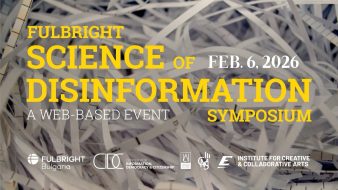
Last weekend, a cohort of students participated both in person and online in the first module of a rigorous new training program, “Disinformation and Societal Resilience: Building Knowledge and Skills for Identifying and Countering Disinformation,” designed to sharpen their ability to dissect, debunk, and counter falsehoods in the digital age.
The course, a collaborative effort between the Center for Information, Democracy and Citizenship (CIDC), the Center for the Study of Democracy (CSD), and the Open Information Partnership (OIP), convened participants from Sofia University and the American University in Bulgaria (AUBG) – several of the participants are junior analysts at the CIDC- Sensika Disinformation Observatory. Over three intensive weekends, they will acquire both theoretical frameworks and practical tools to combat the increasing weaponization of information.
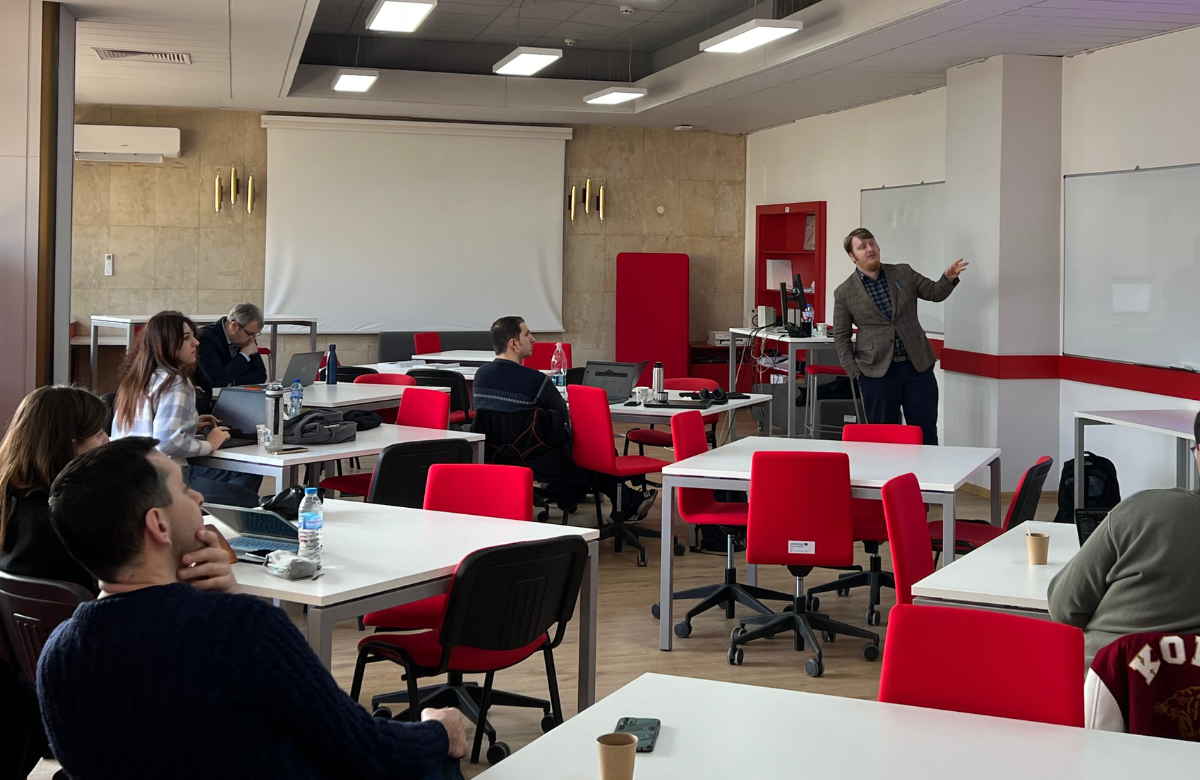
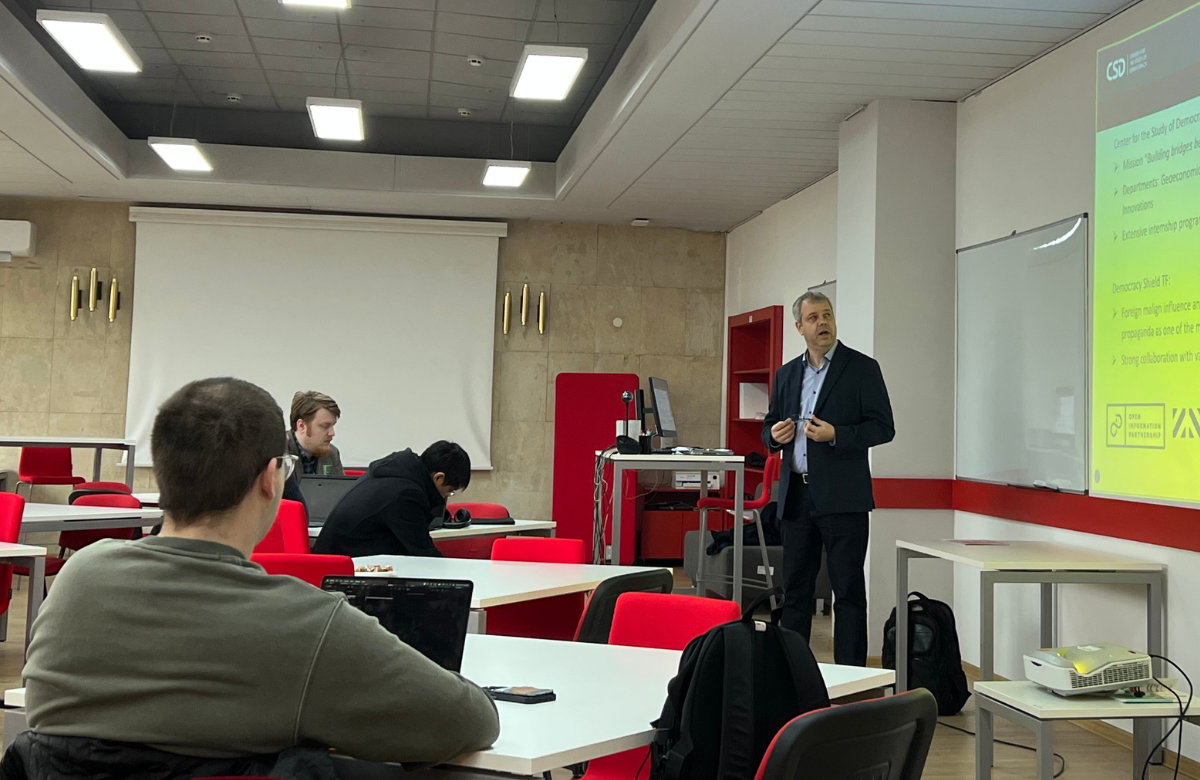
The opening session, led by Dr. Todor Galev, Director of Research at CSD, started with definitions and a conceptual framework for analyzing disinformation and went on to provide a sweeping overview of the European and Southeast European (SEE) disinformation landscape. Participants examined the role of big tech, algorithmic amplification, and AI-generated content in the proliferation of false narratives, as well as the evolving tactics of state and non-state actors engaged in information warfare.
A keynote address by AUBG President, Dr. Margee Ensign, underscored the urgent responsibility of academic institutions in countering disinformation.
“Democracy is at an inflection point,” Dr. Ensign stated. “AI and social media algorithms have reshaped the playing field. Malign actors are adapting at a pace that far outstrips our regulatory and institutional responses. Democracies cannot afford to lag behind.”
Dr. Ensign said it is crucial for universities to integrate media literacy and critical thinking across disciplines. She noted that history, economics, political science, and communication studies cannot operate in isolation in the face of an existential epistemic crisis.
“This cannot be a niche topic confined to specialist courses. It must permeate every academic discipline,” she noted. “Students must leave our institutions equipped not just with knowledge, but with the discernment to distinguish fact from fiction in an era where that distinction is increasingly blurred.”
The course continues next weekend with Module 2: “Basics of Disinformation Research in Online and Social Media.” Participants will engage with fact-checking methodologies, open-source intelligence (OSINT) techniques, AI-assisted verification tools, and counter-disinformation strategies such as pre-bunking and debunking.
The final module will shift focus from narratives to networks, investigating the actors, mechanisms, and amplification structures that sustain and disseminate disinformation.
On successful completion, students will receive a certificate of participation from the CIDC and the CSD.