This is not just a story about disinformation. This is a ghost story.
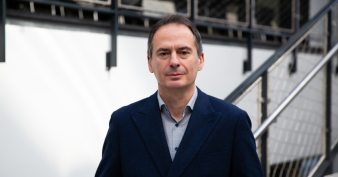
In collaboration with Al Jazeera’s investigative unit, Philip Obaji—Christo Grozev Fellow at the CIDC—exposed a vast network of fake journalists: nonexistent or dead people whose bylines have appeared across francophone Africa. The scale is staggering—over 200 articles published in more than a dozen countries, all designed to manipulate public perception. But who is behind it? And why?
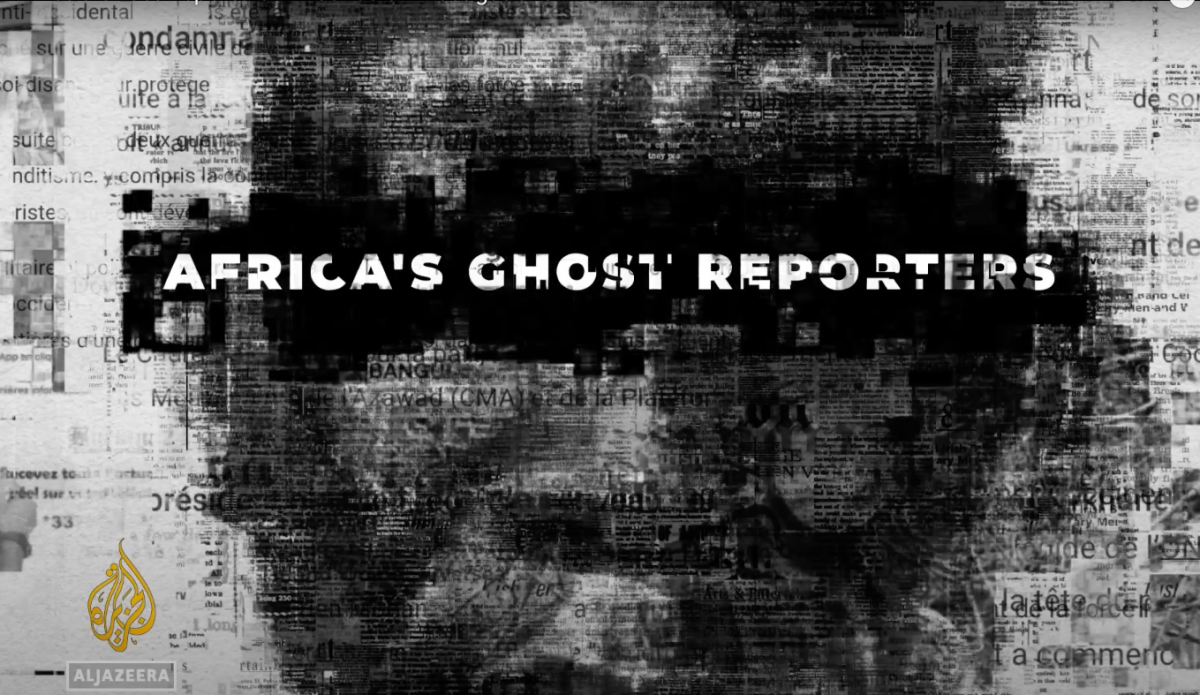
Africa’s Ghost Reporters follows the digital breadcrumbs—metadata, WhatsApp messages, and financial transactions—that reveal a sophisticated influence operation reaching all the way to Wagner – Russia’s infamous paramilitary group that marched on the Kremlin.
Philip Obaji gives us a unique behind-the-scenes glimpse into his work on the investigation – dive in.
In Africa’s Ghost Reporters, a documentary by Al Jazeera’s investigative unit, we reveal a campaign that has impacted over a dozen francophone countries, with more than 200 articles published in local media.
This is an investigation that has a little bit of Sixth Sense, a sprinkle of 2016 election interference, some links to previous reporting on this topic, and mostly it is a warning that nobody on the Internet is who they say they are.
This story mainly is about ‘geopolitical and military expert’ Gregoire Cyrille Dongobada. He’s on X and Facebook, but more importantly: he’s a published writer in many media in Africa.
His articles have appeared in countries like Mali, Burkina Faso, Central African Republic (CAR), and Cameroon.
But there is something strange about Dongobada: he has no history anywhere before his first post in early 2021.
Dongobada, in fact, isn’t a real person. He seems to exist only on social media and as a writer for outlets across French-speaking Africa, from Senegal to Mali and Cameroon to Burkina Faso. His profile photos on Facebook and X are that of Jean Claude Sendeoli, a former teacher and referee for the Central African Republic Football Association who passed away in September 2020, several months before Dongobada first appeared online.
We know this because we have footage and images of his funeral, people commemorated him on Facebook, and he’s actually mentioned in FIFA’s obituary of that year (2020). Well, we obtained WhatsApp conversations and documents showing who is behind this whole operation.
As it turns out, there are middlemen in Western Africa, approaching the media to publish articles for a fee.
In this case, it was a journalist from Togo — Aubin Koutele — who would send documents to the media to get published, provide them with the name of the ‘writer’, and then pay the local media a fee (about $80 per article ). This middleman forwarded Word docs from someone else, our evidence shows. Koutele even mentioned a ‘client’ who was paying for the whole thing (he later claimed to us that he was just helping other journalists). We also obtained those Word documents that he sent, and we found out who is behind this operation. It’s a known name in propaganda.
We analysed the metadata of the Word documents, and a couple of things stood out. Firstly, we found Cyrillic writing, which is surprising for a region where the vast majority of the people speak French. Sort of a big hint as to who might be behind this, but we got even luckier. One document had a bunch of numbers under the ‘Last Saved by’ column, there were a bunch of numbers that looked an awful lot like a phone number, and lo and behold: the country code for Russia (well, one of them) is +7. With the help of some reverse number apps, we found out that this phone number belonged to someone named Seth Boampong Weridu, a Ghanaian national with a connection to Russia.
In 2020, a CNN investigation revealed how a Russian troll factory that was disguised as a nonprofit group run by Weridu with offices in Ghana and Nigeria, and with several staff, posted coordinated messages and responses on social media to stoke racial tensions in the United States. Twitter (now X) and Facebook subsequently took down scores of accounts and pages created by Weridu’s group, which calls itself Eliminating Barriers for the Liberation of Africa (EBLA), after the social media companies found links to both EBLA and persons associated with the notorious Internet Research Agency (IRA), a St. Petersburg-based organization founded by Yevgeny Prigozhin.
After the CNN story, Seth showed up in a Wagner-funded action movie called Tourist, playing the role of Maxim, a priest. It’s about Russian military trainers that have to prevent a coup d’état. The movie was produced the same year that the Russian influence operation in francophone Africa started.
In total, we found about 200 articles attributed to this campaign in local media all over French-speaking Africa. They all feature ‘experts’ or ‘journalists’ that don’t seem to exist.
Ultimately what was shocking to me was that the local media in Togo and Burkina received payment from middlemen working on Russia’s behalf to publish articles without doing a background check on the authors and on the people who gave them the articles to publish. If they did, they would have found out that the authors were fake people and the people who gave them the articles to publish had a hidden agenda.
The use of fabricated journalists and paid-for narratives is not just an attack on media integrity—it’s a direct assault on civil society, democracy, and trust in public discourse. Russian disinformation networks have perfected the art of influence, embedding deceptive content in local media ecosystems where fact-checking resources are limited, and geopolitical tensions can be easily exploited.
By shining a light on this we not only reveal the mechanics of modern disinformation in Africa but also reinforce the urgent need to protect independent journalism and civil society from manipulation, and bring back to mind the one filter we should always have on when scrolling for fast news – fact or fake?