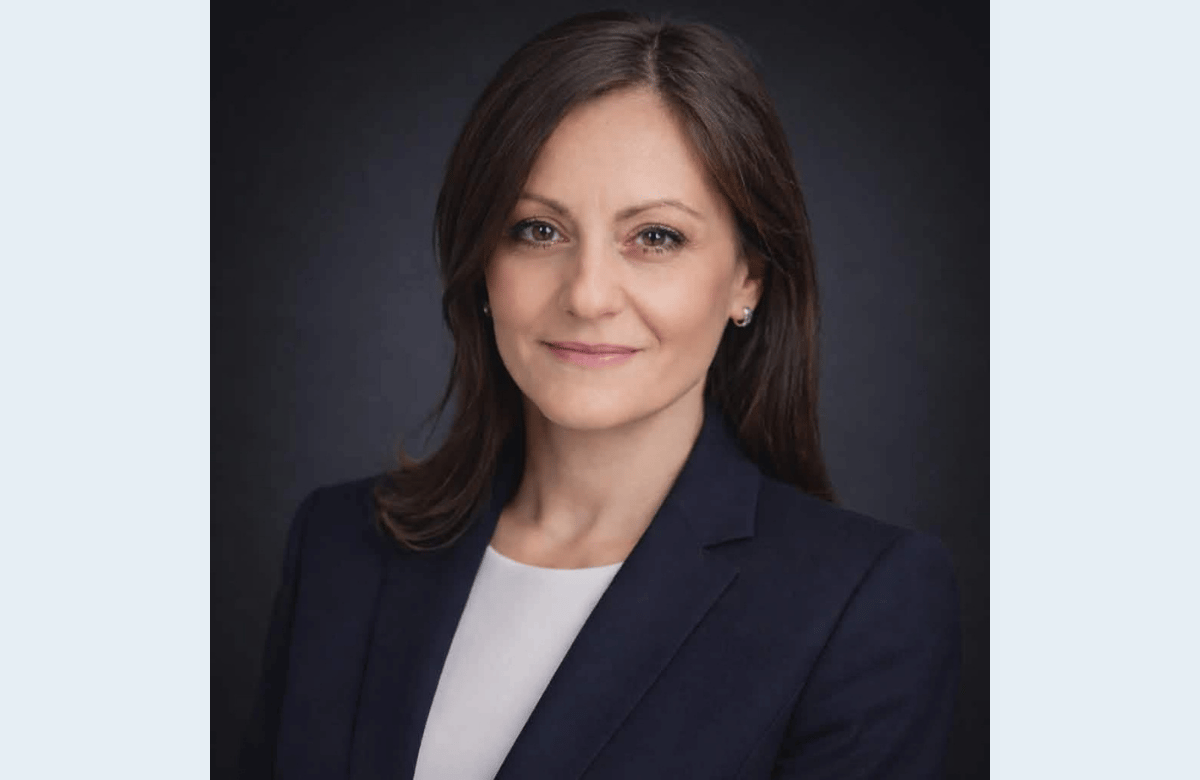
After two decades of leading complex projects in the global mining industry, Sofia Toteva (EMBA ’11) made a decision many professionals only dream about: she stepped away from the corporate world to focus on something she believed would create an even greater impact – people.
After completing the AUBG Executive MBA and the Stanford LEAD program, Toteva set out to build a community of leaders and innovators. Today, as co-founder of the Stanford Club of Bulgaria, she brings together entrepreneurs, researchers, executives, and students who share a desire to lead with intention and continue learning.
The club has already become a catalyst for meaningful conversations and new opportunities. Most recently, Toteva and her team brought Silicon Valley entrepreneur and Stanford lecturer Bret Waters to AUBG, where he delivered a leadership talk and led a corporate workshop on innovation.
In this interview, Toteva reflects on the leadership lessons that shaped her journey, the transformative role of the AUBG Executive MBA, and why she believes the strongest communities, and the strongest leaders, are built by creating opportunities for others.
Q: Three years ago, you decided to step away from traditional corporate leadership in the mining industry after 20 years to dedicate your time to purpose-driven work. Many professionals dream about making a career change but rarely act on it. What gave you the confidence to do so?
People often assume confidence comes from certainty. My experience has been exactly the opposite. Confidence comes from learning that uncertainty is inevitable. Mining is one of the most complex industries in the world. It is influenced by commodity prices, geopolitics, environmental regulations, government decisions, and global conflicts-forces no individual leader can control.
Early in my career, I experienced firsthand how volatile the mining industry can be. The project I was working on was suddenly put on hold, and within weeks, 40 of our 50 colleagues lost their jobs.
A decade later, following the market upheavals caused by COVID-19 and the war in Ukraine, the international company I represented decided to exit the region as part of a broader strategic realignment.
Those experiences taught me something fundamental: even the strongest organizations are vulnerable to forces beyond their control. Titles change. Companies change. Industries change.
The only investment that keeps growing is investing in people.
Over twenty years, I realized that what energized me most wasn’t managing operations-it was bringing people together, mentoring teams, solving problems collaboratively, and creating opportunities for others to grow.
When I left the corporate world, I wasn’t running away from something. I was moving toward something that had been motivating me for years: building communities that help people create opportunities for one another.
Looking back, I don’t see it as changing careers. I see it as applying the same leadership skills to something with a different kind of return-not measured in quarterly results, but in people, ideas, and lasting impact.
Q: During this new chapter, you co-founded the Stanford Club of Bulgaria. What inspired you to establish the club, what kinds of people does it bring together, and why did you feel Bulgaria needed a community like this?
The inspiration came from my experience with the Stanford LEAD program. Before co-founding the Stanford Club of Bulgaria, I had already started building a community through the Stanford LEAD Innovation Tour. Every year, I brought LEAD participants from around the world together to explore innovation ecosystems, learn from entrepreneurs, researchers, governments, and, most importantly, from one another.
Watching what happened during those few days completely changed my understanding of leadership.
People didn’t remember the presentations as much as they remembered the conversations afterwards. A coffee break became a business partnership. A shared dinner became a lifelong friendship. A casual introduction turned into a collaborative project.
That experience showed me the real power of community. Ideas are important, but ideas only create impact when they bring people together.
It also made me realize that Bulgaria has extraordinary talent, but many accomplished people work within their own professional circles. We needed a platform that would connect leaders across industries, generations, and institutions around a shared commitment to innovation, lifelong learning, and positive impact.
Today, the Stanford Club of Bulgaria brings together Stanford alumni, current students, entrepreneurs, executives, researchers, investors, public sector leaders, and friends of Stanford. While the club is rooted in Stanford’s values, it is intentionally open because we believe the best ideas emerge when diverse perspectives come together.
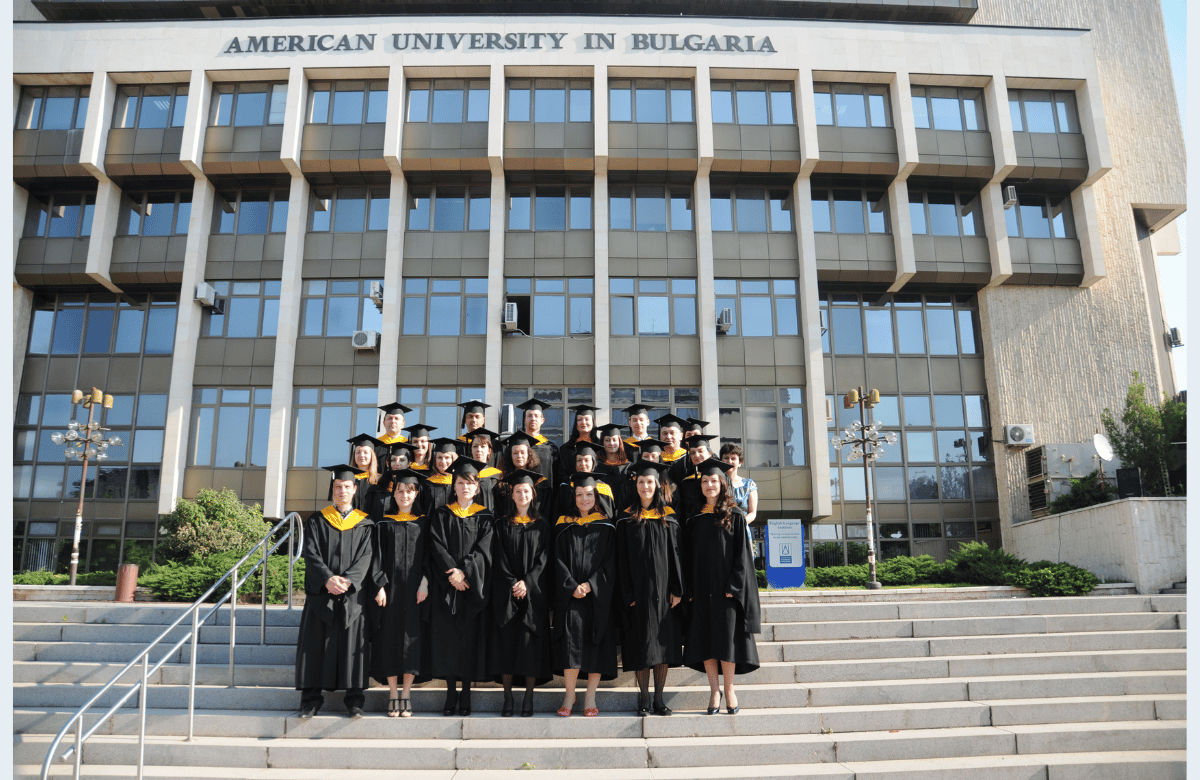
Sofiya Toteva (EMBA '11) during Commencement

Sofiya Toteva (EMBA '11) in class at the Elieff Center
Q: Before Stanford, you completed the AUBG Executive MBA program. Looking back, how did it shape your professional journey?
The AUBG Executive MBA changed the way I think about leadership.
Before the program, my focus was primarily on execution—delivering projects, managing operations, and solving complex business problems. The EMBA encouraged me to step back and think more strategically, to understand not just how organizations work, but why they succeed or fail.
That shift in perspective became one of the key factors in my professional growth. It helped prepare me for greater leadership responsibilities and contributed to my progression from Administrative Project Manager to Regional Manager, where I was able to apply a more strategic approach to leading teams, managing stakeholders, and driving business performance.
Equally valuable were the people. My classmates came from different industries and leadership backgrounds, and they challenged many of my assumptions. Those conversations taught me that leadership isn’t about having all the answers. It’s about asking better questions, listening carefully, and being willing to change your perspective.
The EMBA also gave me the confidence to think beyond my immediate role and to see leadership as something much broader than managing a business. Looking back, it wasn’t just an academic experience-it was the beginning of a lifelong network of people who continue to inspire and challenge me.
Q: Building communities requires a very different kind of leadership than managing organizations. Did the EMBA prepare you for that transition in unexpected ways? Were there particular lessons, experiences, or relationships from the program that influenced your approach to leadership?
Absolutely. Managing an organization and building a community require two very different kinds of leadership. In an organization, your position gives you authority. In a community, nobody has to follow you. People participate because they trust you, believe in the purpose, and feel they belong.
Looking back, I think the EMBA prepared me for that transition in ways I only appreciated later. The greatest lessons didn’t come from textbooks-they came from working with talented people who challenged my thinking and approached problems from completely different perspectives.
One of the ideas that has stayed with me is that leadership isn’t defined by good intentions but by your ability to create outcomes. And creating outcomes rarely happens alone. It requires relationships, credibility, and the ability to bring people together around a common goal.
That philosophy has shaped everything we’ve built at the Stanford Club of Bulgaria. Leadership isn’t about being at the center of the conversation. It’s about creating the conditions for others to connect, contribute, and succeed.
Q: How do you hope the Stanford Club of Bulgaria will support the next generation of Bulgarian leaders?
Our mission is to foster a vibrant community of Stanford graduates and students in Bulgaria – a community of people who are committed to supporting each other’s personal and professional growth while making a positive impact on society.
We strive to create meaningful opportunities for networking, mentorship, and lifelong learning while promoting the values that are at the heart of the Stanford experience: intellectual curiosity, social responsibility, and ethical leadership. Through our collective efforts, we hope to empower our members to make a positive impact in their communities and the world.
For me, one of the biggest lessons from both my corporate career and Stanford is that opportunities rarely happen in isolation—they happen through people. A conversation can lead to a new idea, a mentor can change someone’s perspective, and a trusted network can open doors that would otherwise remain closed.
That’s why we launched #ChatWithUs www.stanfordclub.bg. It’s an initiative that opens the Stanford Club to the wider community and invites anyone to connect with our members to discuss topics ranging from strategy and finance to innovation, entrepreneurship, and leadership. We believe knowledge becomes more valuable when it is shared, and that experienced leaders have a responsibility to make themselves accessible to others.
I don’t think our role is to tell the next generation what to do. Our role is to create an environment where people can learn from one another, challenge each other’s thinking, and build relationships that help them grow.
I also believe that strong, inclusive institutions are essential for a country’s long-term prosperity. Communities like the Stanford Club don’t replace those institutions—they strengthen them by connecting, developing, and inspiring the people who will build and lead them. If we can help cultivate leaders who create better companies, stronger universities, more innovative startups, and more effective public institutions, then we will be fulfilling our mission.
While every leadership journey is different, Sofia Toteva’s demonstrates a lesson that lies at the heart of the AUBG Executive MBA: leadership is ultimately about people. Whether leading organizations or building communities, lasting impact comes from bringing others together, asking better questions, and creating opportunities for growth.
Explore the Executive MBA