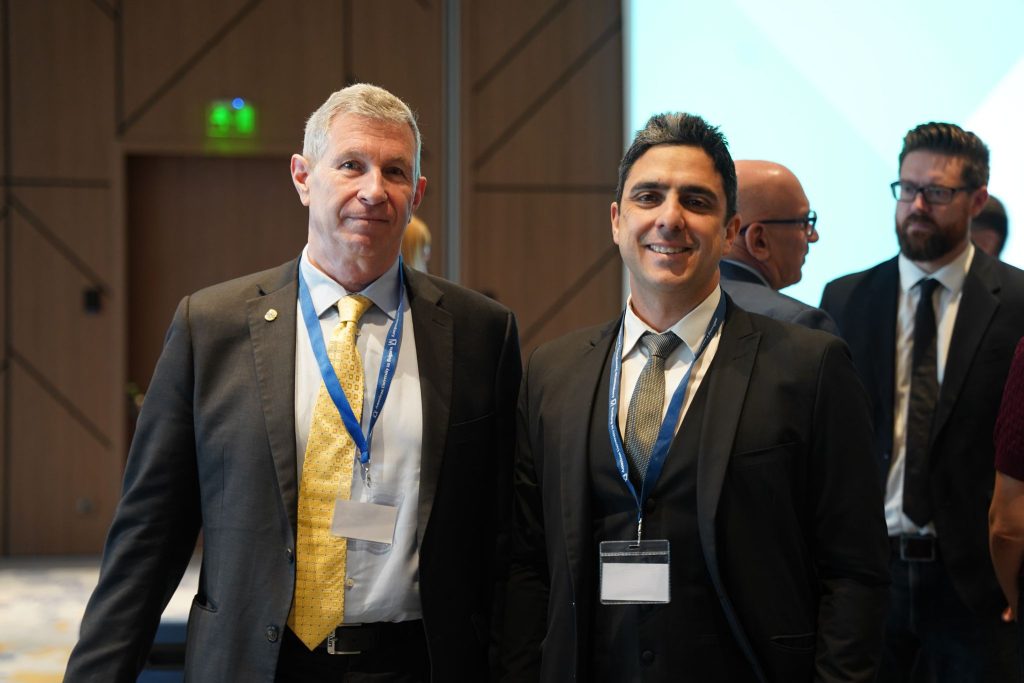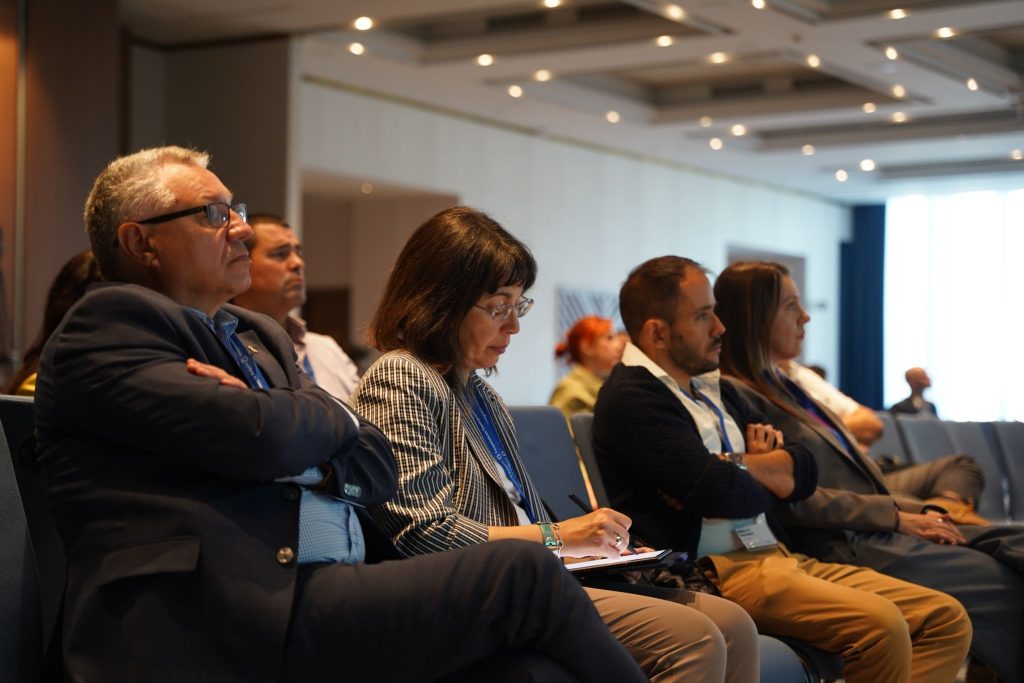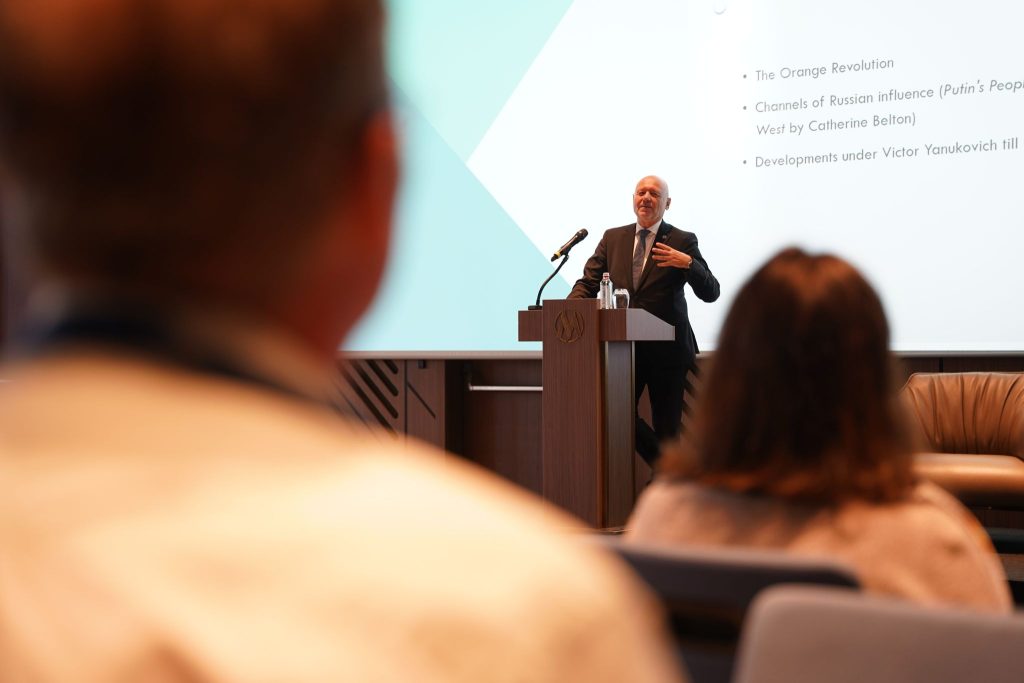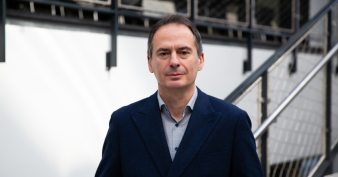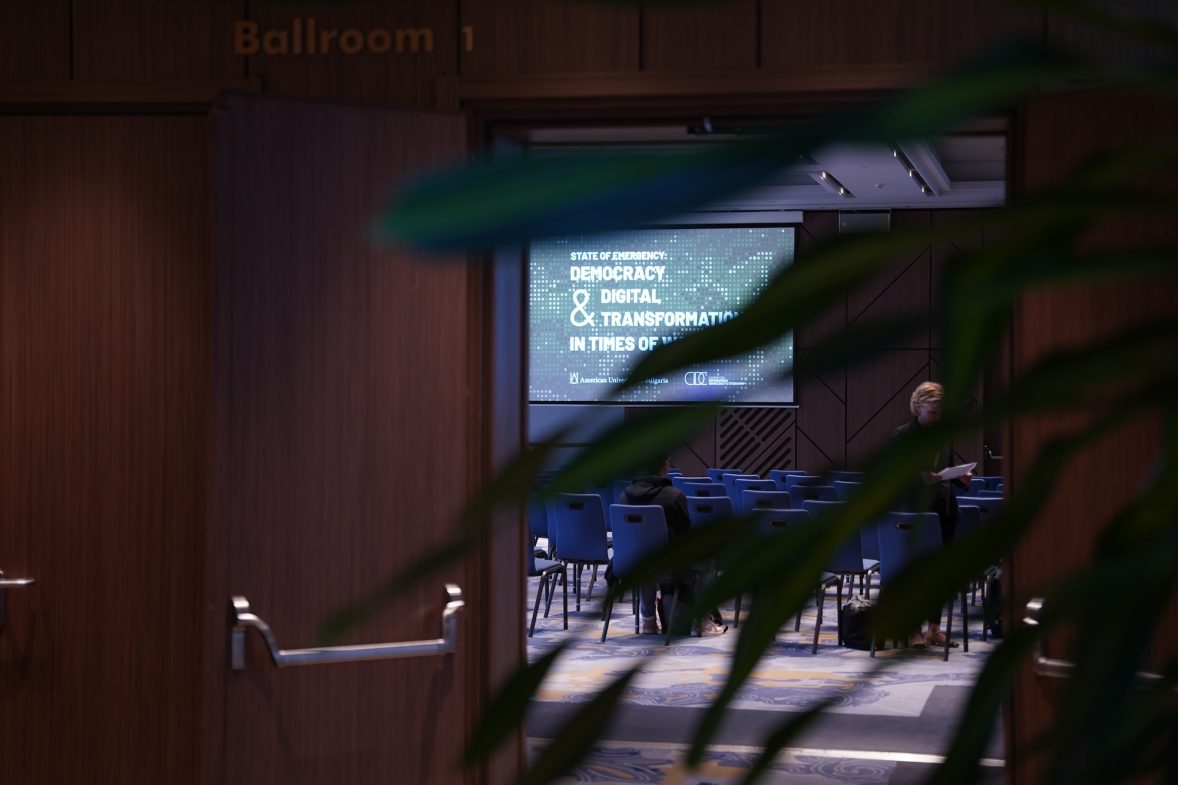
The State of Emergency: Democracy and Digital Transformation in Times of War conference, organized by the Center for Information, Democracy and Citizenship (CIDC) at AUBG, brought together a diverse range of thought leaders and experts for two days of in-depth discussions. The conference aimed to explore the tensions between democracy, digital transformation, and national security during times of war.
AUBG Provost Dr. J.D. Mininger and CIDC Executive Director Dr. Jacob Udo-Udo Jacob opened the event by setting the stage for what would become a series of thought-provoking presentations and conversations. Dr. Mininger reflected on the university’s unique position “AUBG has been a crossroads and a place for the meeting of cultures and ideas. Just as we are a kind of democratic vehicle for the meeting of process.”
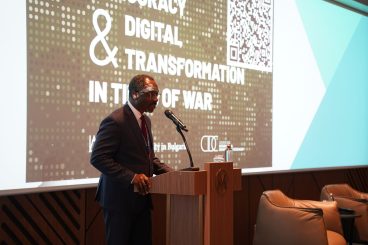
Dr. Jacob Udo-Udo Jacob
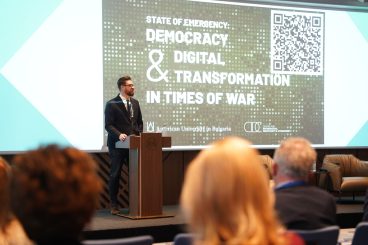
AUBG Provost Dr. J.D. Mininger
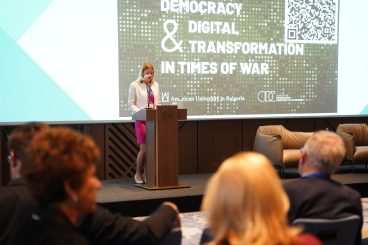
Despina Koleva, CIDC Director of Projects and Partnerships
Keynote Speakers
The Day One keynote address was delivered by Professor Kostiantyn Koshelenko, Ukraine’s Deputy Minister of Social Policy for Digital Development, Digital Transformation, and Digitalization. Prof. Koshelenko emphasized how the war in Ukraine has accelerated the digitalization of social services in the country, especially in the context of veteran care. He also offered insight into how shared wartime experiences drive the Ukrainian government’s innovations in public services. “The shared experience [of taking refuge in bomb shelters] is what drives our work in the ministry of social policy, pushing us to innovate and adapt our social services to efficiently meet the needs of our people,” he noted. His address laid the groundwork for a deeper exploration of how war reshapes governmental processes and approaches to digital transformation.
In his Day Two keynote speech, Professor Todor Tagarev, former (two-time) Minister of Defense in Bulgaria, reflected on lessons from the war in Ukraine and the shifts in popular support for Ukraine’s efforts to defend itself from Russian aggression. “Gaining and maintaining the moral high ground is extremely important,” he said. Ukraine’s ability to crowd-source intelligence, deliver professional communications and deploy advanced technologies to support societal resilience, he noted, are some of the key factors that have helped the country to withstand Russia’s aggression.
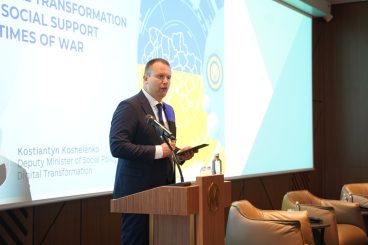
Prof. Kostiantyn Koshelenko
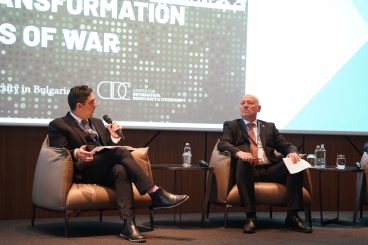
Dr. Antonio Garcia and Prof. Todor Tagarev
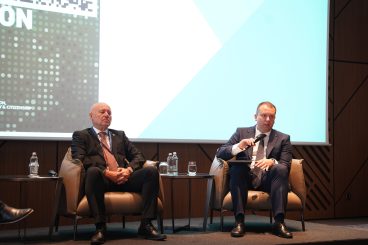
Prof. Todor Tagarev and Prof. Kostiantyn Koshelenko
Fireside Chats and Expert Panels
The fireside chat that followed each keynote, featuring Professor Koshelenko and Professor Tagarev, moderated by Dr. Antonio Garcia, further explored Ukraine’s wartime digital strategies, examining both immediate responses and post-war recovery plans. Professor Tagarev provided critical insights into lessons learned from the war in Ukraine and how these lessons might influence future defense strategies.
Cognitive Warfare and the New Digital Battlespace
One of the key themes of the conference was cognitive warfare, a topic expertly discussed by Dr. Sae Schatz and Dr. Velizar Shalamanov. Dr. Schatz, Executive Director of the Partnership for Peace Consortium, highlighted the history of cognitive warfare —how technological advances are increasingly weaponizing human cognition. “We cannot address [disinformation] by itself. We have to think more broadly,” she said, adding that the spread of democracy and mass access to new communication technologies and devices have opened an increasingly complex human domain of warfare, with human cognition, including beliefs, attitudes, values, identity, and networks as critical targets. Dr. Shalamanov, Bulgaria’s former Minister of Defense, built on this by presenting actionable strategies his team is working on in Bulgaria to combat mis and disinformation, emphasizing the complexity of information and psychological warfare and the need to build an ecosystem of multiple actors.
Dr. Shalamanov further underscored the importance of democracy during these turbulent times, noting that “we don’t understand democracy enough to use all of the advantages, and we get to learn this only when we are under stress like Ukraine.”
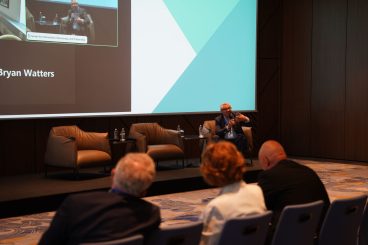
Dr. Velizar Shalamanov
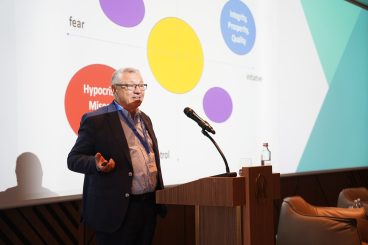
Dr. Velizar Shalamanov
Balancing National Security and Civil Liberties
Another critical issue examined was the balance between national security and civil liberties. Phillips Payson O’Brien, a Professor of Strategic Studies at the University of St. Andrews, and Bryan Watters, an Emeritus Professor of Defense Leadership at Cranfield University both in the UK, delved into the challenging task of ensuring that security measures do not undermine democratic freedoms during war.
Disinformation and Media
The pervasive impact of disinformation was tackled by Michael Weiss, an international investigative journalist who has covered the wars in Syria and Ukraine and has written extensively on Russian espionage, and Prof. Nicolas Tenzer, French public intellectual and Senior Fellow at the Center for European Policy Analysis (CEPA). Their discussion, moderated by AUBG alumna and board member, Dr. Ralitza Nikolaeva (’96), examined the risks disinformation poses to public perception especially in times of war and the need for democracies to build resilient systems to prevent and counter disinformation. Weiss emphasized the essential role of factual media in safeguarding democracy, particularly in monitoring and checking government actions in a responsible and ethical manner.
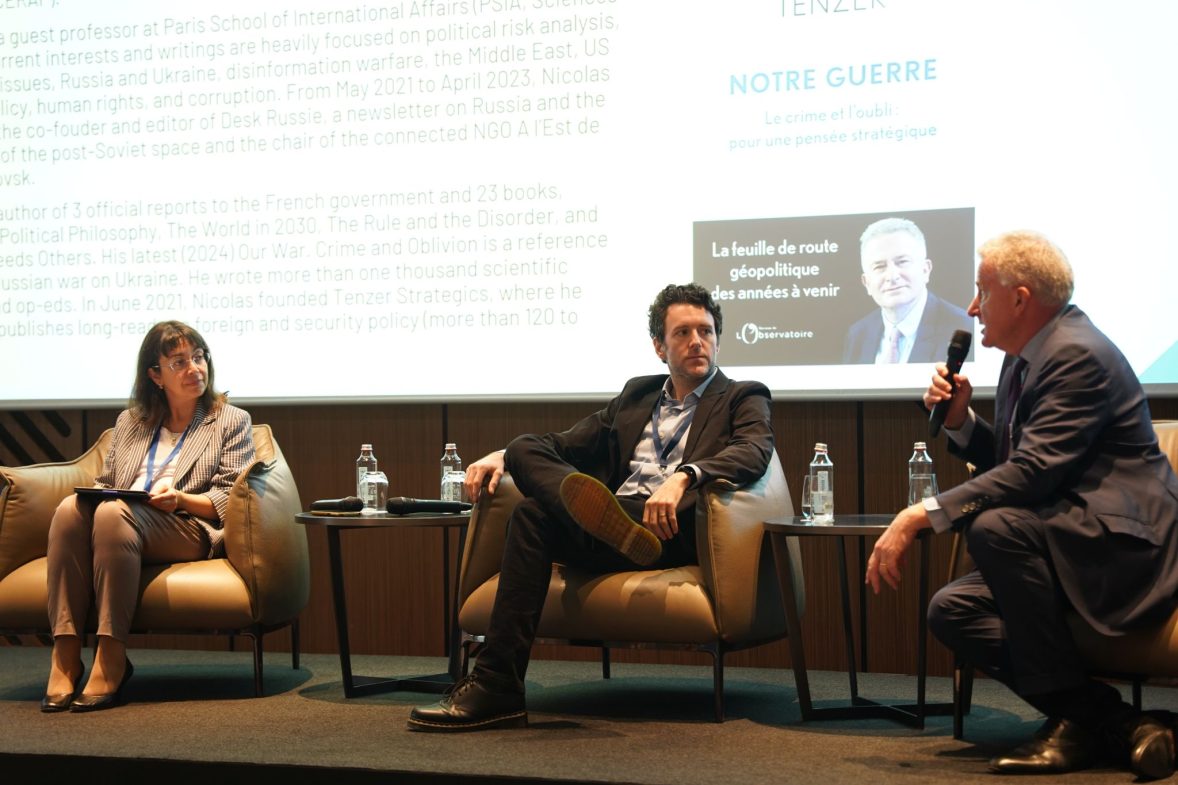
Prof. Nicolas Tenzer, Michael Weiss, and Dr. Ralitza Nikolaeva
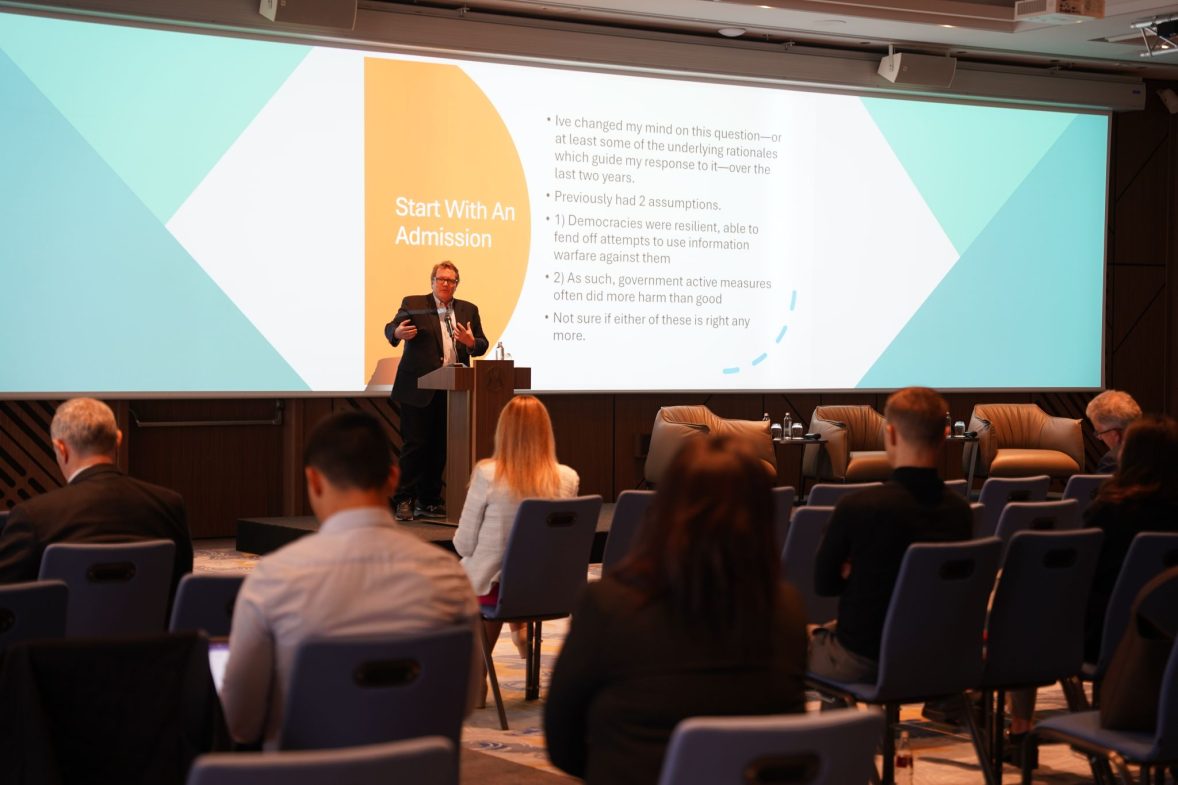
Prof. Phillips Payson O’Brien
Multistakeholder Engagement
Professor Peter De Clercq, former UN Assistant Secretary General, and Dr. Antonio Garcia, a military historian, and former UN Peacekeeper, drew on lessons from UN multidimensional peacekeeping operations to discuss the need to have a post-conflict plan. Civil society organizations, they noted, have critical roles to play in peacebuilding and post-conflict reconciliation and therefore must be protected. They also noted how the conflict in Ukraine has tested the UN’s moral authority and role in a rapidly changing world. A new multilateralism, they stressed, will require engagement with multiple actors.
The Role of Digital Transformation and Disinformation
An important announcement during the conference was the unveiling of the CIDC-Sensika Disinformation Observatory, a collaborative project between CIDC and Sensika, a Sofia-based interntional media monitoring company. Dr. Jacob and Mr. Konstantin Christoff – CEO of Sensika, presented this innovative initiative aimed at tracking and analyzing disinformation trends in the Balkans.
Reflections
AUBG alumna Sevdalina Yaneva, reflecting on the conference, praised its timely relevance and thought-provoking content. “The conference shed light over, and answered a lot of already alerted questions during a difficult period of war, and raised new emerging questions over the impact of digital disinformation,” she said. She further emphasized the value of such gatherings in fostering dialogue and exchanging ideas that help navigate complex geopolitical and digital challenges.
In his closing remarks, Dr. Jacob captured the essence of the discussions, stating, “At no other time is the tension between democratic ideals and national security more pronounced than during war. The fundamental principles of democracy, those that prioritize civil liberties and individual freedoms, must often contend with the harsh necessities of survival and security.”
The State of Emergency: Democracy and Digital Transformation in Times of War conference succeeded in bringing together a diverse group of experts from fields such as academia, defense, social policy, and digitalization. It was attended by delegates from government, policy, academic, civil society, military, and diplomatic communities, including representations from the NATO Center of Excellence in Crisis Management and Disaster Response, and the America for Bulgaria Foundation.